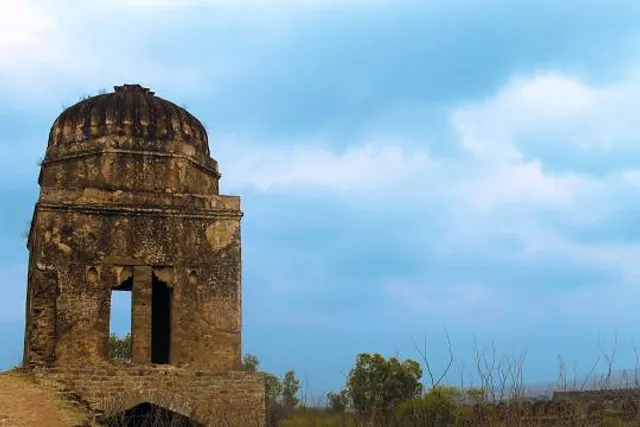
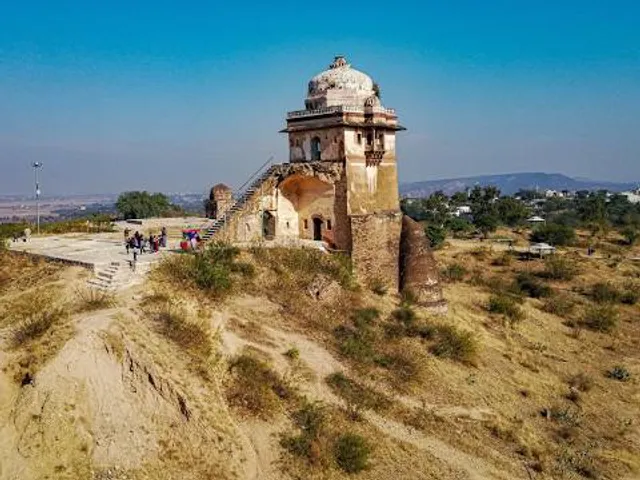
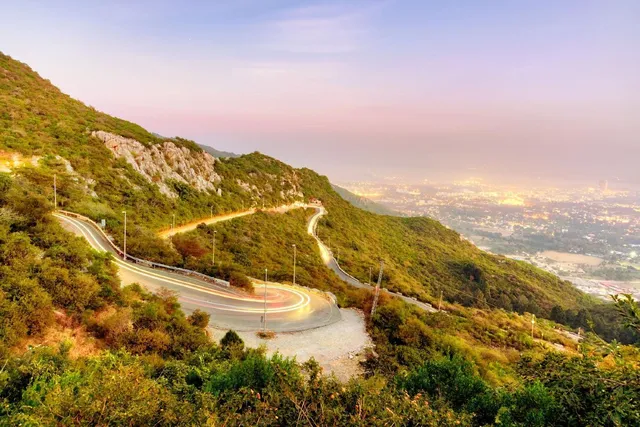
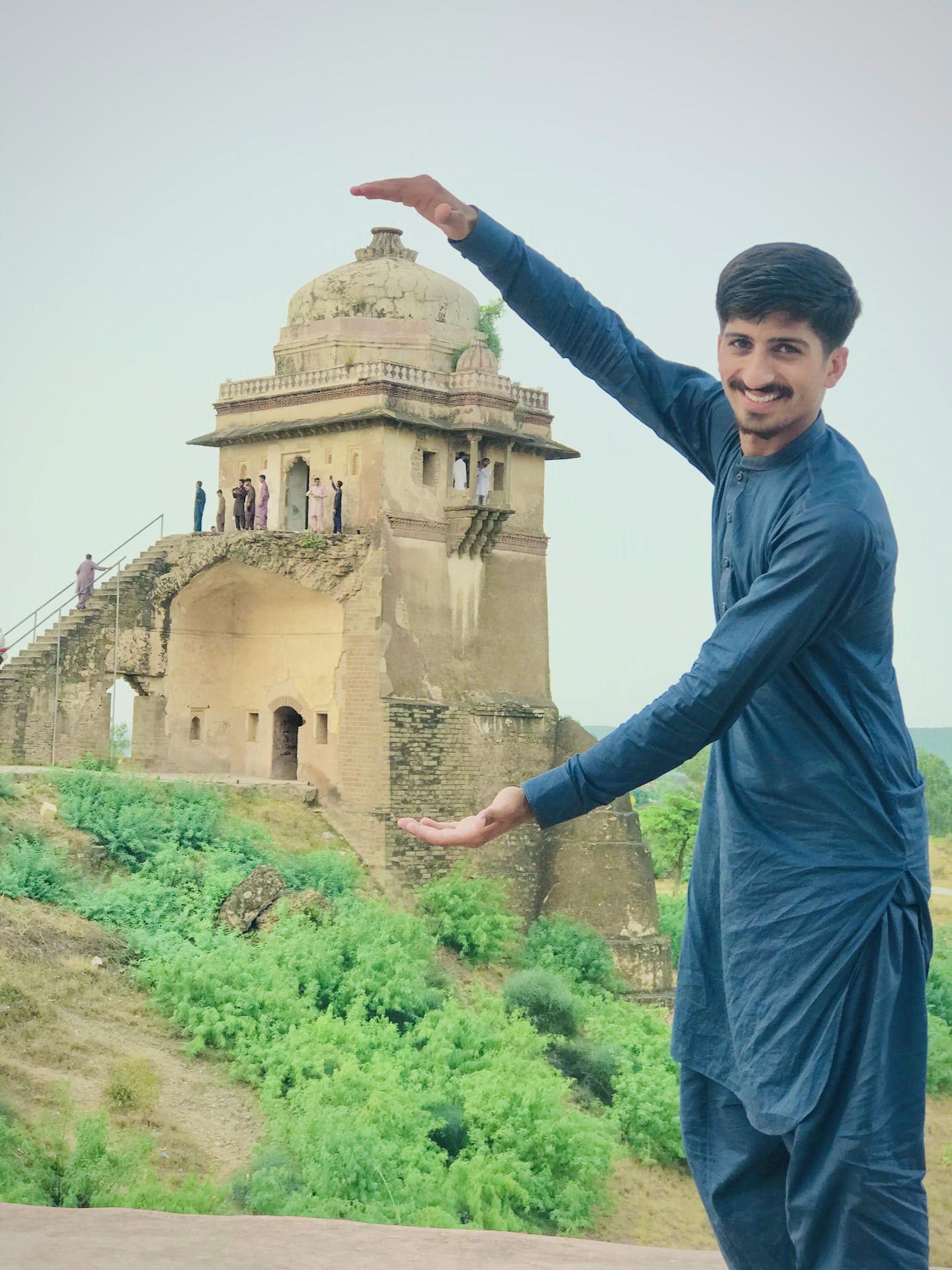
Rohtas Fort, located in the northern part of Pakistan's Punjab province, is one of the most iconic landmarks in the country. Built during the 16th century by the Afghan king Sher Shah Suri, the fort is a testament to the architectural prowess of the Mughal era. With its massive walls, imposing gates, and intricate carvings, Rohtas Fort is a fascinating place to visit for anyone interested in history, architecture, or culture.
The fort was constructed by Sher Shah Suri in 1541, after he had defeated the Mughal emperor Humayun and seized control of much of northern India. Sher Shah Suri was a great military strategist and administrator, and he built the fort as a means of consolidating his power in the region. The fort was strategically located on a hilltop overlooking the River Indus, which made it an ideal location for monitoring and controlling trade routes in the area.
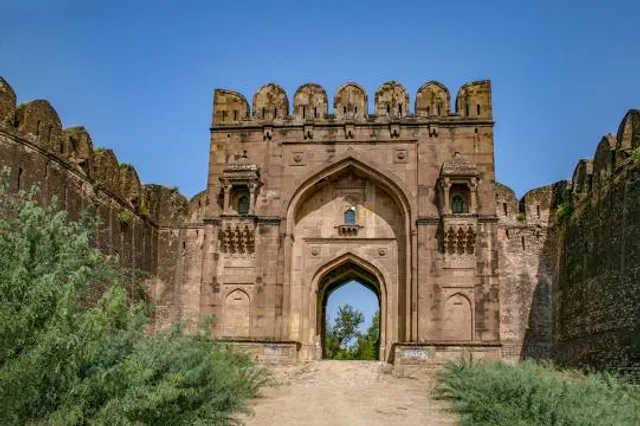
The construction of Rohtas Fort took eight years to complete and involved the labor of thousands of workers. The fort covers an area of over 70 acres and is surrounded by a wall that is more than 4 km long and up to 18 meters high. The walls are made of stone and are reinforced with buttresses and towers at regular intervals. The fort has 12 gates, including the famous Sohail Gate, which is decorated with intricate carvings of animals, humans, and mythical creatures.
Inside the fort, there are a number of buildings and structures, including the Haveli Man Singh, the Shahi Mosque, and the Rani Mahal. The Haveli Man Singh is a palace built by Raja Man Singh, a Rajput ruler who served in the court of the Mughal emperor Akbar. The palace has two courtyards and a number of rooms and chambers, including a hall decorated with frescoes depicting scenes from Hindu mythology.
The Shahi Mosque is located in the center of the fort and is one of the oldest and most impressive mosques in Pakistan. The mosque was built by Sher Shah Suri and is constructed entirely of stone. It has three domes and a number of minarets, and the walls are decorated with intricate tilework and calligraphy.
The Rani Mahal is another notable building inside the fort, which was once used as a palace for the wives and concubines of the Mughal rulers. The palace has a number of rooms and courtyards, and the walls are decorated with frescoes and carvings.
In addition to its historical and architectural significance, Rohtas Fort is also an important cultural site in Pakistan. The fort has been designated a UNESCO World Heritage Site and is a popular destination for tourists and locals alike. The fort is also used as a venue for cultural events and festivals, including music concerts, art exhibitions, and traditional dance performances.
In conclusion, Rohtas Fort is a remarkable example of the architectural and cultural heritage of Pakistan. With its massive walls, intricate carvings, and fascinating history, the fort is a must-visit destination for anyone interested in the rich and diverse culture...
Read moreHere’s a comprehensive overview of Rohtas Fort, a stunning UNESCO World Heritage site near Dina, Jhelum.
⸻
🏰 What is Rohtas Fort? • A 16th‑century citadel commissioned by Sher Shah Suri (1541–1548) to block Mughal emperor Humayun’s return and control local tribes  . • Massive fortification covering 70 hectares, encircled by 4 km of stone walls featuring 68 bastions and 12 monumental gates . • Architectural fusion of Turkish, Afghan, and South Asian military styles, forming a precursor to later Mughal architecture .
⸻
🌟 UNESCO & Conservation • Recognized in 1997 as a World Heritage Site for its “exceptional example of Muslim military architecture” . • Conservation spearheaded by the Directorate General of Archaeology & Museums and Himalayan Wildlife Foundation since 2000, supported by UNESCO, USAID, World Bank, and provincial funds . • Funding over Rs 410 million in the latest master plan, including restoration of gates, visitor centre upgrades, road improvements, and traffic rerouting .
⸻
🧭 Visiting Rohtas Fort
Location & Access • 16 km NW of Jhelum, 8 km south of the Grand Trunk Road (GT Road), reachable via Dina . • Ideal visiting hours: 08:00–18:00 ().
Best Time to Visit • Cool months (Oct–Mar) are perfect for exploring outdoors .
How to Get There • By road: 2 h from Islamabad, 4 h from Lahore via GT Road and Dina . • By rail: Nearest station is Dina (10 km); Jhelum is another option (). • By air: Islamabad Airport (141 km) plus ground transport .
⸻
🎯 What You’ll See • Kabuli, Talaqi & Chandwali Gates – monumental entry points, several recently restored . • Shahi Masjid – elegant central mosque; Haveli Man Singh and baolis (stepped wells) inside . • Gurdwara Chowa Sahib, marking a miracle attributed to Guru Nanak, built in 1834 near Talaqi Gate . • A small village still exists inside, with strict conservation controls in place .
⸻
🛠️ Tourism Infrastructure • Interpretive signage, walkways, lighting, parking, sanitation, a museum (Sher Shah Suri Museum), canteen, souvenir shop, and horse-cart rides have been added . • Community-led handicrafts (embroidery, replica coins) and trained local guides enhance visitor interaction and support livelihoods . • The “Visit Rohtas Fort” initiative, by STFP with UNESCO & Punjab govt, promotes sustainable tourism, local engagement, and cultural entrepreneurship .
⸻
🎒 Why Visit Rohtas? • Exceptional preservation—never conquered, walls and structures remain largely intact . • Rich history—traces of Afghan, Mughal, Durrani, Sikh, British eras woven into its architecture. • Educational & cultural value—museums, guided tours, heritage storytelling. • Scenic & strategic location—perched on a ridge overlooking the Kahān River gorge...
Read moreRohtas Fort, Qila Rohtas Jehlum DiNa
The origin of the fort goes back to the Sur dynasty, when emperor Sher Shah Suri ordered the fort built after his victory over the Mughal emperor Humayun.4] Construction of the fort began in the year 1541.[4] It was built primarily to defend against the Mughals .[5]
Mughal period Edit The fort was ceded to Mughal emperor Humayun in the year 1555.
The fort lost much of its significance as the fort's purpose of subduing Mughal tribesmen, as well as the preventing the return of Emperor Humayun, was no longer required.[3] Further, the construction of the nearby Attock Fort in the 1580s by Emperor Akbar better served Mughal interests.
Sikh Empire period Edit The fort remained in use during the Mughal era, and was used almost continuously until 1707,[2] though it was not popular with the Mughal rulers.[3] The Afsharid ruler Nadir Shah camped at the fort during his attack on the Mughal Empire. Also the Afghan chieftain Ahmed Shah Abdali used the fort in his expeditions in the Punjab during the waning days of the Mughal empire.[6] It was briefly conquered by the Marathas in 1758. The Afghans retook the fort in 1759.
In 1825, the Sikh forces of Gurmukh Singh Lamba took the fort so Rohtas was thereafter used for administrative purposes by the Sikh Empire until its collapse by the British in 1849.[7
The height of the outer wall varies between 10 and 18 metres, with a thickness that varies between ten and 13 metres. The fortified walls have 68 bastions at irregular intervals,[2] with twelve monumental gateways providing access to the inner fort.[2] The ramparts follow the hilltop's contours.[2]
The walls had up to three terraces at different levels, connected by staircases. The uppermost terrace has merlon-shaped battlements from which muskets could be fired, and from which soldiers could also pour molten lead.
The walls are built in sandstone laid in lime mortar mixed with brick. The gates are in grey ashlar masonry. Some portions were built of burnt brick.
Gates Edit The Rohtas Fort has twelve gates, all built of ashlar stone.
Sohail Edit
Sohail Gate
Close-up of Sohail Gate The Sohail gate features some of the best masonry work of the Sur Empire, and was likely the ceremonial main entrance to the fort.[1] It derives its name from a local saint named Sohail Bukhari, whose remains are interred in the south-western portion of the gate.
Peace of and mind...
Read more