
A guide to China Temple and Buddha's Holy Garden
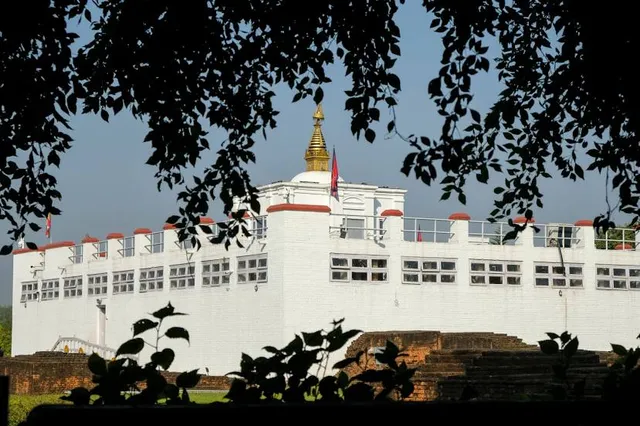
This is a "sacred place" that countless Buddhists dream of pilgrimaging to at least once in their lives. In 1997, Lumbini was inscribed on the UNESCO World Heritage List, becoming one of Nepal’s only two world cultural heritage sites. ✨ From dawn to dusk, as the sun rises and sets, and stars fill the sky, this place is always crowded with believers and tourists from around the world coming to pay homage to Buddha. Some move quickly, while others sit under the bodhi tree in quiet meditation, savoring Nepal’s unique slow life. After Lumbini was named a World Heritage Site, governments from various countries began building monasteries here in an official capacity, rekindling butter lamps and Sanskrit chants on the Indian subcontinent. Divided by a central river, the eastern side is home to Theravada Buddhism, gathering monasteries from Southeast Asian Buddhist countries; the western side belongs to Mahayana Buddhism, where China Temple (Zhonghua Temple) is located. At the center lies Maya Devi Temple—the origin of it all. 【🔥 What to see in Lumbini?】 ✨ Maya Devi Temple: The soul of Lumbini. In 2013, British archaeologists excavated near the original Puskarini Pond and confirmed this as the birthplace of Buddha in the 6th century BCE. For countless Buddhists, this is the holiest site for pilgrimage and practice—the closest place to Buddha’s origin. Next to it stands a large bodhi tree, where Buddhists can always be seen meditating. Beside the temple is the Ashoka Pillar, inscribed with edicts from the Mauryan Empire. Tickets: 700 NPR for a one-day pass, 1000 NPR for a 12-day pass—choose based on your stay. ✨ China Temple (Zhonghua Temple): A Chinese monastery in a foreign land! Its interior is no different from Han Buddhist temples in China, and it’s one of the best-maintained monasteries in Lumbini. Chinese tourists can stay for free with their passports, including three meals, but are required to attend morning chanting and daily chores. The strictness of these rules depends on the on-duty monk in the guest hall. 🎗️ PS: To stay, arrive at the guest hall before 5 PM to meet the monk. They’ll usually ask a few questions to confirm you’re here for practice, not just tourism. Accommodation is in triple rooms with air conditioning and 24-hour hot water—much better than other monasteries in Lumbini. Meals are simple vegetarian fare, but not strictly restrictive: the temple allows five pungent spices, fermented bean curd, and doesn’t restrict eggs or milk—quite appetizing. ✨ Other Mahayana monasteries: The most famous are the adjacent Korean and Japanese temples. The Korean Temple features a single-eave gable roof with grand blue-green decorations. The Japanese Temple’s Heijo Pagoda has a unique style, perfect for photos. The Korean Temple also offers accommodation: 500 NPR per day including three meals, though conditions are simpler than China Temple, and morning chanting is required. ✨ Eastern Theravada monasteries: Such as Thai, Burmese, and Cambodian temples, showcasing Southeast Asian Theravada styles. Most are relatively simple—those who’ve visited Southeast Asia may find them less notable. 1️⃣ Kapilavastu and Ramagrama Stupa: I’ll cover these in separate notes. Buses from Lumbini go directly there—no need for a private car. 2️⃣ Buses from Pokhara and Kathmandu to Lumbini cost around 1600 NPR; tickets are available at Bus Sewa. #OffTheBeatenPath #Lumbini #NepalSacredSites #BuddhistPilgrimage