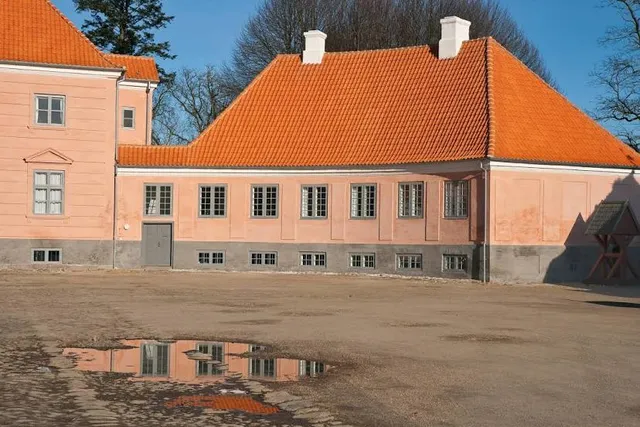
Aarhus Moesgaard Museum: A Glimpse into the Nordic Past
The Moesgaard Museum is located in the Højbjerg area, south of Aarhus, which literally translates to 'high mountain area', and boy, does it live up to its name with all the hill climbing required to get there on a bike. Adult tickets are 195kr, and student tickets are 110kr. From 9.9 to 9.15, individuals under 28 years old can enjoy free admission to all museums across Denmark for a week 🥹 The content is incredibly rich; if you're interested, it feels like you could spend an entire day exploring, from the Stone Age to the Bronze Age, Iron Age, Viking Age, and finally, the religious section. There are various exhibits, audio-visual interactions, and it's actually worth the price of admission. I spent nearly 5 hours there and had to end my visit hastily when I got too tired to continue. The earliest inhabitants of the Nordic region were hunters from the south who followed the red deer. During the Stone Age, materials used here included not only stone but also antler and amber, which were fashioned into various tools, including axes. This is a significant difference from China. The tools were also decorated with patterns that seem to be the origin of the Nordic style patterns we see today. (There are many explanatory videos, one of which introduced the symbolism of the patterns on the popular sweaters today, which also originated from that time, such as dots representing honey for sweetness, and diamond patterns representing wealth, quite interesting) Amber was also made into decorations. Sun worship was important during the Bronze Age, with various spiral decorations symbolizing infinity. Ancient Chinese bronze wares were mainly used for sacrificial purposes in rituals, intricate and exquisite, while Western bronze wares served various purposes including tools, decorations, and rituals. Bronze axes were also used for sacrifices. Additionally, there seems to have been a custom of burying axes for sacrifices to pray for a bountiful harvest. The museum introduces the European custom of making offerings to swamps and ponds, including weapons, animals, and even human sacrifices. There is an exhibit of a male corpse killed and thrown into a swamp for sacrifice 2000 years ago; I didn't dare to look closely or take photos 😑 There is an introductory film. Figure 14 is a collection of Iron Age women's decorations, very sturdy. Also, the Viking Age slave trade is the origin of the racial name Slavic, Slavs in the modern Slavic region. The city of Atlantis is believed to have originated from the submersion of the Greek island of Thera. Even a cursory visit still yields a vast amount of information, and it's very interesting. #Museum #Aarhus #StudyingInDenmark #NordicHistory #DenmarkTravel #DanishLife