

HTML SitemapExplore

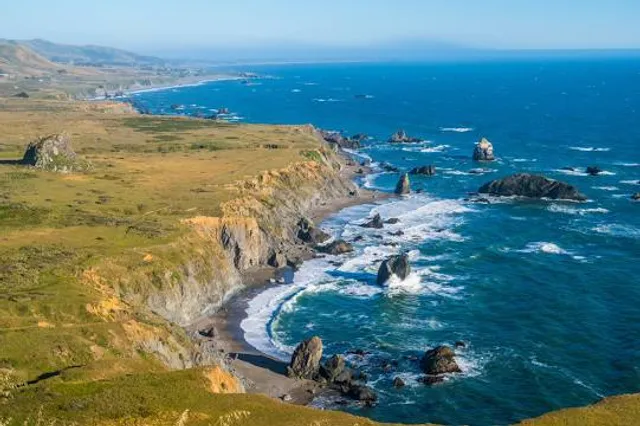
Blue time in Sonoma Coast State Park

Nestled along the stunning northern California coastline, Sonoma Coast State Park is a place of breathtaking beauty and profound historical echoes. 🏞️ Established in 1934, this magnificent park protects a dramatic 17-mile stretch of shoreline between Jenner Bay and Bodega Bay. It's a realm where the raw power of the Pacific Ocean meets serene landscapes, featuring picturesque beaches, natural sea arches, and secluded coves that invite contemplation. 🌊☀️ For the nature enthusiast, the park is a living tapestry of wildlife. The thunderous bark of sea lions 🦭 echoes against the cliffs, while harbor seals bob curiously in the waves. During migration seasons, the horizon might be graced by the majestic spout of a gray whale 🐋. The skies and bluffs are alive with a symphony of birdsong, home to a diverse array of species such as sparrows, warblers, finches, and the vibrant flash of an oriole. 🐦️ Each creature plays its part in the park's vibrant ecosystem. But the soul of this land whispers stories from a much deeper past. History buffs can trace footsteps back through millennia. The very geology tells a tale; certain sea stacks bear marks believed to have been left by mammoths 🐘 that roamed this area an astonishing 40,000 years ago. More recently, the 19th century left indelible marks. The remnants of Fort Ross, built by the Russians in Bodega Bay, and the settlement of Fort Ross established by the Russian-American Company in 1812, stand as silent sentinels. This settlement marked the southernmost expansion of Russian colonization in North America. 🏰❄️ The Russian presence here was strategic, yet ultimately fleeting. Fearing the relentless expansion of the British Empire and wishing to avoid a costly confrontation, the Russian Empire made a pragmatic decision. They sold their vast Alaskan territory to the burgeoning United States in 1867, a move that resolved their geopolitical anxieties and reshaped the continent. This historical pivot is a reminder of how empires rise and fall, and how land changes hands. It brings to mind the words of the ancient Hebrew poet: "You set all the boundaries of the earth; you made both summer and winter." 🙏🌍 The boundaries we see are transient, but the earth endures. The primary purpose of the Russian settlement at Fort Ross was not agriculture or permanent colonization, but as a hub for the lucrative fur trade. 🎣🦦 The fortress served as a base for hunting sea otters along the Pacific coast, whose incredibly dense and soft pelts were highly prized in the markets of China and Europe. This pursuit of fur connects this specific location to a much older, even primordial, human story. The narrative of "fur" finds its very first mention in foundational human texts. In the Biblical tradition, the first humans to wear garments of skin were Adam and Eve. 🍎↔️🧥 After they disobeyed by eating the fruit from the tree of knowledge, they became aware of their nakedness and felt shame. Their first instinct was a human solution: "they sewed fig leaves together and made themselves loincloths." But the Creator, in an act interpreted as representing grace and atonement, replaced these makeshift coverings. The scripture says, "The Lord God made garments of skin for Adam and his wife and clothed them." This substitution is deeply symbolic. Why replace the fig leaves? 🤔 Because leaves are a human effort—they are temporary, they wither, crack, and ultimately fail to provide adequate or lasting cover. The garments of skin, however, were durable, offering true and lasting protection. This story has been interpreted to signify that human efforts to cover our own failings or achieve salvation through our own works are ultimately insufficient and temporary, like fig leaves. A more permanent, provided solution—a covering of skin—was needed. This ancient symbolism stands in stark contrast to the modern use of fur. Today, the wearing of fur is largely divorced from necessity or profound symbolism. 👗💎 It has become a statement of luxury, wealth, and fashion. The process of obtaining fur in the contemporary industry is often criticized for its cruelty and inhumane treatment of animals. 🐾😢 This ethical concern has sparked a powerful global movement. Many animal welfare organizations actively campaign for the abolition of the fur industry, urging consumers to boycott fur products and participate in protests. Their message is clear: what was once a provision for basic need or a profound symbol has been corrupted into an unnecessary indulgence that causes immense suffering. Therefore, a visit to Sonoma Coast State Park is more than a scenic getaway. It is a layered experience. It's feeling the ocean spray on your face, hearing the bark of sea lions, and walking near the old walls of Fort Ross. 🤯✨ It’s a chance to reflect on the immense sweep of time—from mammoths to Russian traders—and to ponder the complex #US #CA #Sonoma
Related posts
Trip to SonomaSan Luis Obispo: The Charming Halfway Stop on California’s Highway 1Bay-Area Hidden WinerySonoma Coast State Park, CaliforniaSan Miguel de Allende : City of Twilight A California Seaside Amusement Park You Have to Visit Once in Your Li
Daisy Meadows
Daisy Meadows
4 months ago
Daisy Meadows
Daisy Meadows
4 months ago
no-comment

No one has commented yet...

Blue time in Sonoma Coast State Park

Nestled along the stunning northern California coastline, Sonoma Coast State Park is a place of breathtaking beauty and profound historical echoes. 🏞️ Established in 1934, this magnificent park protects a dramatic 17-mile stretch of shoreline between Jenner Bay and Bodega Bay. It's a realm where the raw power of the Pacific Ocean meets serene landscapes, featuring picturesque beaches, natural sea arches, and secluded coves that invite contemplation. 🌊☀️ For the nature enthusiast, the park is a living tapestry of wildlife. The thunderous bark of sea lions 🦭 echoes against the cliffs, while harbor seals bob curiously in the waves. During migration seasons, the horizon might be graced by the majestic spout of a gray whale 🐋. The skies and bluffs are alive with a symphony of birdsong, home to a diverse array of species such as sparrows, warblers, finches, and the vibrant flash of an oriole. 🐦️ Each creature plays its part in the park's vibrant ecosystem. But the soul of this land whispers stories from a much deeper past. History buffs can trace footsteps back through millennia. The very geology tells a tale; certain sea stacks bear marks believed to have been left by mammoths 🐘 that roamed this area an astonishing 40,000 years ago. More recently, the 19th century left indelible marks. The remnants of Fort Ross, built by the Russians in Bodega Bay, and the settlement of Fort Ross established by the Russian-American Company in 1812, stand as silent sentinels. This settlement marked the southernmost expansion of Russian colonization in North America. 🏰❄️ The Russian presence here was strategic, yet ultimately fleeting. Fearing the relentless expansion of the British Empire and wishing to avoid a costly confrontation, the Russian Empire made a pragmatic decision. They sold their vast Alaskan territory to the burgeoning United States in 1867, a move that resolved their geopolitical anxieties and reshaped the continent. This historical pivot is a reminder of how empires rise and fall, and how land changes hands. It brings to mind the words of the ancient Hebrew poet: "You set all the boundaries of the earth; you made both summer and winter." 🙏🌍 The boundaries we see are transient, but the earth endures. The primary purpose of the Russian settlement at Fort Ross was not agriculture or permanent colonization, but as a hub for the lucrative fur trade. 🎣🦦 The fortress served as a base for hunting sea otters along the Pacific coast, whose incredibly dense and soft pelts were highly prized in the markets of China and Europe. This pursuit of fur connects this specific location to a much older, even primordial, human story. The narrative of "fur" finds its very first mention in foundational human texts. In the Biblical tradition, the first humans to wear garments of skin were Adam and Eve. 🍎↔️🧥 After they disobeyed by eating the fruit from the tree of knowledge, they became aware of their nakedness and felt shame. Their first instinct was a human solution: "they sewed fig leaves together and made themselves loincloths." But the Creator, in an act interpreted as representing grace and atonement, replaced these makeshift coverings. The scripture says, "The Lord God made garments of skin for Adam and his wife and clothed them." This substitution is deeply symbolic. Why replace the fig leaves? 🤔 Because leaves are a human effort—they are temporary, they wither, crack, and ultimately fail to provide adequate or lasting cover. The garments of skin, however, were durable, offering true and lasting protection. This story has been interpreted to signify that human efforts to cover our own failings or achieve salvation through our own works are ultimately insufficient and temporary, like fig leaves. A more permanent, provided solution—a covering of skin—was needed. This ancient symbolism stands in stark contrast to the modern use of fur. Today, the wearing of fur is largely divorced from necessity or profound symbolism. 👗💎 It has become a statement of luxury, wealth, and fashion. The process of obtaining fur in the contemporary industry is often criticized for its cruelty and inhumane treatment of animals. 🐾😢 This ethical concern has sparked a powerful global movement. Many animal welfare organizations actively campaign for the abolition of the fur industry, urging consumers to boycott fur products and participate in protests. Their message is clear: what was once a provision for basic need or a profound symbol has been corrupted into an unnecessary indulgence that causes immense suffering. Therefore, a visit to Sonoma Coast State Park is more than a scenic getaway. It is a layered experience. It's feeling the ocean spray on your face, hearing the bark of sea lions, and walking near the old walls of Fort Ross. 🤯✨ It’s a chance to reflect on the immense sweep of time—from mammoths to Russian traders—and to ponder the complex #US #CA #Sonoma

Sonoma
Sonoma Coast State Park
Sonoma Coast State ParkSonoma Coast State Park