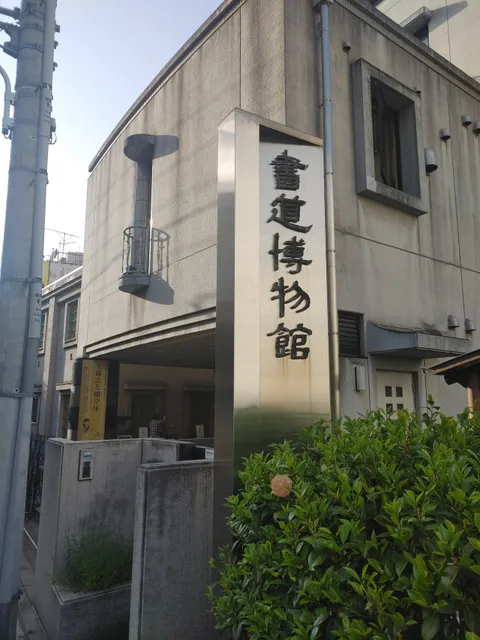

Calligraphy Museum: The "Twenty Dragon Gate Pieces" Exhibition 🎨
The Tokyo Taito Ward Calligraphy Museum, with its core collection based on the old holdings of oil painter Nakanishi Fuzetsu, is heavily influenced by the Wei Steles in his calligraphy. 🎢🍃 During the First Sino-Japanese War, Nakanishi Fuzetsu was sent to China as a war correspondent. 🌿🌟Interestingly, the day before he arrived in China, a ceasefire agreement was reached between China and Japan. During his stay in China, Nakanishi acquired numerous Wei Stele works, including the famous Longmen Inscriptions, which became the foundation of his personal style. 🎢🍃 The Wei Steles of the Longmen Grottoes are extremely well-preserved, with some being highly revered, such as the "Four Dragon Gate Pieces" and the "Twenty Dragon Gate Pieces." 🌿🌟These were mostly dedicated by various social groups in the Guyang Cave of the Longmen Grottoes after Emperor Xiaowen moved the capital to Luoyang. This exhibition at the Calligraphy Museum also features Northern Dynasties sutras, including the Northern Liang Juqu Anzhou's Wish Sutra unearthed in Turpan; and the Northern Wei Dongyang King Yuan Rong's Wish Sutra from the Dunhuang Mogao Grottoes' Library Cave. 🎢🍃 Yuan Rong is also the most likely patron of the famous Mogao Cave 285. It's truly a high-quality exhibition for appreciating Northern Wei calligraphy. 🌟 🌿🌟 #WeiStele 🌿#LongmenGrottoes 🌄#Dunhuang 🌟