
🌄 Fushimi Inari Taisha in Kyoto: How to Explore?
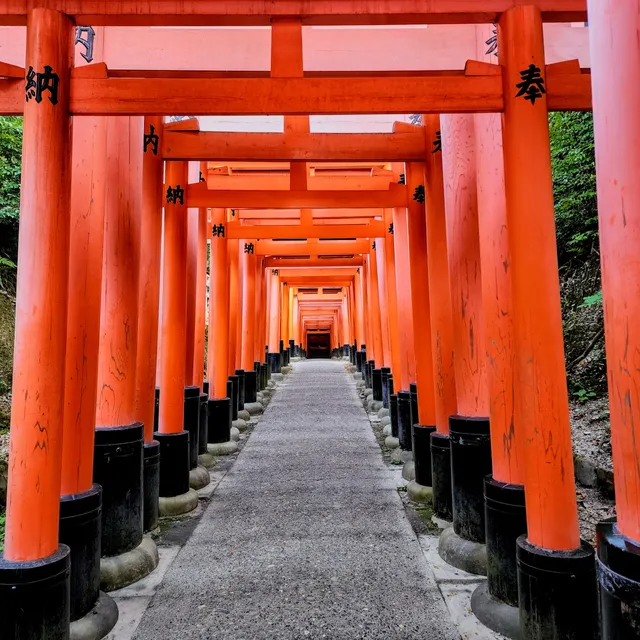
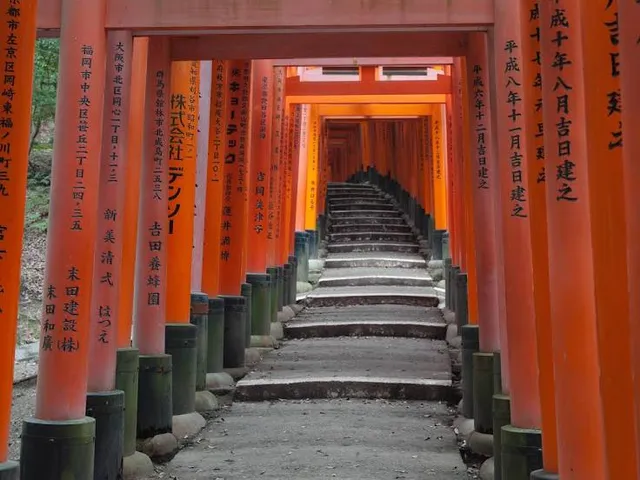
📌 Fushimi Inari Taisha, Japan Built in the 8th century, it mainly enshrines Ukanomitama no Mikoto and other Inari deities. Inari is the god of agriculture and commerce. 🙏🏻 Devotees come to pray for bountiful harvests, prosperous business, and traffic safety. ✨ Fushimi Inari Taisha is the head shrine of over 30,000 Inari shrines across Japan. ❗ It is also one of the oldest and most popular shrines in Kyoto city. Open 24 hours, 🆓 and no admission fee required. 📝 Historical Background 🔸 Inari was formerly regarded as the clan deity of the powerful Hattori clan in the Kyoto area. The shrine's hereditary priests belong to the Onishi family. 🔸 Due to the influence of the Hattori clan and the spread of Esoteric Buddhism, the worship of Inari spread throughout the country. 🔸 After the Middle Ages, with the development of industry and commerce, Inari came to be seen not only as the god of agriculture but also as the god of industry, commerce, the protector of homes, and a versatile god of fortune and prosperity. It became popular not only among farmers but also among scholars and samurai. 🔥 The most famous feature here is the dense vermilion "Senbon Torii" behind the main shrine, one of Kyoto's most iconic landscapes, which also appeared in the movie "Memoirs of a Geisha." ★ The large torii at the entrance of Fushimi Inari Taisha was donated by Toyotomi Hideyoshi in 1589. 🦊 Behind the massive red torii, the shrine has stone foxes on its sides (these are the white foxes, messengers of Inari). The entire hillside is covered with countless red torii that connect to form an endless tunnel. 👉 Explanation ✔ Torii ★ Refers to the gate in a shrine that symbolizes the entrance to the divine domain. ♥ Torii are offerings made to the shrine after a wish has been granted, as a way to express gratitude to the deities. #Travel #OffTheBeatenPath #TravelGuide #Japan #JapanTravel #KyotoTravel