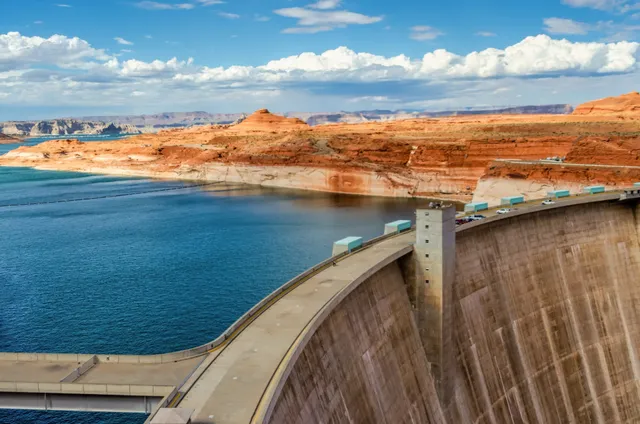

Glen Canyon National Recreation Area 🌄
Nestled in Page, Arizona, Glen Canyon National Recreation Area revolves around the Glen Canyon Dam and the breathtaking Lake Powell it created. 🌉 Built in 1966, this 216-meter-high concrete arch dam (second only to Hoover Dam) stretches 475 meters across the Colorado River, forming America’s second-largest artificial lake 💦—boasting 3,000+ km of shoreline, longer than the entire U.S. West Coast! The dam powers 500,000 homes 🏠 and regulates winter snowmelt/summer rains to ensure stable water supplies for California, Arizona, Nevada, and Mexico. It also mitigates floods 🌊, protecting downstream areas like the Grand Canyon. Yet, its legacy is controversial. 🌍 The dam submerged Glen Canyon’s waterfalls, side canyons, and biodiversity. Cold water (8–10°C) from Lake Powell’s depths replaced seasonal warm flows, altering ecosystems. 🌄Sediment trapping cleared downstream rivers, eroding beaches critical for habitats. Species adapted to natural flood cycles faced disruption. In 1996, the Bureau of Reclamation tested controlled floods 🌧️ to mimic natural processes, partially restoring ecosystems. Today, the dam faces a new crisis: severe drought. Low water levels threaten hydropower and downstream water security for millions. Nearby, Horseshoe Bend 🏞️—a 360° meander carved by the Colorado River—offers jaw-dropping views of turquoise waters against red sandstone cliffs. 📸 A photographer’s paradise! This recreation area blends human ingenuity 🏗️ and nature’s raw beauty —a testament to both progress and the need for balance. #Arizona #Page #HorseshoeBend #GlenCanyonDam 🌵