
Not a Fairytale, But Living Medieval History: Tallinn, Estonia
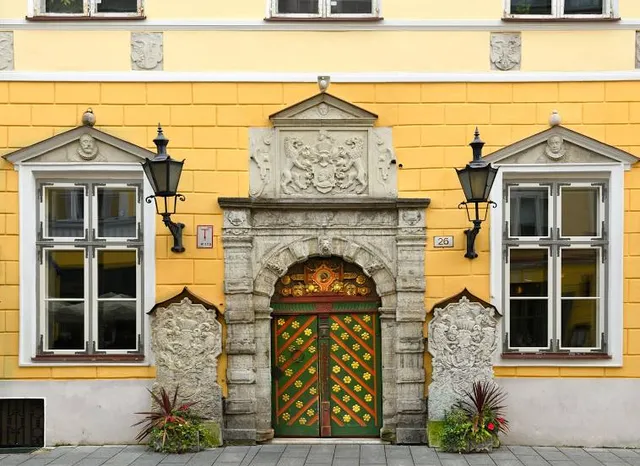
💗This is a "vertically stratified" city—where nobility ruled above the walls, and merchants and artisans lived below. To truly understand Tallinn, 💗you must explore its height-based power structure.🌳 💗Toompea Hill | The Seat of Power 💗 Not just a viewpoint—this was the Teutonic Knights' stronghold since the 13th century, 🌈later controlled by Swedish nobles. Today’s Toompea Castle houses Estonia’s parliament, 🌈but its foundations trace back to a Crusader-era stone fortress. 🌈The hill’s German aristocracy lived separately from the merchant class below—medieval Tallinn was essentially 🌈two cities in one, with strict social divides (even intermarriage was rare). 🌀St. Mary's Cathedral | A Noble "Archive" in Stone 🌀 Tallinn’s oldest church (early 1200s) appears plain outside, but inside, its tombstones, 🌀carvings, and coats of arms document the Baltic German nobility network.🌳 🌀 Look for the wall-mounted family crests—traces of Silesian, Livonian, and Teutonic lineages that once ruled here. ✨The Blackheads Guild Ruins | Merchants & Mercenaries ✨The Blackheads Brotherhood was a medieval guild for young, unmarried foreign merchants—part trade union, part militia—unique to Estonia and Latvia.✨ ✨Laboratooriumi Street | A Hidden Defense Corridor ✨This unrenovated alley along the city walls once served as a passage for guards and craftsmen.🌳 🌿 Its original cobblestones and stonework preserve Tallinn’s earliest urban fabric. 🌿Tallinn Isn’t "Frozen"—It’s a Multi-Empire Palimpsest 🌿 Beyond German influence, this was a contested border city ruled by Sweden, Denmark, 🌿and Russia—each leaving traces in architecture, street names, and even church affiliations. 🌳Tallinn is no fairytale town. It’s a miraculously preserved medieval puzzle, 🌳carved and recarved by empires on the Baltic coast. #MedievalMarvel #Estonia #Tallinn #LivingHistory