
Orlando Travel Notes
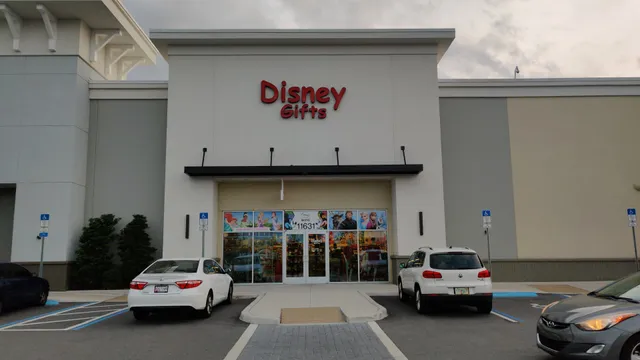
A few years ago, in Professor Niu Hongbao’s course Modern Western Aesthetics, a lecture on Disneyland left me deeply stirred. He described Disney as a highly integrated cultural apparatus — one that folds together aesthetic experience, capitalist logic, technology, and ideological narrative into a seamless mechanism designed to synchronize seeing, walking, consuming, and emotional response within “the happiest place on Earth.” At the time, I was still a happy little princess enchanted by immersive theme parks, and that cool, sharp cultural critique struck me with force. Yet it was also then that I began to understand how humanities scholars use themselves as method, drawing on their own perceptions, emotions, and senses to observe and analyze the world. So, from the standpoint of personal experience, I’d like to share some thoughts about Disney in Orlando. Even before entering the park, I wondered: Why Orlando, Florida? Year-round warm weather is one reason — it means year-round operation, year-round cash flow, year-round emotional production. But Orlando’s beauty isn’t the key. What matters first is accessibility. The site’s former identity as an air force base laid the groundwork for a dense network of flight routes, while interstate highways branch out in all directions. Access is an underrated aesthetic — it determines who can come, how they come, and how a constant stream of visitors is funneled into the vacation kingdom. Orlando is, in a sense, “empty.” Before Disney’s development, it was mostly scrubland and swamps. Unlike European cities laden with history or immovable cultural heritage, Orlando was a cultural blank slate — infinitely plannable, endlessly rewritable, a perfect lab for large-scale cultural simulation. In this highly malleable terrain, Disney built a world. Orlando’s dehistoricized geography allowed Disney to rearrange nature, history, and the globe without confronting reality. From this angle, Disney is a microcosm of America — and America is a macro Disneyland. Disney excels at using “fakeness” to conceal reality, openly declaring its own artifice to affirm — and play with — the systematic, experiential “real.” Fantasy is contained within clearly marked boundaries, allowing the world outside the park to still be perceived as natural and true. And America, as the world’s largest Disneyland, continues to attract tourists in pursuit of the “American Dream.” Perhaps the true function of Disneyland is to make us believe that “America” really exists 😄. Next: Walking inside the dream — performative joy, staged authenticity, and the machinery of memory. Stay tuned 🏰✍️🎢 #US #Florida #Orlando