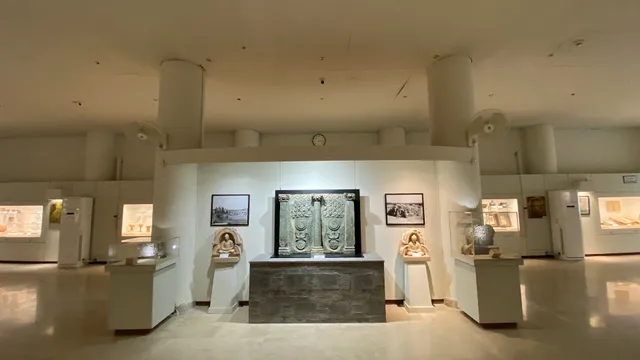

Pakistan 🇵🇰 | Islamabad Museum
🏛️ A Crossroads of Civilizations: Where East Met West Islamabad’s museums reveal how this region pulsed as the Silk Road’s creative laboratory, where cultures collided to birth artistic revolutions: 🪔 Gandhara Art: The Buddha’s Hellenistic Makeover (1st-5th c. AD) • Greek Hands, Buddhist Soul: Afghan stonemasons trained in Greco-Roman realism sculpted the first-ever human Buddha images—serene faces with Apollo’s curls, draped in Roman togas. • Iconic Artifact: The "Fasting Buddha" (Taxila Museum)—emaciated ribs carved with anatomical precision, merging Greek realism with Buddhist asceticism. 🌀 The Twilight of Buddhism (7th c. Onward) Under Islamic rule and fading patronage, Buddhist monasteries: ✓ Became Fortresses: Takht-i-Bahi’s hilltop complex turned into a defensive stronghold. ✓ Transformed Art: Gold-leaf Buddha murals in Swat Valley were repurposed as Islamic geometric art templates.Poignant Relic: A defaced Bodhisattva statue in Lahore Museum—its eyes chiseled away during cultural shifts. 🔍 Where to See These Treasures? 1️⃣ Taxila MuseumStar Exhibit: Stone reliquary with Ashoka’s edicts in Greek and Aramaic.💎Hidden Gem: A tiny terracotta Alexander the Great figurine (proof of Greek settlers?). 2️⃣ Lok Virsa Museum’s Gandhara WingInteractive Display: Touchscreen map tracing how Buddha’s image evolved from footprints to Greek-inspired statues. 3️⃣ Peshawar Museum (Day Trip from Islamabad)Kanishka’s Casket: Gold-inscribed box holding the Buddha’s ashes (on rare display). 🎭 Why This Matters Today These artifacts aren’t just relics—they’re Pakistan’s multicultural DNA: Modern Pakistani truck art borrows Gandhara’s lotus motifs. The same marble quarries that supplied Buddhist stupas now build Islamabad’s mosques. #Islamabad#trip diary#travel guide#Pakistan#Pakistan guide# Islamabad Museum#Pakistan travel