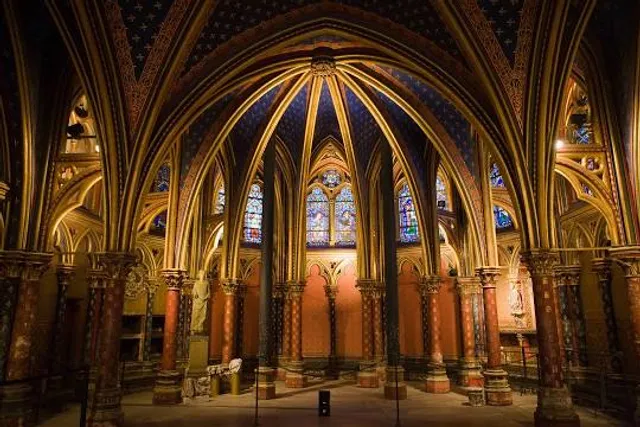

Paris, France | Sainte-Chapelle 🌹
In the first century BC, the Parisii, a Gallic tribe, settled on a small island in the Seine River, which later became the Île de la Cité, and thus the city of Lutetia was born. In the fifth century, Paris was born. In the sixth century, Clovis became the first king of the Franks and made the Palace of the Cité his royal residence. His son, Childebert, ordered the construction of Paris's first cathedral. By the end of the tenth century, Hugh Capet, the first king of the Capetian dynasty, established his curia and administrative offices in the Palace of the Cité, making it the center of royal power. Both the Sainte-Chapelle and the famous Notre-Dame Cathedral are located on the historic Île de la Cité. Sainte-Chapelle is a Gothic church, donated by King Louis IX of France. King Louis IX wished to preserve the relics of Christ's Passion in Sainte-Chapelle, such as the Crown of Thorns and fragments of the True Cross. The most famous feature of Sainte-Chapelle is its rose stained-glass windows, which is why it is called the "Rose Chapel" in the movie "The Da Vinci Code." The prime meridian, also known as the rose line, runs through the central axis of Sainte-Chapelle. 🧭 🎫 Admission: 13 euros per person 💶 The Conciergerie, an ancient prison, is located next to it, and both are included in the museum pass, with the option to book in advance. It is the most heavily secured site in all of Paris, without a doubt. #Paris #France #ParisTravelRecommendations #ParisChurches #SainteChapelle #RoseChapel #IleDeLaCite