

HTML SitemapExplore
logo
Find Things to DoFind The Best Restaurants

🔴 Plaza de la Revolución|Cuba's Red Heart & Revolutionary Totem

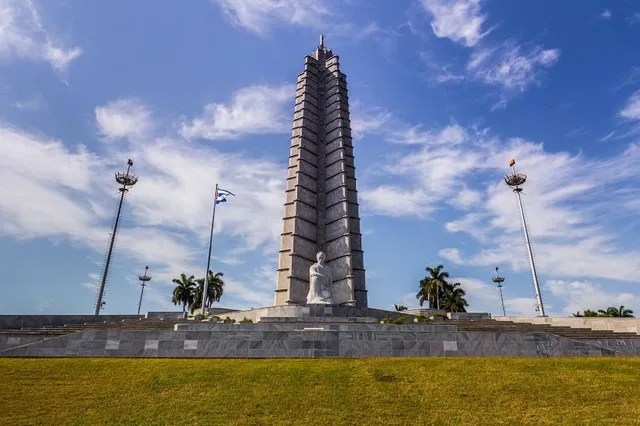
Architectural Epic: 11 Acres of Revolutionary Aesthetics One of the world's largest urban plazas, Havana's Plaza de la Revolución stuns with its 11-acre geometric scale—French designers merged minimalist layout with revolutionary symbolism. Gray granite floors accommodate million-strong rallies, while surrounding buildings' angular lines evoke the precision of a guillotine. Standing at its center, you feel the dual heat of Caribbean sun and revolutionary ideals🌞 🔧 Steel Totem: Che Guevara's Gaze & Revolutionary Code ✅ Che Guevara Steel Relief Global Symbol of Counterculture: The 37m-tall steel on the Interior Ministry building casts a shadow. Based on Alberto Korda's 1960 photo Guerrillero Heroico, the beret-clad gaze has become a rebel icon—from Parisian cafés to Tokyo's Shibuya, this face outshines any flag📸 Inscribed Revolutionary Oath: Below the statue, Che's "Hasta La Victoria Siempre" (Ever Onward to Victory) is etched in polished stainless steel. Rain only makes the Spanish letters shinier, as if revolutionary vows never fade with time 📡 Twin Icons: Revolutionary Stars in Dialogue ✅ Camilo Cienfuegos Mosaic Silent Strength of a Native Hero: Added to the Telecommunications Building in 2009, Camilo's portrait diagonally opposes Che's. A Havana-born revolutionary and Fidel Castro's right-hand man, he died in a 1959 mystery plane crash. The mosaic uses blue tiles that shimmer in sunlight, honoring the "Caribbean Guerilla"🌊 Popularity Gap Explained: While Che became an international icon, Camilo is beloved locally—elders often tell grandchildren under his portrait how he smuggled weapons in fishing boats ⭐️ National Soul: José Martí's Star Monument ✅ José Martí Memorial Tower 109m Spiritual Coordinate: The pentagonal tower on the plaza's north pierces the sky at 109m—1+0+9=10, symbolizing Martí's 1853 birth year (the snake, his zodiac sign, means rebirth in Cuban culture). White marble walls hide an elevator to the observatory, where a 360° view reveals the tower aligning with the colonial governor's mansion, a visual metaphor of revolution transcending history🗼 Bronze Gaze of a Visionary: The 6m bronze Martí statue wears a tailcoat, right hand clutching a book, eyes fixed on the Caribbean—this 19th-century pioneer's cry "Fatherland Above All" remains Cuba's national mantra 🕊️ Seat of Power: Materializing Revolutionary Ideals ✅ Government Complex as Political Space South plaza's twin buildings form Cuba's power core: ✅ Interior Ministry (Che's building): Handles security and immigration, guards in olive uniforms stand at attention, rifle bayonets glinting ✅ Council of Ministers Building: Glass walls reflect the plaza; Wednesday cabinet meetings happen here, with officials discussing policies under Che's "watch" Architectural Material Symbolism: All government buildings use gray precast concrete—"low-cost, high-symbolism" materials embody socialist austerity and "revolution needs no luxury" 📜 Plaza Narrative: From Colonial Ruins to Sacred Site Historical Layers: The plaza stood on a 19th-century racetrack where Spaniards watched horse races; now hoofbeats yield to rally chants. Bronze plaques mark milestones: Castro's 1959 victory speech, the 1961 million-strong "Socialist Revolution" rally📅 Blending Sacred & Everyday: Morning sees schoolchildren raising flags at Martí's monument, afternoon taxi drivers listen to baseball under trees, couples watch sunset gild Che's portrait—revolutionary symbols have seeped into Havana's daily life 🌟 Semiotic Reading: Three Men & a Nation's Soul Che's internationalism, Camilo's local spirit, and Martí's nationalism form a trio over the plaza. Touching Martí's marble tower or gazing at Che's steel face, visitors realize: this plaza isn't just political space, but a poem of Cuban identity—here, revolution isn't abstract, but touchable architecture, gazeable icons, and palpable urban breath. #CubaRevolutionLandmark #CheGuevaraSemiotics #HavanaArchitecturalPolitics #PlazaDeLaRevolucionGuide
Related posts
🌟 Boston’s Mariel | Vibes Overload: Cuban Eats + Underground Bar Iconic Cuban Spots in Little Havana Habana Cuban Buffet 🌴: A South American Feast Under California Sun Cuba Libre Cuba Libre Restaurant & Rum Bar 📍10 S 2nd St, Phil🐧 Little Dudu's World Trip|First Stop: Cuba 🇨🇺La Guarida's Colonial Elegance & Michelin-Level Cuban Cuisine
Emma Watson
Emma Watson
5 months ago
Emma Watson
Emma Watson
5 months ago
no-comment

No one has commented yet...

🔴 Plaza de la Revolución|Cuba's Red Heart & Revolutionary Totem

Architectural Epic: 11 Acres of Revolutionary Aesthetics One of the world's largest urban plazas, Havana's Plaza de la Revolución stuns with its 11-acre geometric scale—French designers merged minimalist layout with revolutionary symbolism. Gray granite floors accommodate million-strong rallies, while surrounding buildings' angular lines evoke the precision of a guillotine. Standing at its center, you feel the dual heat of Caribbean sun and revolutionary ideals🌞 🔧 Steel Totem: Che Guevara's Gaze & Revolutionary Code ✅ Che Guevara Steel Relief Global Symbol of Counterculture: The 37m-tall steel on the Interior Ministry building casts a shadow. Based on Alberto Korda's 1960 photo Guerrillero Heroico, the beret-clad gaze has become a rebel icon—from Parisian cafés to Tokyo's Shibuya, this face outshines any flag📸 Inscribed Revolutionary Oath: Below the statue, Che's "Hasta La Victoria Siempre" (Ever Onward to Victory) is etched in polished stainless steel. Rain only makes the Spanish letters shinier, as if revolutionary vows never fade with time 📡 Twin Icons: Revolutionary Stars in Dialogue ✅ Camilo Cienfuegos Mosaic Silent Strength of a Native Hero: Added to the Telecommunications Building in 2009, Camilo's portrait diagonally opposes Che's. A Havana-born revolutionary and Fidel Castro's right-hand man, he died in a 1959 mystery plane crash. The mosaic uses blue tiles that shimmer in sunlight, honoring the "Caribbean Guerilla"🌊 Popularity Gap Explained: While Che became an international icon, Camilo is beloved locally—elders often tell grandchildren under his portrait how he smuggled weapons in fishing boats ⭐️ National Soul: José Martí's Star Monument ✅ José Martí Memorial Tower 109m Spiritual Coordinate: The pentagonal tower on the plaza's north pierces the sky at 109m—1+0+9=10, symbolizing Martí's 1853 birth year (the snake, his zodiac sign, means rebirth in Cuban culture). White marble walls hide an elevator to the observatory, where a 360° view reveals the tower aligning with the colonial governor's mansion, a visual metaphor of revolution transcending history🗼 Bronze Gaze of a Visionary: The 6m bronze Martí statue wears a tailcoat, right hand clutching a book, eyes fixed on the Caribbean—this 19th-century pioneer's cry "Fatherland Above All" remains Cuba's national mantra 🕊️ Seat of Power: Materializing Revolutionary Ideals ✅ Government Complex as Political Space South plaza's twin buildings form Cuba's power core: ✅ Interior Ministry (Che's building): Handles security and immigration, guards in olive uniforms stand at attention, rifle bayonets glinting ✅ Council of Ministers Building: Glass walls reflect the plaza; Wednesday cabinet meetings happen here, with officials discussing policies under Che's "watch" Architectural Material Symbolism: All government buildings use gray precast concrete—"low-cost, high-symbolism" materials embody socialist austerity and "revolution needs no luxury" 📜 Plaza Narrative: From Colonial Ruins to Sacred Site Historical Layers: The plaza stood on a 19th-century racetrack where Spaniards watched horse races; now hoofbeats yield to rally chants. Bronze plaques mark milestones: Castro's 1959 victory speech, the 1961 million-strong "Socialist Revolution" rally📅 Blending Sacred & Everyday: Morning sees schoolchildren raising flags at Martí's monument, afternoon taxi drivers listen to baseball under trees, couples watch sunset gild Che's portrait—revolutionary symbols have seeped into Havana's daily life 🌟 Semiotic Reading: Three Men & a Nation's Soul Che's internationalism, Camilo's local spirit, and Martí's nationalism form a trio over the plaza. Touching Martí's marble tower or gazing at Che's steel face, visitors realize: this plaza isn't just political space, but a poem of Cuban identity—here, revolution isn't abstract, but touchable architecture, gazeable icons, and palpable urban breath. #CubaRevolutionLandmark #CheGuevaraSemiotics #HavanaArchitecturalPolitics #PlazaDeLaRevolucionGuide

Havana
Revolution Square
Revolution SquareRevolution Square