
🤫 Possibly the Least Known, But My Favorite National Park 🇺🇸
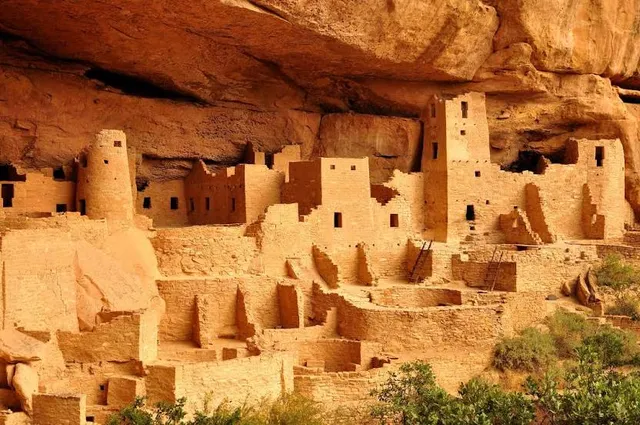
After seeing so much nature, I needed a dose of human civilization. Among the six or seven national parks I’ve visited, this one is my absolute favorite. No contest. Mesa Verde National Park – sometimes translated as Green Tableland) – truly lives up to its name as a mesa.😘 Let’s be real: almost every natural landscape I’ve seen abroad exists in China too, just with differences in scale, climate, or altitude. But cultural landscapes? They’re unique everywhere. Experiencing nature and human history are completely different feelings. Every corner of the world has its own culture, lifestyle, traditions, and rituals – and ancient dwellings are one of the best ways to witness them. That’s why I was thrilled to visit Mesa Verde, the only U.S. national park dedicated to preserving architectural ruins – and also the least crowded (probably because not many people are into staring at old mud walls 😆). Unlike Central and South America, North America had no vast empires. Most Indigenous peoples here were initially nomadic, but a few settled down – like the cliff dwellers of Mesa Verde, who built homes into canyon walls and rock crevices. Since it was winter, we couldn’t enter the cliffs themselves, but we admired them from across the canyon. Some cliffs and dwellings have already collapsed. Eventually, time will wear down these massive rock formations, and the ruins will be crushed. Traces of this civilization will disappear forever.👍 The ancient Pueblo people grew corn on the mesa and lived in cliffside communities. Each settlement typically had two types of structures:😍 1️⃣ Ordinary houses 2️⃣ Cylindrical kivas The houses were stacked neatly – some one or two stories, others four or five layers high. People often entered through the roof via ladders (similar to Çatalhöyük in Turkey), which could be pulled up for defense. Kivas were likely used for ceremonies and gatherings (though they look a bit like granaries). By the late 13th century, the Pueblo people abandoned these homes – archaeologists believe drought and crop failure forced them to leave.😁 Early humans lived together in dark caves. When they moved to the plains, they began building houses. Limited construction skills eventually led to the shift from communal living to family units.😊 So which came first – the family or the architecture? I lean toward the idea that architecture drove separation. Still, some cultures continued living communally even after settling down – like the Pueblo people with their longhouses.👌 Unfortunately, they were closed due to the season, but I’ll be back! #WorldHeritage #USATravel #RoadTrip #NationalParks #MesaVerde #AncientArchitecture