

HTML SitemapExplore
logo
Find Things to DoFind The Best Restaurants

South Africa’s BOSJES | A Church’s Light Awakens the Entire Valley

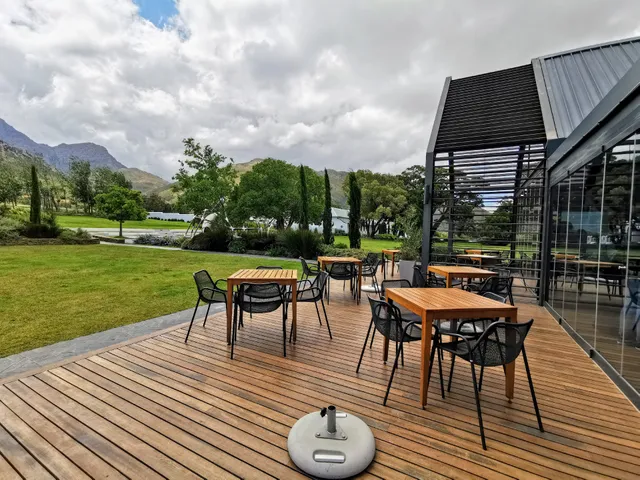
🚗 A two-hour drive from Cape Town, nestled in the Breedekloof Valley of the Western Cape, lies BOSJES—a surreal estate that’s more than a hotel; it’s a dialogue between nature and architecture, history and the present. 🏛 1. Spatial Narrative Starting with a "Church" The first to capture public attention is BOSJES Chapel. Designed by London’s Steyn Studio, this small church resembles a white, folded ribbon floating in the valley. Its concrete roof curves gently, mirroring the undulating mountains around it—striking the perfect balance between the reverence of a religious space and the softness of a naturally formed landscape. The curves aren’t just decoration; they’re an extension of the terrain. The chapel feels like a vessel that "materializes" holiness into light and shadow. Floor-to-ceiling glass blurs the line between inside and out, leaving the space so pure it borders on abstraction—a "transparent faith," and a modern architectural reimagining of sacred ground. 🏡 2. A Modern Translation of a Historic Estate The hotel itself occupies an 18th-century Dutch colonial estate, renovated by local architects Hugo Hamity Architects. Rather than a heavy-handed "renovation," the design honors time: preserving Cape Dutch arches, white walls, and reed roofs; and harmonizing old and new through material, proportion, and rhythm. "Harmony without uniformity" isn’t a compromise of form, but a resonance of time. Each guest room frames a unique view—architecture doesn’t just "look at the mountains"; it "borrows" them into a living painting. You’ll realize: the windows here aren’t just for seeing the scenery—they become the scenery. 🌿 3. Architecture Beyond Buildings: Landscape Design The entire BOSJES estate weaves architecture, paths, water, and plantings into one. The open-air restaurant floats like a pavilion; the children’s playground is sculpted into the grassy slope. Paths are lines, tree groves are planes, pools are mirrors—architectural language extends to the ground, even "designing" nature into part of the space. Here, architecture isn’t the star, and nature isn’t the backdrop—they’re a delicate co-creation. #BlackEyesCulturalTravel #LostVillages #LesserKnownDestinations #NatureAndArchitecture #UniqueTravelExperiences #ArchitecturalAesthetics #TheEndOfTheWorldAndHardBoiledWonderland #TravelFirstThinkLater #CulturalDecoder
Related posts
🌊 Summer in South Africa belongs to the sea!🍽️ Cape Town Food Guide: N Days, N Meals Sorted!🔥 2025 Ultimate Guide: Cape Town’s 10 Must-Try Restaurants!🇿🇦 Cape Town, South Africa | The Most Hyped Destination🇿🇦 Cape Town Weekend Getaway from Joburg🇿🇦 Cape Town | Stunning Coastal Bus Route
Melisande Hall
Melisande Hall
4 months ago
Melisande Hall
Melisande Hall
4 months ago
no-comment

No one has commented yet...

South Africa’s BOSJES | A Church’s Light Awakens the Entire Valley

🚗 A two-hour drive from Cape Town, nestled in the Breedekloof Valley of the Western Cape, lies BOSJES—a surreal estate that’s more than a hotel; it’s a dialogue between nature and architecture, history and the present. 🏛 1. Spatial Narrative Starting with a "Church" The first to capture public attention is BOSJES Chapel. Designed by London’s Steyn Studio, this small church resembles a white, folded ribbon floating in the valley. Its concrete roof curves gently, mirroring the undulating mountains around it—striking the perfect balance between the reverence of a religious space and the softness of a naturally formed landscape. The curves aren’t just decoration; they’re an extension of the terrain. The chapel feels like a vessel that "materializes" holiness into light and shadow. Floor-to-ceiling glass blurs the line between inside and out, leaving the space so pure it borders on abstraction—a "transparent faith," and a modern architectural reimagining of sacred ground. 🏡 2. A Modern Translation of a Historic Estate The hotel itself occupies an 18th-century Dutch colonial estate, renovated by local architects Hugo Hamity Architects. Rather than a heavy-handed "renovation," the design honors time: preserving Cape Dutch arches, white walls, and reed roofs; and harmonizing old and new through material, proportion, and rhythm. "Harmony without uniformity" isn’t a compromise of form, but a resonance of time. Each guest room frames a unique view—architecture doesn’t just "look at the mountains"; it "borrows" them into a living painting. You’ll realize: the windows here aren’t just for seeing the scenery—they become the scenery. 🌿 3. Architecture Beyond Buildings: Landscape Design The entire BOSJES estate weaves architecture, paths, water, and plantings into one. The open-air restaurant floats like a pavilion; the children’s playground is sculpted into the grassy slope. Paths are lines, tree groves are planes, pools are mirrors—architectural language extends to the ground, even "designing" nature into part of the space. Here, architecture isn’t the star, and nature isn’t the backdrop—they’re a delicate co-creation. #BlackEyesCulturalTravel #LostVillages #LesserKnownDestinations #NatureAndArchitecture #UniqueTravelExperiences #ArchitecturalAesthetics #TheEndOfTheWorldAndHardBoiledWonderland #TravelFirstThinkLater #CulturalDecoder

Cape Town
BOSJES
BOSJESBOSJES