

HTML SitemapExplore
Find Things to DoFind The Best Restaurants

The Astrology Academy of Bhutan 🔮

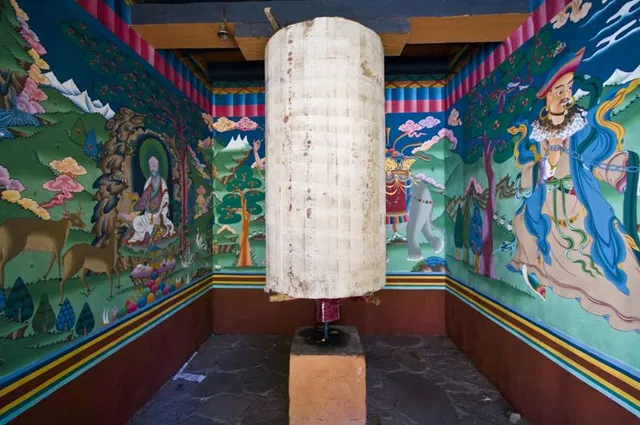
By the river valley of Thimphu lies a monastery that “tells stories” — Pangri Zampa Monastery. Its pink-white walls reflect in the river, and the colorful curtains hanging under the eaves flutter in the wind, like the skirts of flamenco dancers spinning💃 More than just a “photogenic star” for tourists, it’s the most sacred center of traditional astrology in Bhutan. Since its founding in the early 16th century, it has stood like an open astrological book, recording the connection between the Himalayan stars and the human world. 🏯 Architecture as Frozen Poetry: Timeless Beauty in Pink Walls and Colorful Curtains The first time I approached Pangri Zampa, I was struck by its “contrasting charm” — a solemn monastery, yet brimming with lively energy: The main building follows Bhutan’s traditional “dzong-style” architecture, with a stone foundation as solid as an old pine rooted in the valley. The pink-white walls, streaked with faint watermarks from rain, exude a gentle sense of age; The most stunning feature is the colorful curtains under the eaves: layers of scarlet, bright yellow, and indigo cloth rustle in the wind, like countless ribbons dancing a silent dance. Locals say these colors correspond to the “five elements” in astrology — red for fire, blue for water — each piece of fabric holding reverence for heaven and earth The monastery’s wooden doors are carved with astrological symbols: circles representing the sun and moon, geometric shapes symbolizing planets, even the door knockers are copper astrolabes. When you push the door, it “dings” like touching a switch to time. 🔮 The “Heart” of Bhutanese Astrology: Where Stars and Humans Converse Pangri Zampa’s most unique role is as Bhutan’s premier traditional astrology academy. After the high lama Zhabdrung Ngawang Namgyal arrived here in 1616, he transformed it into a hub for spreading astrology — The temple’s scripture hall houses hundreds of ancient astrological manuscripts, written on Tibetan paper with cinnabar and gold powder. They depict star charts, predicting eclipses, marking solar terms, and even interpreting personal fortunes; Monks still study astrology here today. They advise locals on auspicious dates (for weddings, funerals, house-building) and draw “natal charts.” It’s said even important ceremonies of Bhutan’s royal family reference their astrological guidance; There’s a small observatory in the courtyard, with carved stone scales. On clear days, monks observe stellar trajectories here. Standing by the observatory and looking out at the valley, it dawns on you: Bhutanese devotion to astrology may stem from living in a mountainous land, where stars are the clearest “navigation.” 📜 The Lama’s Footsteps: A Tale That Rewrote the Monastery’s Fate Zhabdrung Ngawang Namgyal’s arrival turned Pangri Zampa from an ordinary monastery into an astrological sanctuary. This high lama from Tibet not only mastered astronomy but also blended astrology with Bhutan’s local culture — his manuscripts combine the rigor of Indian astrology with Bhutan’s mountain deity legends, making “star-gazing” a bridge between heaven, ancestors, and the present. His portrait still hangs in the scripture hall, depicting him holding an astrolabe, gaze fixed on the valley outside the window, as if still watching the celestial changes over this land. Our guide said: “For Bhutanse, Pangri Zampa isn’t just a place to study astrology — it’s the source of wisdom that ‘knows how to converse with heaven and earth.’” 📸 Visiting Tips: Location: Along Thimphu’s river valley, ~3km from the city center, 10 minutes by taxi. The ride passes through valley fields (barley fields); Best photo time: Early morning or evening, when sunlight slants on the pink walls, casting colorful curtain shadows on the ground like a spilled palette; Notes: Remove shoes in the temple hall, no flash photography. If monks are studying astrology, stay quiet (they don’t mind observers). Leaving, the wind lifted the curtains again, and light and shadow flickered like flowing spots on the ground. Suddenly, I understood why “Bhutan’s mystery hides in details” — here, stars aren’t just distant celestial bodies, but symbols carved in stone, colors dancing in the wind, and reverence flowing in blood. If you’re in Thimphu, don’t miss this monastery that “reads stars.” After all, how often do you get to touch the warmth between stars and humans, within 600-year-old walls? ✨ #Bhutan #Astrology #BhutanTravel #ThimphuSights #BhutanCulture #MysticalBhutan #PangriZampa #HimalayanHeritage
Related posts
Bhutan Travel ~ Outdoor Statue of Sakyamuni- Bhutan: A Landlocked Country in the Himalayas with Unique TraitsBhutan Daily Life: AffordableExploration is endlessBold prediction: The next hiking mecca — BhutanFacts About the Kingdom of Bhutan
Emma Watson
Emma Watson
5 months ago
Emma Watson
Emma Watson
5 months ago
no-comment

No one has commented yet...

The Astrology Academy of Bhutan 🔮

By the river valley of Thimphu lies a monastery that “tells stories” — Pangri Zampa Monastery. Its pink-white walls reflect in the river, and the colorful curtains hanging under the eaves flutter in the wind, like the skirts of flamenco dancers spinning💃 More than just a “photogenic star” for tourists, it’s the most sacred center of traditional astrology in Bhutan. Since its founding in the early 16th century, it has stood like an open astrological book, recording the connection between the Himalayan stars and the human world. 🏯 Architecture as Frozen Poetry: Timeless Beauty in Pink Walls and Colorful Curtains The first time I approached Pangri Zampa, I was struck by its “contrasting charm” — a solemn monastery, yet brimming with lively energy: The main building follows Bhutan’s traditional “dzong-style” architecture, with a stone foundation as solid as an old pine rooted in the valley. The pink-white walls, streaked with faint watermarks from rain, exude a gentle sense of age; The most stunning feature is the colorful curtains under the eaves: layers of scarlet, bright yellow, and indigo cloth rustle in the wind, like countless ribbons dancing a silent dance. Locals say these colors correspond to the “five elements” in astrology — red for fire, blue for water — each piece of fabric holding reverence for heaven and earth The monastery’s wooden doors are carved with astrological symbols: circles representing the sun and moon, geometric shapes symbolizing planets, even the door knockers are copper astrolabes. When you push the door, it “dings” like touching a switch to time. 🔮 The “Heart” of Bhutanese Astrology: Where Stars and Humans Converse Pangri Zampa’s most unique role is as Bhutan’s premier traditional astrology academy. After the high lama Zhabdrung Ngawang Namgyal arrived here in 1616, he transformed it into a hub for spreading astrology — The temple’s scripture hall houses hundreds of ancient astrological manuscripts, written on Tibetan paper with cinnabar and gold powder. They depict star charts, predicting eclipses, marking solar terms, and even interpreting personal fortunes; Monks still study astrology here today. They advise locals on auspicious dates (for weddings, funerals, house-building) and draw “natal charts.” It’s said even important ceremonies of Bhutan’s royal family reference their astrological guidance; There’s a small observatory in the courtyard, with carved stone scales. On clear days, monks observe stellar trajectories here. Standing by the observatory and looking out at the valley, it dawns on you: Bhutanese devotion to astrology may stem from living in a mountainous land, where stars are the clearest “navigation.” 📜 The Lama’s Footsteps: A Tale That Rewrote the Monastery’s Fate Zhabdrung Ngawang Namgyal’s arrival turned Pangri Zampa from an ordinary monastery into an astrological sanctuary. This high lama from Tibet not only mastered astronomy but also blended astrology with Bhutan’s local culture — his manuscripts combine the rigor of Indian astrology with Bhutan’s mountain deity legends, making “star-gazing” a bridge between heaven, ancestors, and the present. His portrait still hangs in the scripture hall, depicting him holding an astrolabe, gaze fixed on the valley outside the window, as if still watching the celestial changes over this land. Our guide said: “For Bhutanse, Pangri Zampa isn’t just a place to study astrology — it’s the source of wisdom that ‘knows how to converse with heaven and earth.’” 📸 Visiting Tips: Location: Along Thimphu’s river valley, ~3km from the city center, 10 minutes by taxi. The ride passes through valley fields (barley fields); Best photo time: Early morning or evening, when sunlight slants on the pink walls, casting colorful curtain shadows on the ground like a spilled palette; Notes: Remove shoes in the temple hall, no flash photography. If monks are studying astrology, stay quiet (they don’t mind observers). Leaving, the wind lifted the curtains again, and light and shadow flickered like flowing spots on the ground. Suddenly, I understood why “Bhutan’s mystery hides in details” — here, stars aren’t just distant celestial bodies, but symbols carved in stone, colors dancing in the wind, and reverence flowing in blood. If you’re in Thimphu, don’t miss this monastery that “reads stars.” After all, how often do you get to touch the warmth between stars and humans, within 600-year-old walls? ✨ #Bhutan #Astrology #BhutanTravel #ThimphuSights #BhutanCulture #MysticalBhutan #PangriZampa #HimalayanHeritage

Pasakha
Pangri Zampa Monastery
Pangri Zampa MonasteryPangri Zampa Monastery