
The Saddest Moment of My Kenya Trip 💔
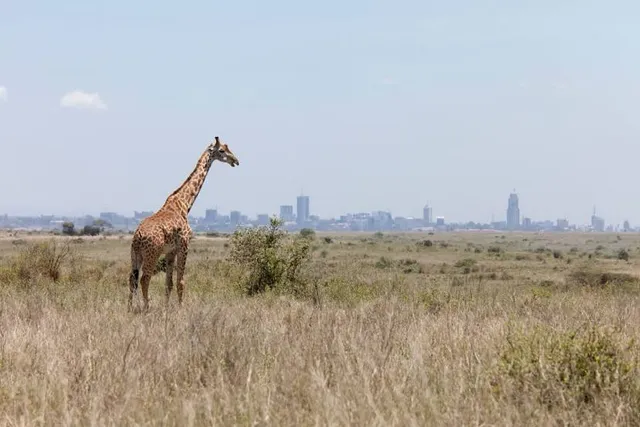
Our first stop in Kenya was Nairobi National Park (NP), just 7km south of the city center—one of the world's few national parks adjacent to a capital. This was my first African safari, and I was thrilled by the surreal sight of giraffes grazing near highways 🦒🛣️ and impalas strolling by roadsides—an illusion of wildlife coexisting with urban sprawl. But soon, reality sank in. Our driver got word of a lioness with cubs near the road. We rushed over and saw three lionesses leading eight cubs out of the tall grass 🦁🐾. "This is very rare," he said. Excited, we grabbed our cameras, capturing this "magical" moment. But as more safari vehicles crowded around, doubt crept in: Is this really okay? The lions showed no obvious distress, and our driver assured us it was "normal." So we accepted it as "habituation." Yet unease lingered. On closer look, the lions were thin, visibly unhealthy, their fur infested with ticks—far worse than other prides we'd later see. Then, as they walked, Nairobi's skyline emerged in the background 🏙️. The lions eventually veered into the grass, disappearing at the edge of wilderness and city. I wondered: If there were no fences, would they keep walking toward those buildings? Research later confirmed my fears. The park is fenced on three sides, with only the south open to Kitengela plains—a fragmented ecosystem. Urban expansion and human encroachment shrink their habitat, likely worsening inbreeding among lions. With dwindling prey, many now target livestock, escalating human-wildlife conflict. Last year, a 14-year-old girl was killed by a lion 🦁💔. Though the government compensates Maasai communities, solutions remain shaky. I share this unvarnished truth not to shame but to reflect. Yes, we participated in questionable tourism that day. But deeper still, these lions symbolize a vanishing boundary between civilization and wilderness. Will they become casualties of that blurred line? #Kenya #Nairobi #Lions #WildlifeConservation #TravelReflections 🌍✨