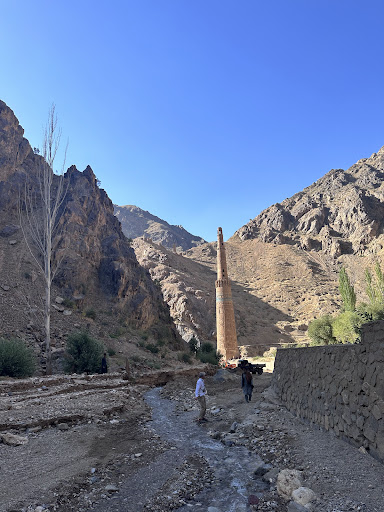
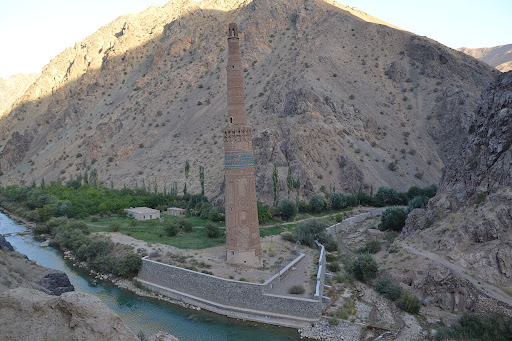
The Minaret of Jam, located in the remote western region of Afghanistan, is a cultural treasure dating back to the 12th century. Standing at 65 meters tall, the brick minaret is adorned with intricate Islamic inscriptions from the Quran and is considered a masterpiece of Islamic architecture.
Despite its historical significance, protecting and preserving the Minaret of Jam has posed significant challenges for local authorities. Its remote location, as well as years of neglect and damage from natural disasters, have made it difficult to maintain the structure and prevent further deterioration.
In 2002, the Minaret of Jam was registered as a UNESCO World Heritage Site in recognition of its cultural and historical importance. This designation brought much-needed attention and resources to the site, but there is still much work to be done to ensure its long-term preservation.
One of the biggest challenges facing the preservation of the Minaret of Jam is its location. The structure is located in a remote and mountainous area, which makes it difficult to access and transport necessary equipment and materials. Additionally, the region has been affected by conflict and instability, further complicating preservation efforts.
Another challenge is the ongoing threat of natural disasters. The Minaret of Jam has already experienced significant damage from earthquakes and flooding, and the risk of future disasters remains high. To address this, preservation efforts have focused on reinforcing the structure and implementing measures to protect it from further damage.
Despite these challenges, there have been some successes in preserving the Minaret of Jam. In recent years, efforts have been made to raise awareness of the site's cultural and historical significance, both locally and internationally. This has led to increased tourism, which has provided much-needed funds for preservation efforts.
Efforts have also been made to improve the infrastructure around the site, including the construction of a new road and the installation of a bridge to improve access. These improvements have made it easier to transport equipment and materials to the site and have helped to facilitate preservation efforts.
In conclusion, the Minaret of Jam is a cultural treasure that is of immense historical and architectural importance. Despite the challenges facing its preservation, efforts are underway to protect this iconic structure for future generations. As we continue to learn more about the site's cultural and historical significance, it is important that we work together to ensure its long-term preservation...
Read moreThe Minaret of Jam is a UNESCO World Heritage Site in western Afghanistan. It is located in a remote and nearly inaccessible region of the Shahrak District, Ghor Province, next to the Hari River. The 65-metre (213 ft) or 62-metre (203 ft) high minaret was built around 1190 entirely of baked bricks and is famous for its intricate brick, stucco and glazed tile decoration, which consists of alternating bands of kufic and naskhi calligraphy, geometric patterns, and verses from the Qur'an. Since 2002, the minaret has remained on the list of World Heritage in Danger, under serious threat of erosion, and has not been actively preserved. In 2014, the BBC reported that the tower was in imminent danger of collapse. The word minaret is Arabic [منارة] and usually means a tower next to a mosque from which the muezzin calls the faithful to prayer. However it also means lighthouse and has other meanings. Here it is used loosely. The Minaret of Jam is probably located at the site of the Ghurid Dynasty's capital, Firozkoh. The circular minaret rests on an octagonal base; it had 2 wooden balconies and was topped by a lantern. Its formal presentation has a striking similarity to the Ghazni minarets built by Masud III. It is thought to have been a direct inspiration for the Qutub Minar in Delhi, India.
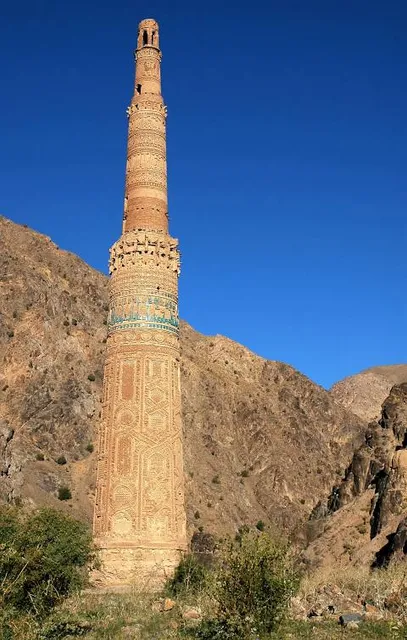
The Minaret of Jam belongs to a group of around 60 minarets and towers built between the 11th and the 13th centuries in Central Asia, Iran and Afghanistan, including the Kutlug Timur Minaret in Old Urgench (long considered the tallest of these still in existence). The minarets are thought to have been built as symbols of Islam's victory, while other towers were simply landmarks or watchtowers.
The archaeological landscape around Jam includes the ruins of a 'palace', fortifications, a pottery kiln and a Jewish cemetery, and has been suggested to be the remains of the lost city of Turquoise Mountain. Analysis of the "robber holes" around the site, high-resolution satellite images and data from Google Maps has led to an estimate that the Ghūrid summer capital around the minaret was about 19.5...
Read moreMINARET of JAM is a UNESCO World Heritage Site in Shahrak District, Ghor Province, Afghanistan. The 65-meter high minaret was built around 1190 entirely of baked bricks and is famous for its intricate brick, stucco, and glazed tile decoration, which consists of alternating bands of kufic and naskhi calligraphy, geometric patterns, and verses from the Quran. The Arabic inscription dating the minaret is unclear – it could read 1193/4 or 1174/5. It could thus commemorate the victory of the Ghurid sultan Ghiyas ud-Din over the Ghaznavids in 1186 in Lahore. However, Dr. Ralph Pinder-Wilson, a British Archaeologist and Director of the British Institute of Afghan Studies in the 1970s, wrote a major study of the Minarets of Jam and Ghazni in which he expressed his belief that the minaret was built to commemorate the victory of Mu'izz ad-Din, Ghiyath ud-Din's brother, over...
Read more