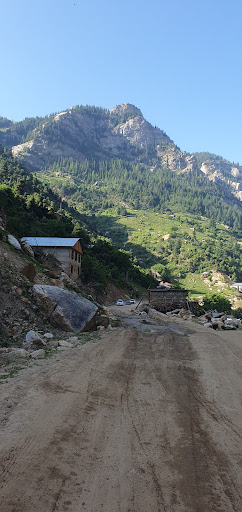
Nuristan Forest National Reserve is a protected area located in the Nuristan province of eastern Afghanistan. The reserve is home to a diverse range of flora and fauna, including rare and endangered species, and is considered to be an important conservation area in the region.
The reserve covers an area of approximately 4,200 square kilometers, and includes a variety of landscapes, ranging from high mountain peaks to lush forests and grasslands. The forests in the reserve are predominantly composed of coniferous trees, including spruce, fir, and pine, and are home to a number of rare and endemic plant species.
Nuristan Forest National Reserve is also home to a variety of wildlife, including several species of wild goat and sheep, as well as wolves, bears, and other large predators. The reserve is also an important habitat for a number of bird species, including the endangered western tragopan and the Himalayan snowcock.
Despite its importance as a conservation area, Nuristan Forest National Reserve faces a number of challenges, including habitat destruction, overgrazing, and illegal hunting. The ongoing conflict in Afghanistan has also made it difficult to maintain effective protection measures for the reserve, and there are concerns about the long-term sustainability of conservation efforts in the area.
Efforts are being made to address the challenges facing Nuristan Forest National Reserve, including the development of sustainable forestry and land management practices, as well as the promotion of ecotourism in the region. These efforts aim to protect the unique natural resources of the reserve, while also providing economic benefits to the local communities.
Nuristan Forest National Reserve is an important part of Afghanistan's natural heritage, and it is hoped that the efforts to protect and conserve this valuable area will help to ensure its survival for...
Read moreNuristan, also spelled as Nurestan or Nooristan (Dari: نورستان; Kamkata-vari:a] Nuriston), is one of the 34 provinces of Afghanistan, located in the eastern part of the country. It is divided into seven districts and is Afghanistan's least populous province, with a population of around 167,000.[2] Parun serves as the provincial capital. Nuristan is bordered on the south by Laghman and Kunar provinces, on the north by Badakhshan province, on the west by Panjshir province. The origins of the Nuristani people traces back to the 4th century BC. Some Nuristanis claim being descendants of the Greek occupying forces of Alexander the Great. It was formerly called Kafiristan (Pashto: كافرستان) ("Land of the Infidels") until the inhabitants were forcibly converted from an animist religion;[3] a form of ancient Hinduism infused with local variations,[4] to Islam in 1895, and thence the region has become known as Nuristan ("land of illumination", or "land of light").[5] The region was located in an area surrounded by Buddhist civilizations which were later taken over by Muslims.[6] The origin of the local Nuristani people has been disputed, ranging from being the indigenous inhabitants forced to flee to this region after refusing to surrender to invaders, to being linked to various ancient groups of people and the Turk Shahi kings.[7
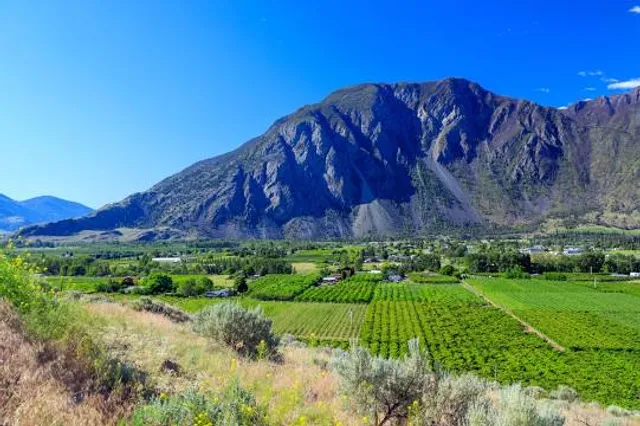
The primary occupations are agriculture, animal husbandry, and day labor. Located on the southern slopes of the Hindu Kush mountains in the northeastern part of the country, Nuristan spans the basins of the Alingar, Pech, Landai Sin, and Kunar rivers. Most of Nuristan is covered by mountainous forests and it has a rich biodiversity with a domestically unique monsoon climate by air coming from the Indian Ocean.[9] As of 2020, the entirety of Nuristan is now a protected national...
Read moreNuristan National Park is a national park in Afghanistan announced by the Government of Afghanistan on 5 June 2020 (coinciding with World Environment Day), making it the third in the country after Band-e Amir National Park and Wakhan National Park.2] The Park comprises the entire mountainous eastern Province of Nuristan, which borders Pakistan.[3] According to the FAO, a detailed management plan - and "gazettement" - is still forthcoming.[2] An initial proposal was drafted in 1981, with Nuristan National Park to be formed in what was then Laghman Province and Kunar Province (Nuristan Province was not created, by carving out areas of these two provinces, until July 1988[4]); the report highlighted what were then the "largely undisturbed monsoon-influenced forests", as well as the assemblage of species living therein, including the leopard, snow leopard, Himalayan black bear, and markhor, combined with the traditional way of life of the local communities.[2 Although a 2003 UNEP report suggested that 52% of forest cover in Nuristan, Laghman, and Nangahar Provinces was lost between 1977 and 2002, and the National Environmental Protection Agency warned a decade later of continuing illegal logging, a 2008 Wildlife Conservation Society report confirmed the continuing presence of the bear and leopard cat, alongside the grey wolf, golden jackal, yellow-throated marten, and crested porcupine, with of a number of other felids reported by interviewees.27] The area also includes part of the Pech and Waygal valleys Important Bird Area, with at least fifty-three breeding...
Read more