A place of immense potential—buried under neglect.
Reaching this location is already an adventure in itself. The road offers some spectacular views, but ends rather abruptly at a gate manned by a local who utters just one word: “500.” That’s the entrance fee, and once paid, you continue to a fairly standard parking area. From there, the charm begins to unfold—visibly at first, with a lovely little church further along the path.
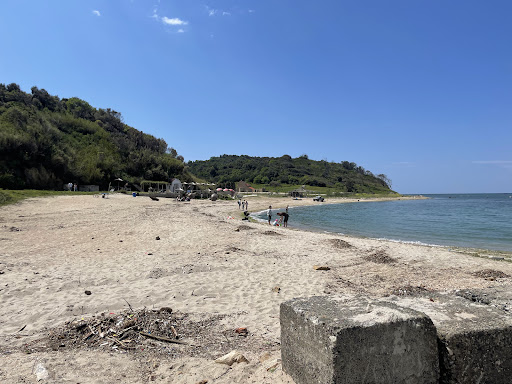
Instinctively drawn toward the coastline, you follow the trail down—only to be met with an unfortunate sight: a beach area that was likely once a true gem of Albania, now marred by decaying beach bars, piles of trash, and general neglect. It’s a sad reflection of what poor maintenance and tourism without responsibility can lead to.
Thankfully, the church we passed earlier offers a glimmer of hope. Beautifully restored with EU support, it stands out as a pristine pearl amidst the surrounding disorder—a moment of serenity and respect for heritage.
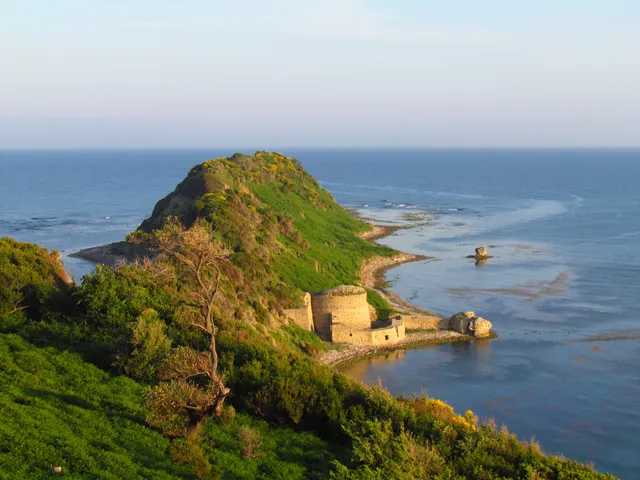
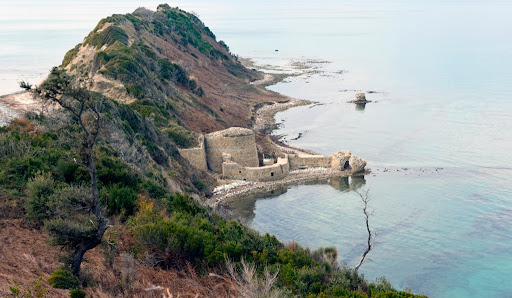
Continuing onward, a sign point toward a castle. While some visitors (mostly Albanians) opt to drive, we chose to hike. It’s a steep and adventurous climb, leading first to several bunkers—interesting to explore, though empty inside. Eventually, we were rewarded with an exceptional view of a small castle by the water—a breathtaking scene worth the effort.
The descent to the ruins is not for the faint of heart. Good shoes are essential, as the trail is steep, uneven, and can be unpredictable. The ruins themselves are fascinating and provide a glimpse into the past. However, yet again, the site is overwhelmed by litter—both left behind and washed ashore.
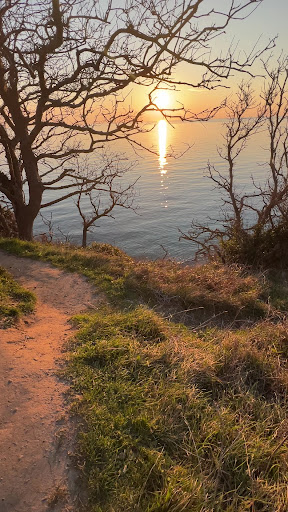
If you can look past the mess, the natural beauty of this place remains undeniable. On the way back, an alternative path offers a gentler descent and more scenic views perfect for photography.
Final thoughts: This site could be spectacular with proper care and investment. At the moment, it’s a bittersweet experience—part raw adventure, part environmental disappointment. Worth visiting for the views and history, but be prepared for the contrast between potential...
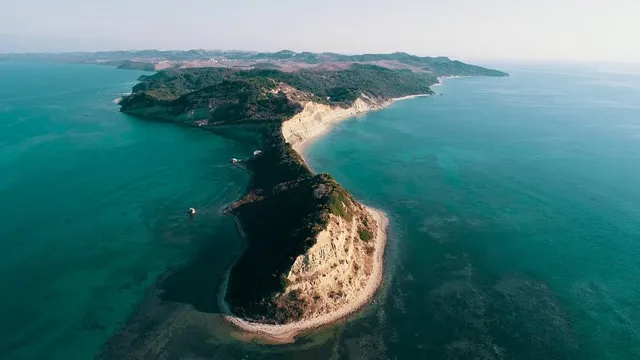
Read moreLocated only a few kilometers from Tirana, the Cape of Rodon in Durrës is a destination whose popularity has risen exponentially among tourists in the last few years. This narrow strip of land, in the shape of a peninsula, extends along the Adriatic and offers not only beautiful views but several crucial historical and cultural monuments. Many tourists choose to visit the Cape of Rodon during the spring season as it is shrouded in a beautiful cornucopia of flowers (click here for the video) while in the summer, they choose it to enjoy the beautiful virgin beaches and fine-grained sand.
Castle of Skanderbeg
The Cape is surrounded by navels with an altitude of 25 meters and is particularly famous for the Castle of Skanderbeg located there. The castle by the sea was built by Skanderbeg around 1450 – 1452, in order to create a quick exit to the Adriatic Sea in case of an Ottoman invasion. Life existed inside this castle until 1467, when the Turks destroyed it. Fortunately, the Venetians rebuilt it after 1500 and, since then, it has survived in a fairly good condition.
Church of St. Anthony
The Church of St. Anthony, a monument built around the same period as the Castle, is located near the Cape. Built in Romanesque-Gothic architecture, this church includes several beautiful frescoes and other interesting elements. Thanks to its position near the Cape and the sea, the panoramas surrounding the Church are quite impressive. The Cape of Rodon is an ideal choice for a relaxing as well as historical and cultural weekend away...
Read moreCape of Rodon is one of the closest destinations to Tirana where you can spend a beautiful day. It is located about 60 km north-west of Tirana. The road is partially good and easily passable outside the summer season during which there is a lot of traffic. The part of the road from Lalzi Bay to Cape of Rodon is damaged and you may encounter difficulties due to potholes and road damage. Nature is fantastic, one of the rare areas in Albania where the forests have not been damaged. There is a not very long part for hiking, from the church to the castle, the relief is passable by any category. Apart from the bad road and pollution, every other landscape pleases the eye. Payment at the entrance to Cape of Rodon is 200 Albanian Lek per person and 100 Albanian Lek for vehicles. At the entrance there is also a regulation that you must adhere to while staying in this area. There are some strict rules for people who want to stay long or do camping in the area. For any activity, you can get information from the staff at the entrance of Cape of Rodon. It is windy in the area and I would suggest you to have suitable clothing against the wind. Also during the summer there are many snakes in the area so you have...
Read more