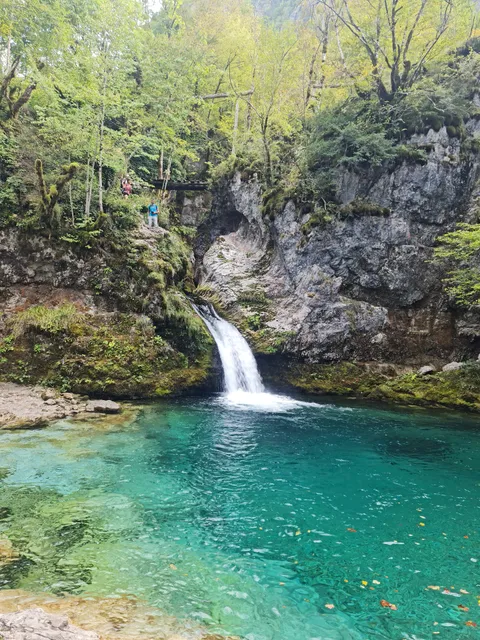
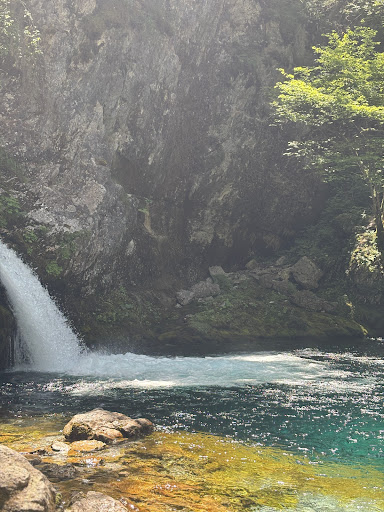
Most Interesting Facts about the Blue Eye of Theth Formed by Mountain Springs • The Blue Eye of Theth is a natural pool fed by ice-cold mountain springs from the Kaprea River. • Its water is incredibly clear and icy blue, even more intense in sunlight. Water Temperature Stays Around 5°C Year-Round • Even in the middle of summer, the water remains freezing cold. • Only the bravest dare to jump in—it’s like a natural ice bath! Only Accessible by Hiking • To get there, you need to hike about 6–7 km (around 2–3 hours one way) from Theth village or Shala River valley. • The trail is moderate to challenging, but filled with breathtaking views of forests, canyons, and waterfalls. Hidden in the Albanian Alps • Located in one of Albania’s most remote and wild areas—Theth National Park. • The Blue Eye lies in a deep gorge, surrounded by rocky cliffs and lush alpine vegetation. Part of Theth National Park • The area is part of a protected park known for its untouched nature, traditional stone houses, and Albanian highland culture. • It’s ideal for eco-tourism, photography, and wilderness trekking. Incredible Natural Colors • The pool has layers of emerald green, sapphire blue, and turquoise—especially when sunlight hits the surface. • The water’s color comes from the depth, minerals, and speed of the current. Nearby Attractions • Close to Grunas Waterfall, Lock-In Tower of Theth, and Valbona–Theth hiking trail. • You can combine a visit to the Blue Eye with a multi-day hiking adventure in the Albanian Alps. Swimming Is Allowed—but with Caution • Some visitors jump in, but due to the icy temperature and slippery rocks, it’s best to be careful. • The current is not strong, but the cold can be shocking. A Growing Eco-Tourism Destination • Once known only to locals and serious hikers, the Blue Eye of Theth has become a symbol of Albania’s unspoiled north. • Still, it’s far less crowded than the southern Blue Eye. Some recommendations:Better to do this hiking early morning to avoid the direct sun as the first ,most difficult part of the way is sharp up and in the open sun.Coral shoes would be good if you decide to swim.Still,try to walk as light as possible .Altogether the round trip takes...
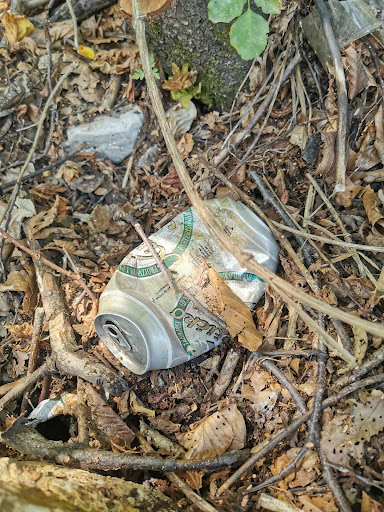
Read moreNestled within the serene and untouched wilderness en route to the stunning "Blue Eye," a peculiar exhibition has emerged—one that speaks volumes about humanity's relationship with nature. Welcome to the "Lost Can Project," an art gallery like no other, where tourists are invited to contribute their very own artifacts: aluminum cans, discarded at random locations along the trail.
These cans, purchased from conveniently located take-away shops along the path, are not merely litter—they are symbols, carefully placed to endure for generations. Aluminum cans, after all, take approximately 200 to 500 years to decompose. Yes, these shiny tokens of modern convenience will remain scattered across the landscape, a lasting tribute to our time on Earth, offering future generations a sobering reminder of our environmental impact.
But what is the "Lost Can Project" really about? This exhibit is not just about the act of littering; it is a profound statement on our collective ignorance and indifference towards the environment. It highlights the disconnect between the temporary joy of a cold beverage and the permanent scar it leaves on the planet. As you stumble upon these cans, you might ask yourself: How did we get here? Why do these remnants of civilization dot the landscape like bizarre monuments to carelessness?
The "Lost Can Project" challenges us to confront the stark reality of our wasteful habits and the lack of adequate waste management systems in places of natural beauty. It serves as an eternal reminder that the consequences of our actions—or inactions—persist far beyond our brief moments of indulgence. Through this inadvertent art, we are called to reflect on the pressing need to educate ourselves and others about the value of nature and the critical importance of protecting it.
So, the next time you visit the "Blue Eye," take a moment to appreciate the "Lost Can Project." Contemplate the aluminum can lying on the forest floor, silently testifying to our era. And remember, the beauty of nature is timeless—let’s ensure our...
Read moreBlue Eye, located in Albania, is a breathtaking natural wonder that leaves visitors in awe. Nestled amidst lush greenery, this enchanting spring captivates with its stunning blue hues and crystal-clear waters.
One of the most striking features of Blue Eye is its mesmerizing depth. The vibrant blue water seems bottomless, creating an otherworldly ambiance. It's as if you're peering into a magical portal that leads to an undiscovered realm.
The spring's water is incredibly clear and pristine, allowing you to see the rocky bottom and the unique formation that resembles a human eye, hence its name. The clarity of the water also invites you to take a refreshing swim or simply dip your toes and enjoy the coolness.
Surrounded by dense forests and rich flora, Blue Eye offers a serene and tranquil environment. The lush greenery provides shade and creates a perfect spot for a picnic or a moment of relaxation amid nature's beauty.
Visiting Blue Eye is an experience that connects you with the raw and untouched beauty of Albania. The untouched nature and the sense of tranquility make it an ideal destination for nature lovers, photographers, and anyone seeking a peaceful escape.
However, it's worth noting that due to its popularity, Blue Eye can get crowded, especially during peak tourist seasons. To fully appreciate its splendor, it's advisable to visit early in the morning or during weekdays when it's less crowded.
In conclusion, Blue Eye in Albania is a truly mesmerizing natural attraction that captivates visitors with its stunning blue waters, picturesque surroundings, and a sense of tranquility. It's a must-visit destination for anyone exploring Albania and seeking a memorable encounter with...
Read more