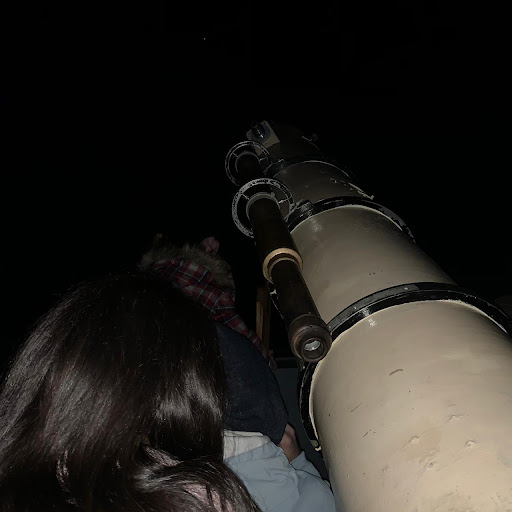
Read moreThis is going to be a long review, so bare with me. I visited this place some 14 years ago. And my last visit was yesterday, 10.08.2024. 10 years ago, I had an unforgettable experience since I could observe the sky, the planets, the stars, the Moon, the Milkey way and much more. The telescope offered back than was powerful and Iit was a fantastic experience, since i saw the universe so bright , so colourful. Yesterday I had the worst experience during our night time tour. We were offered to watch 3 objects only, and with he worst telescope one could have. Lenses were old, picture was blurred. There were almost 30 people in one group. When I asked what is the most powerful telescope with which one can observe the sky these days from the observatory, the guide answered that only some 10 years ago you could watch from 40cm telescope, today there is no such option. Somehow those telescopes are removed. If you want to watch the sky, choose another observatory, bcs today's telescopes are jsuta joke, and the whole event is just a big scam. They just take money for nothing. Maybe for someone who has never had an experience like I had 10 years ago, this could be something , but no I am not buying it. Won't pay for it 2nd time. Another thing to know, technologies are becoming betterhelp and better and for scientific purposes academics use telescopes which give simulations. The era of old telescopes seems is in the past. So before your vsist properly check what are you exactly being offered. Or you will be hugely disappointed. And even when they offer a smaller telescope it is too old, in too bad condition. When we left, I joked that maybe online I could buy better telescope. Don't get me wrong, Victor hambardzunyan was great, but he is not alive anymore , while those who are in charge for todays observatory don't care about people's experiences. And I have a big question, where are the greatest telescopes why aren't those used? Where are those, I know they had powerful ones. So...
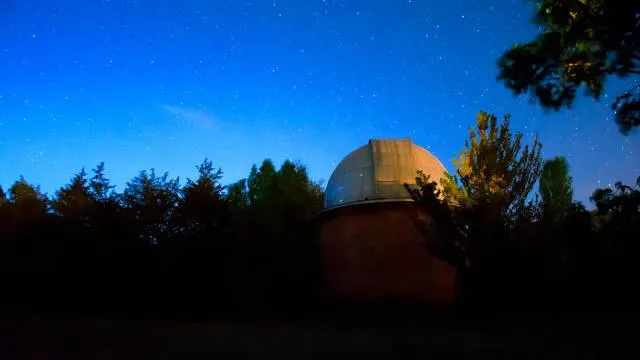
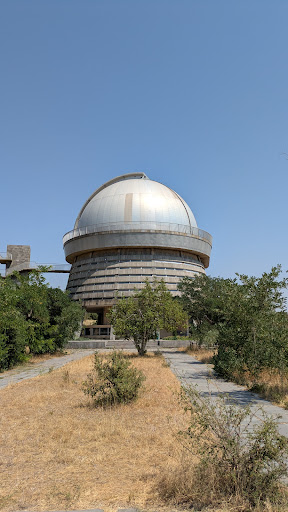
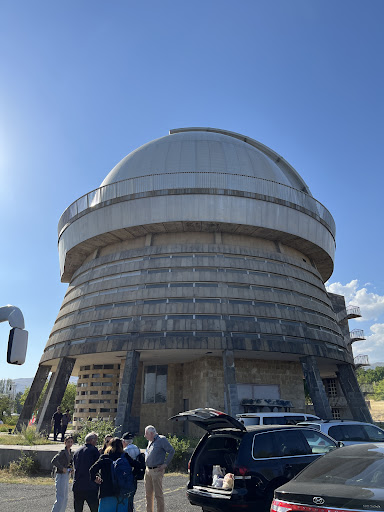
In the small Armenian village of Byurakan, against the backdrop of Mount Aragats, one of the country’s highest spots, several silver domes can be seen shining in the sun. These domes cover the Byurakan Observatory, a premier astronomical center which was established during the Soviet era.
The man behind the observatory’s establishment is an Armenian hero, who led many advancements in astrophysics, both in the country and globally: Victor Ambartsumian (also styled Viktor Hambardzumyan). He was one of the earliest to work in the field of theoretical astrophysics and one of its pioneers.
The observatory was founded in 1946 and is home to what was for several years the largest telescope in the USSR, a 2.6m Cassegrain reflector. Under Ambartsumian’s leadership, studies at the observatory related to instability phenomena around the universe, which remains the cornerstone of their research program today. Ambartsumian himself lived near the facility and conducted experiments till he passed away in 1996.
Armenia has a long history of astronomical study dating back several thousand years and the observatory played a crucial part bringing it into the realm of modern science and study. The campus, owned by the Armenian National Academy of Sciences, was designed by the famous Soviet architect Samvel Safaryan and now houses five large observational instruments.
The grounds are beautifully landscaped and maintained, and the observatory hosts guided tours in several languages for a few dollars and also accepts proposals to use its...
Read moreFantastic location, founded in 1946 on the initiative of academician Victor Ambartsumian, who became the first director of the observatory. It is located on the picturesque southern slope of the mountain Aragatz. At the observatory five observational instruments are installed the larger ones being 2.6 m Cassegrain telescope and 1m Schmidt telescope. Scientific researches of the observatory are related mainly with the instability phenomena taking place in the Universe. Since 1946 numerous scientific meetings were held in Byurakan including four symposia and a...
Read more