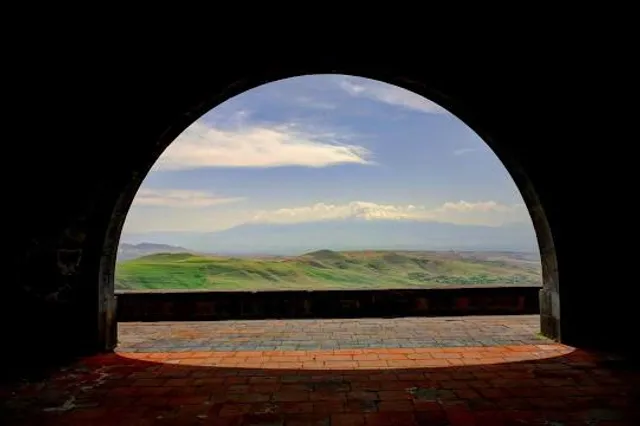
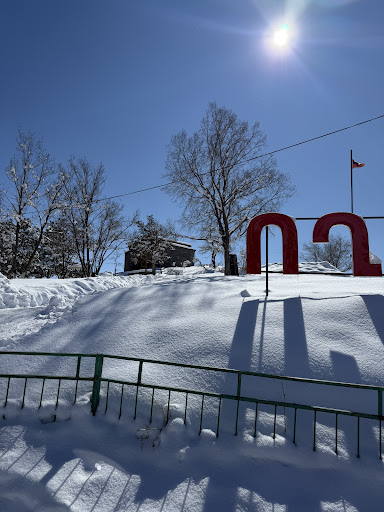
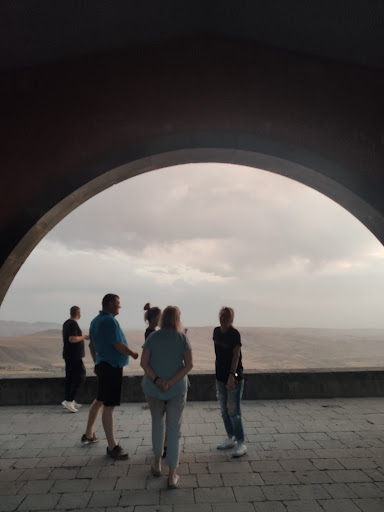
We made a planned stop at Charents' Arch, and it turned out to be one of the most breathtaking highlights of our journey. Perched along the road between Yerevan and Garni, the arch is not just a monument-its a perfect frame capturing the grandeur of Mount Ararat in the distance. We are passionate winter travelers, and the scene from this viewpoint in the colder months was truly magical. The crisp winter air, the layers of snow-draped landscape, and the majestic view through the arch felt like something straight out of a painting. There's something unique about how the winter cold hits differently in each country, and here in Armenia, it wrapped the view in a quiet, peaceful charm. We stood there for nearly an hour, mesmerized by nature's artistry-how beautifully the mountain and surrounding lands stretched endlessly into the horizon. It felt almost spiritual, like witnessing a glimpse of divine design, where everything seemed perfectly placed for us to simply pause and admire. Whether you're visiting in summer or winter, Charents' Arch offers an unforgettable panoramic view. But if you're a fan of winter travel, like us, don't miss the chance to witness this spot dressed in...
Read moreЛучшее место, чтобы полюбоваться горой Арарат
Этот памятник (архитектор Рафаэль Исраэлян) поставлен в 1957 году и привлекает внимание всех тех, кто держит путь в Гарни. Место для арки выбрано неслучайно – с этой точки открывается захватывающий дух вид на библейскую гору Арарат. Слова, выбитые на арке, принадлежат одному из самых почитаемых армянских поэтов–Егише Чаренцу(Егише Согомоняну), воспевшему эту легендарную гору, и именно поэтому в народе это сооружение так и называется «Арка Чаренца».
Егише Чаренцу (1897-1937) довелось жить в грозную эпоху вихрем сменявших друг друга событий: Геноцида армян, Первой мировой войны и становления страны Советов. Родился Егише в Иране, а восьмилетнюю школу закончил в Карсе (1904-1912), бывшем тогда одним из губернских городов Российской империи. В 1914 году Чаренц вступил в ряды армянских добровольцев, которые вместе с российскими царскими войсками, воевавшими в Закавказье против турков, освободили исторические земли Западной Армении до самого Вана и Эрзерума. Во время этой военной кампании поэт стал свидетелем Геноцида армян в Турции, что сильно повлияло на его творчество.
После образования Первой Армянской Республики Чаренц переехал в Ереван (1919), где стал работать учителем. В 1920 году, когда к власти пришли большевики, он присоединился к новому движению и горячо воспринял молодую Армянскую Советскую Республику, так как искренне верил, что это – единственно правильный путь к возрождению израненной и бедствующей родины. На его творчество тогда наложили свой отпечаток движение футуристов и взгляды мастера советской поэзии Владимира...
Read more“One of the most peaceful places, and the clouds came in front of the Mount Ararat (Masis), but still looked beautiful”, – writes National Geographic about this wonderful place. The Arch of Charents was erected in 1957 and named in honour of Armenian poet Eghishe Charents, who wrote the best poem, dedicated to Armenia, full of true love and pride. They say, Charents loved this place and used to visit it frequently. The author of the construction is prominent architect...
Read more