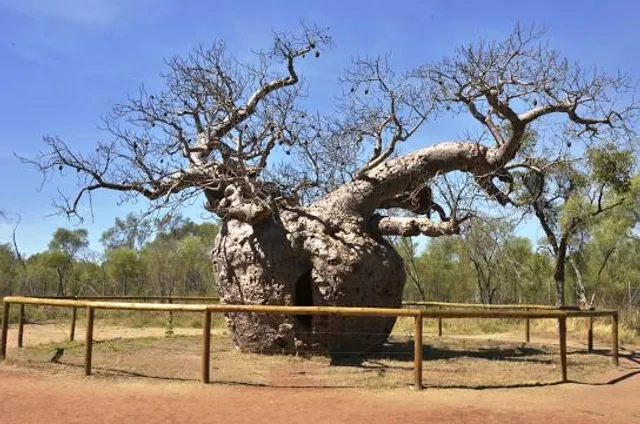
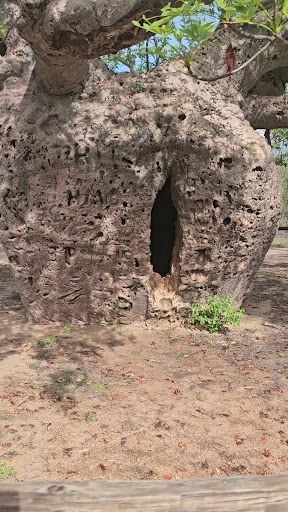
Approaching the prison tree, taking in its surroundings along with the enormity of the tree itself, you can't help but feel horrible for the way Europeans treated the Aboriginal people back in the day. The tree is over 1500 years old, most likely used as shelter or a meeting place prior to European arrival. But then came the white man and it was used as a convenient holding cell for officers to sleep.
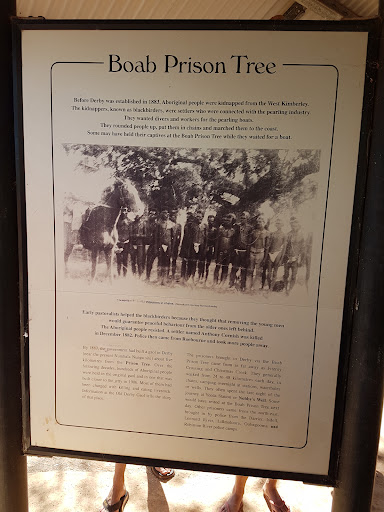
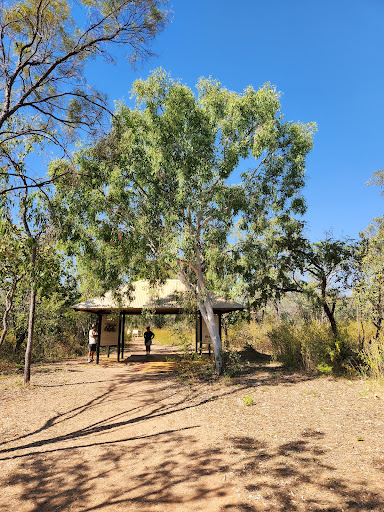
Overall, it's a great first stop when seeing it too explore the Kimberly. There's a few shady trees to park under and well put together information boards at the entrance.
Definitely worth the stop to find out not only about the tree, but also history of the area.
Sadly over the years there has been a lot of damage and vandalism but the tree itself is remarkably still alive, with a boundary fence to stop honest and respectful visitors from getting too close. Unfortunately not everyone adheres to remaining behind...
Read moreThe Boab Prison Tree is famously misnamed because it was never a prison tree. This was the concoction of a journalist who needed to fabricate a story many years ago. The place is a reflection of Derby's demise at the hands of Broome and the desperation to concoct tourism visitation points for the town. Notwithstanding all this, the Prison Tree area is a nice place to stretch the legs (if you're not in a hurry) and view a very well laid out information shelter amidst a very good example of pindan bush vegetation. Close by is the Myall Bore and cattle trough ... once the longest cattle trough in the southern hemisphere. This is part of the historic Derby Commons where the cattlemen, drovers, drifters and bagmen of the past came to camp to await the arrival of ships...
Read moreA profoundly disturbing and very confronting Tree. It is more than a symbol of the brutality of an era in which Aboriginal people were kidnapped, forced into labour and removed from family and Country. The Derby Boab Prison Tree is one of two the other being at Wyndham. This one is approximately 1,500 years old with a girth of about 14.7 meters, located 6 km south of Derby. It was used in the late 19th century for chaining Aboriginal People and temporarily holding them en route to Derby for sentencing or forced servitude in the pearling and pastoral industries. Understandably it has profound cultural significance, with local Aboriginal communities considering boab trees important in mythology, shelter, and burial traditions. Such a wise tree...
Read more