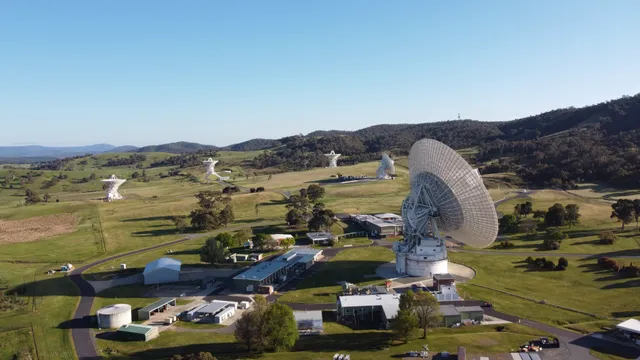
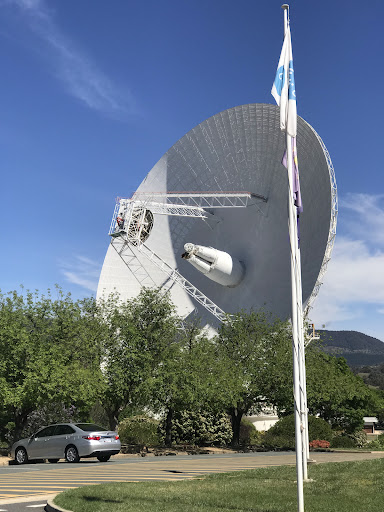
Construction of the complex began in June 1963 with operations commencing in December 1964, in time to support the Mariner 4 spacecraft encounter with Mars. The centrepiece of the complex was the 26-metre antenna (Deep Space Station 42). Two years later a crewed spaceflight wing was added to the complex to assist with the Apollo missions to the Moon. By 1970 the complex featured a power station, and facilities to manage the sewage and water supplies, while a cafeteria, and sleeping accommodation fed and housed the many workers on site. During early 1969 construction started on a new antenna. At 73 metres in height and weighing more than seven million kilograms, the then 64-metre antenna (Deep Space Station 43) took nearly four years to complete. The need for such an antenna was brought about by the increasing amounts of data received and the rapidly expanding distances that spacecraft were travelling. The new 64-metre antenna was more than six times as sensitive as the existing 26-metre antenna, and therefore could extend the useful lifetime of a spacecraft as its signal became weaker the further it was from Earth.
During the 1980s the Voyager spacecraft travelled billions of kilometres to investigate the ‘gas giants’ Jupiter, Saturn, Uranus and Neptune. Over such distances, the signals from the spacecraft would be extremely weak and requiring more sophisticated equipment on Earth to receive them.
Consequently, in 1980 the 26-metre antenna was upgraded to become a 34-metre antenna, improving the surface of the dish and adding higher frequency receiving capabilities. Similarly in 1987, the 64-metre antenna was upgraded to 70 metres in diameter. Even today, the 70-metre antenna is the largest steerable parabolic antenna in the Southern Hemisphere.
When Honeysuckle Creek Tracking Station closed in December 1981, the 26-metre antenna was relocated to Tidbinbilla and renamed Deep Space Station 46 where it was used for spacecraft positioned close to the Earth. It was retired in 2009.
In 1986 the construction of a new high efficiency 34-metre antenna (Deep Space Station 45) was completed to provide better reception at higher frequencies. The antenna was completed in time for the Voyager 2 encounter with Uranus, where it was used in conjunction with the 70-metre antenna to provide even greater sensitivity for the reception of signals. Deep Space Station 45 was...
Read moreThis place is very near about one hour drive from Canberra. Parking is free and entrance to the museum is also free. Very nice place for school students, science students, engineering students and anyone who is interested in space and telecommunication. We can see big telescopes and many models of spaceships and can read about interesting facts in a space ship museum. We can take photos in a demo space suit which looks like if you were a astronaut. Models of lunar spaceship are also displayed. The model of Apollo 11 and a model of moon landing site is displayed in the museum. Different models of space ships and rockets are also displayed. We can also see the models of vehicles which are used on the surface of the moon and mars. Also there are two very big dish antennas and telescope to send message to the deep space and detect signals.
The roads to the station is very beautiful. Small two lane road starts as you pass the highway. Small trees big grasslands and different cattle grazing on the ground. We can also see some small fresh water rivers and we can take a small break to have a swim in the cold water. Also we can see beautiful scenery and landscape while travelling to this place. There is also a reserve park where we can relax and see beautiful green park and animals like Kangaroo and Echidna. Kangaroo can be found in other areas also but you can get a wonderful chance to see the very rare Echidna. Its small animal with spikes on its body and runs slowly on the ground. The space station museum also have a small restaurant where you can buy foods and drinks. I fully recommended this place for anyone to have a nice day out and suggest to take your childrens to this place if you can. Wonderful things to see and have a memorable experience to share with friends...
Read moreI recently visited the Canberra Deep Space Communication Complex (CDSCC) and can’t help but give it a glowing 5-star review! This place is an absolute gem for anyone fascinated by science, space, and cosmic exploration. From the moment I arrived, I was impressed by the modern setup and visitor-friendly layout. The exhibition center is packed with fascinating information about CDSCC’s role in communicating with NASA’s spacecraft, like Voyager and Mars Rover. The models, interactive displays, and videos are clear, engaging, and perfect for both kids and adults. The highlight was seeing the massive parabolic antennas, especially the 70-meter dish – a true engineering marvel! The tour guide was incredibly enthusiastic, sharing captivating stories about space missions and how the complex operates. I felt a magical connection between Earth and the distant universe. The outdoor area is beautiful, with peaceful views and a great spot for a picnic. The onsite café serves tasty snacks and great coffee, making it a perfect place to unwind after exploring. Everything was well-organized, clean, and professional. If you’re in Canberra or nearby, don’t miss the chance to visit CDSCC. It’s an educational, inspiring, and totally worthwhile experience! I’ll definitely be back to learn more about new space missions....
Read more