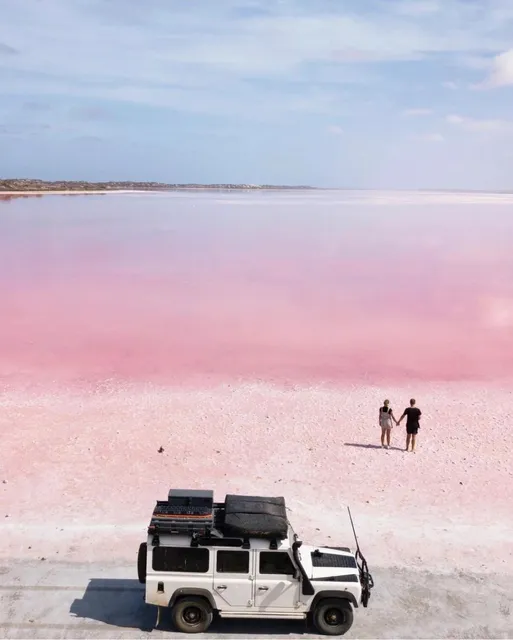
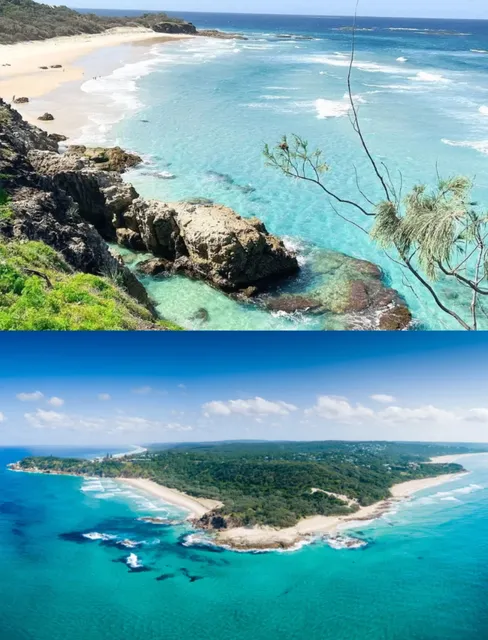
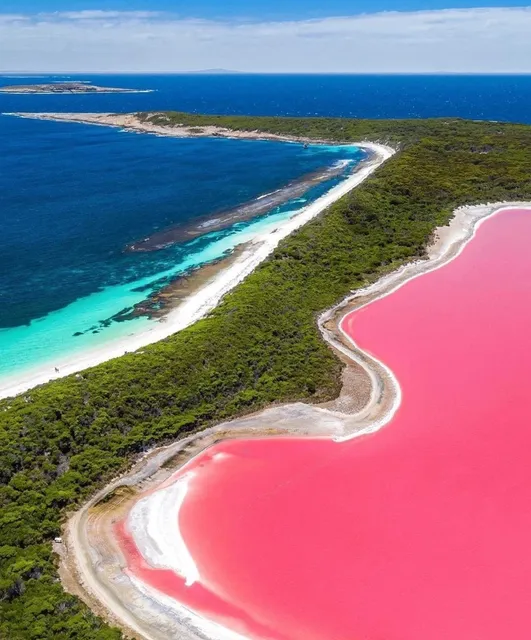
Lake Hillier on Middle Island, Australia, is the color of bright-pink bubble gum. Researchers recently discovered that the lake's unique color is caused by algae, halobacteria, and other microbes. Additionally, this body of water is extremely salty—just as salty as the Dead Sea. . . . . Situated off the south coast of Western Australia is a pink-colored lake that’s sure to catch the attention of tourists. Called Lake Hillier, you can find it right on the edge of the continent’s Recherche Archipelago, literally just a couple of steps away from the Southern Ocean’s turquoise waters.
Pink lakes certainly aren’t new. In fact, there is one called Lake Retba or Lac Rose near the capital city of Senegal. Even though people have known about Lake Hillier’s existence since the 19th century, scientists are still not sure why the lake possesses such an unusual, weirdly consistent hue.
Below, we address the most commonly asked questions about this unique and interesting pink lake in Australia.
How was Lake Hillier discovered? female tourist posing in front of a pink lake
Lake Hillier was first discovered in 1802 by a Royal Navy explorer named Mathew Flinders. That January, he alighted the HMS Investigator to go ashore and climbed the highest peak on the island (now named Flinders Peak). This was where he got a glimpse of the magnificent lake, which he described as “a small lake of rose color” in his log.
Flinders also gave the lake its name, in memory of a crew member named William Hillier who died of dysentery while docked at the island.
Why is Lake Hillier pink? close-up shot of a pink lake in Australia
Since its discovery, the strawberry milkshake-colored lake has left anyone who’s seen it in awe. But in essence, Lake Hillier is actually a pink salt lake. It has a high level of salinity and the color is suspected to be due to saltwater reacting with sodium bicarbonate (baking soda) or certain microorganisms—particularly salt-loving algae (dunaliella salina) and pink bacteria (halobacteria).
Dunaliella salina can tolerate very high salt concentrations (up to 35%). And when these photosynthetic microorganisms generate energy, they do so by using only orange and red frequencies in the light spectrum, which reportedly causes them to produce carotenoid pigments (the same found in carrots) and give off a bubble gum pink hue.
Lake Hillier is also said to contain large amounts of halophilic bacteria and archaea in its salt crusts. These non-algal microorganisms contribute to the lake’s interesting appearance by also producing similar carotenoid pigments within their cell membranes.
Another mystery that sets Lake Hillier apart from other pink lakes is that it remains pink all year round, while other known pink lakes regularly change colors when their temperatures fluctuate. Lake Retba, for example, is pinker during the dry season between November and June.
When you draw closer to Lake Hillier, the color will look more translucent and watery but still very pink. You can even bottle it and it won’t change its color! If anything, it only adds to the curiosity of anybody who wishes to see it in person.
Is it safe to swim in Lake Hillier? woman floating on top of a pink lake
Given its unique hue and the mystery surrounding it, a lot of people wonder if it’s safe to swim in Lake Hillier. Although it is very salty, similar to diving in the Dead Sea, swimming in Lake Hillier has not been reported to be any danger to those who wish to wade in.
According to the official site for Australia’s pink lake, the colored water is very safe and will not cause any harm to the swimmer or their skin. However, it’s also not possible to personally confirm this as the island that it’s on is currently being protected as a nature reserve and can only be visited under special circumstances, such as research.
Needless to say, while the water is safe to swim in and the microorganisms are harmless, drinking hypersaline water is highly...
Read moreLake Hillier is a naturally occurring pink lake located on Middle Island, the largest of the 105 islands and islets making up the Recherche Archipelago in Western Australia. The Archipelago makes up a nature reserve and is fast gaining recognition as one of Australia’s most important wilderness areas. Part of the allure of Lake Hillier, attracting visitors far and wide, is in the mystery itself; as this natural phenomenon has no current proven scientific explanation to why its water is pink.
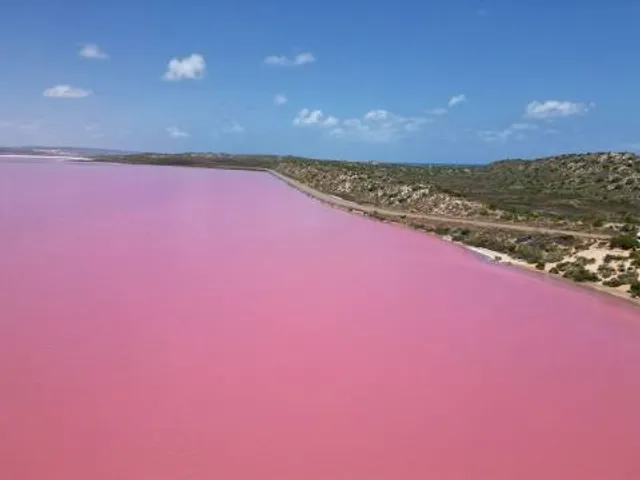
The lake itself is quite small in size measuring 150,000 m2. From up above, the only way to view Lake Hillier, the lake looks like a solid bubble-gum pink. The view is absolutely stunning as it creates a striking contrast between the pink hue of the water, dark green vegetation surrounding and the deep blue water of the Southern Ocean. It is located in pristine wilderness and is encompassed by a rim of dunes and dense woodland consisting of paperbark and eucalyptus trees.
Lake Hillier maintains its pink colour year-round making it different from other pink lakes around the world that regularly change colour due to things like temperature fluctuations. The closer you get to the lake the more translucent the water is, although it is still very distinctively pink. The water remains pink even when it has been removed from the lake and bottled.
The lake is also quite shallow in nature and its shoreline is covered in salt crust deposits creating an environment that is about ten times saltier than the nearby ocean. Although the lake is not open to public swimming due to the inaccessibility of the area, it is believed that although uncomfortable due to high salt levels, that this lake would be perfectly safe to swim in.
The first evidence of the discovery of Lake Hillier dates back to journals written by Matthew Flinders in 1802, a British navigator and hydrographer. Hydrographers are people who provide scientific description and analysis of the physical conditions, boundaries and related characteristics of the earth’s surface waters. Flinders came to navigate the island and climbed the highest peak of Middle Island (Flinders Peak) to survey the waters of the area. He was surprised to discover spectacular Hillier Lake from the viewpoint of the peak.
There is no proven scientific explanation to why Lake Hillier consists of its pink waters, or why it is able to sustain this pigmentation continually. Other pink lakes around the world have been explained by the combination of high salinity and a presence of salt-loving algae species known as Dunaliella salina and a pink bacteria known as halobacteria. Pink Hillier still remains a mystery to science. However, the most likely explanation is contributed to low nutrient concentrations and a sea salt and sodium bicarbonate deposit reaction although it still could be due to various bacteria or algae. One of the problems lies in the fact that this pink lake is the least studied due to its isolated location. It was once used to mine salt in the early 20th century, but the project was abandoned 6 years later.
Currently the only way to view this extraordinary sight is by helicopter. Esperance, only a day’s drive or two-hour plane ride away from Perth, is home to Esperance Heli tours; which offers a helicopter tour of Lake Hillier and the amazing Recherche Archipelago. The tour is rumoured to cost somewhere around $2000. Bob Kent, an Esperance resident, was so impressed by a helicopter tour he experienced of Western Australia, that he was inspired to buy his own helicopter in 2003 and start Esperance Heli tours, business took off...
Read moreLake Hitlier is about 600 metres (2,000 ft) in length by about 250 m (820 ft) in width.[2] The lake is surrounded by a rim of sand and a dense woodland of paperbark and eucalyptus trees[3] with a narrow strip of sand dunes covered by vegetation separating its northern edge from the northern coast of Middle Island. The most notable feature of the lake is its pink, vibrant colour. The vibrant colour is permanent, and does not alter when the water is taken in a container. The pink colour is considered to be due to the presence of the organism Dunaliella salina.[4] The Extreme Microbiome Project, part of the Association of Biomolecular Resource Facilities (ABRF), Metagenomics Research Group (MGRG), has performed a metagenomic analysis on the lake to find Dunaliella as well as Salinibacter ruber, Dechloromonas aromatica, and a few species of the Archaea.[5] Air is the best mode of transportation for viewing the lake. At one point in its history the lake was used to...
Read more