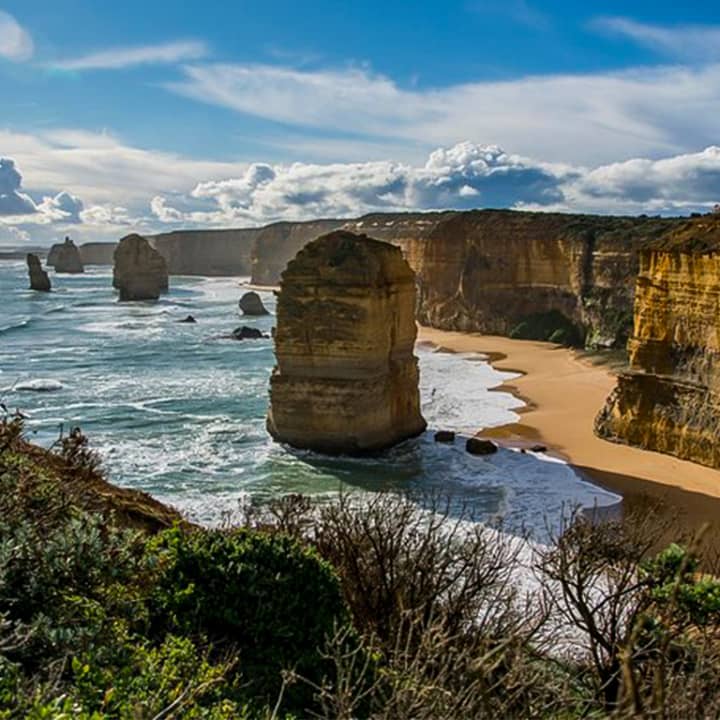
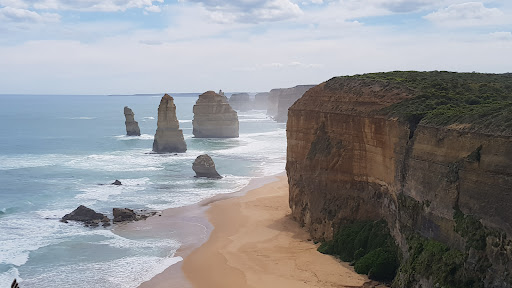
The Twelve Apostles on the coast of Victoria have long been a gem of Australia's tourism industry, with visitors flocking to catch a glimpse of the majestic limestone pillars jutting out of the waves.
Now, scientists from two Australian universities have reported the discovery of the Twelve Apostles' "cousins," dubbed the Drowned Apostles: five underwater limestone sea stacks that are estimated to be about 60,000 years old.
The sea stacks, hidden 50 meters (164 feet) beneath the water and 12 kilometers (7.46 miles) away from the Twelve Apostles, were discovered by sonar technology as part of a project to map the reef habitats along Australia's south coast and survey sea life such as rock lobster and abalone.
Limestone sea stack formations are found on coastlines around the world, formed when cliffs are eroded by harsh winds,rain and waves. The elements first carve caves into the cliffs, which are then worn away to leave just columns of limestone.
However, the scientists say this is the first time limestone stacks have been found preserved underwater and in the ocean.
"Sea stacks are usually very temporary features, with life spans only in the order of centuries, so the fact that there are these seas stacks at that depth is very remarkable," said Rhiannon Bezore, a University of Melbourne PhD student who discovered the Drowned Apostles with two others.
The Twelve Apostles are famously visible to road-trippers traveling the Great Ocean Road through the Port Campbell National Park. Sadly, there are only eight of the Twelve Apostles left to admire, with the rest worn away by the elements since they were first charted (the most recent collapse was in 2005).
The Twelve Apostles are eroding at a much faster pace than their underwater relatives because of the wind and waves that batter them.
The scientists say it is hugely surprising that the Drowned Apostles, located six kilometers (3.73 miles) offshore, managed to defy normal erosion rates while above water.
"They should have collapsed and eroded as the sea level rose," said David Kennedy, associate professor at the University of Melbourne's School of Geography. Kennedy discovered the underwater pillars with Bezore and Daniel Ierodiaconou from Deakin University.
The discovery was presented to the International Coastal Symposium in Coogee, Sydney, on Thursday morning local time...
From CNBC...
Read more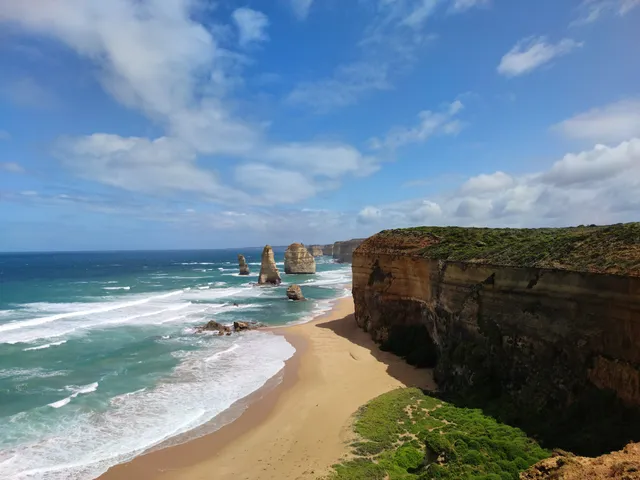
 Learn more insights from Wanderboat AI.