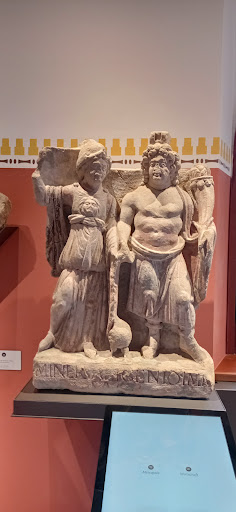
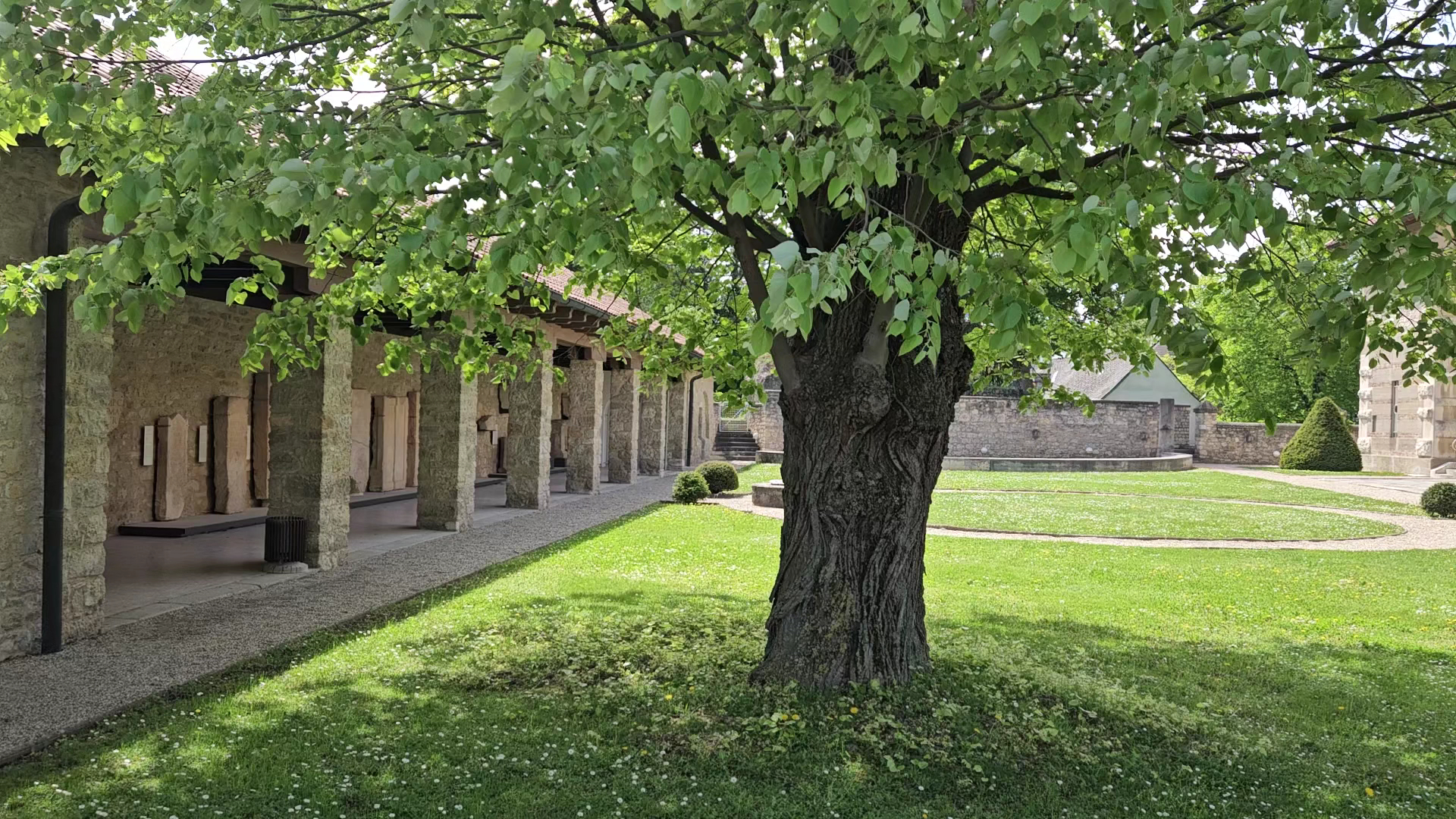
Tiberius, who later became Emperor, erected a winter camp in the Carnuntum area in the year 6 AD.
This was the beginning of 400 years of Roman presence in Carnuntum. Under Emperor Claudius amilitary camp was erected around the year 54 AD where today’s market town of Bad DeutschAltenburg
is situated, which is where the city of Carnuntum originated. A civilian settlement, the socalledcanabae legionis, grew up around the military camp and together they formed the military city.
Towards the end of the 1st century AD a civilian settlement came into being in today’s town of Petronell-Carnuntum, which later became the civilian city of Carnuntum. This was not under military command but had its own civilian administration.
Around the year 124 AD Carnuntum became a municipality under Emperor Hadrian and was known as Municipium Aelium Karnuntum. At this time the province of Pannonia was reorganized into Upper
Pannonia (pannonia superior) and Lower Pannonia (pannonia inferior). Carnuntum became the capital of the province of Upper Pannonia and the seat of the governor. Emperor Marcus Aurelius conducted
the campaign against the Marcomanni in Carnuntum during the years 171-173 AD and it has been verified that he wrote the second book of his famous “Meditations” here.
In the year 193 AD the then ruling governor Septimius Severus was proclaimed emperor by his troops
in Carnuntum, and he then raised Carnuntum to the status of a colonia (Colonia Septimia Aurelia Antoniniana Karnuntum). Carnuntum reached its greatest expansion at the end of the 2nd, beginning of the 3rd century, covering an area of some 10 sq. kilometres with more than 50,000 inhabitants.
Carnuntum thus became the second most important city north of the Alps.
There were three specific reasons that caused Carnuntum to flourish: it is strategically situated on the
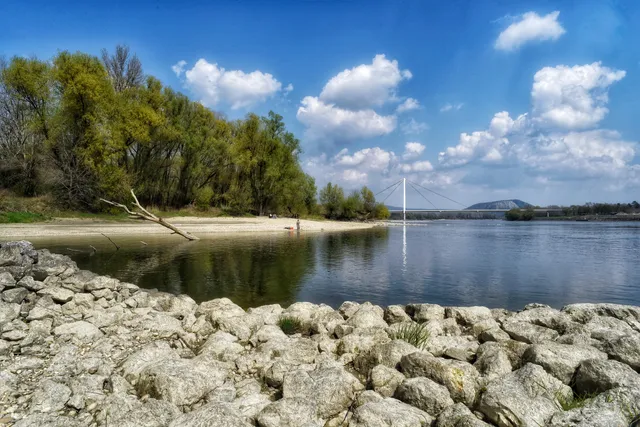
so-called Altenburger plateau. Along this stretch of river, the south bank of the Danube is some 30
metres higher than the north bank. For more than 400 years a Roman legion and an ala, a troop of cavalry, were permanently stationed in Carnuntum. There were therefore about 6,000 troops here
(5,000 infantry and 1,000 cavalry). In addition, Carnuntum was situated at the crossroads of two of the most important ancient long-distance trade routes, the Amber Road from the Baltic to Aquileia,
and the Limes Road from west to east along the north border of the Roman Empire.
Carnuntum became once more the centre of world politics for the last time in the year 308 AD.
Emperor Diocletian (who had actually retired) called a conference of emperors on 11 November 308
AD, in order to reorganize the system of tetrarchy and to bring stability to the Empire. Emperor
Constantine emerged as the new strong man in the ensuing conflicts with the tetrarchs. Thus inCarnuntum the way was paved indirectly for the rapid spread of Christianity, which culminated in theEdict of Milan in the year 313 AD.
Carnuntum was mentioned for the last time in the Roman official calendar in the year 430 AD. Afterthis date Carnuntum sank into oblivion, as the former Vindobona, today’s Vienna, gained...
Read more


 Learn more insights from Wanderboat AI.