HTML SitemapExplore
Find Things to DoFind The Best Restaurants

Wilhering Abbey — Attraction in Wilhering

Name
Wilhering Abbey
Description
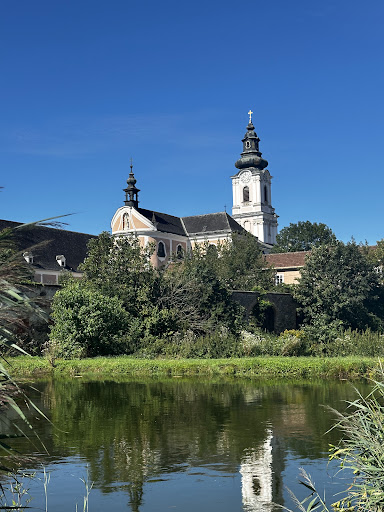
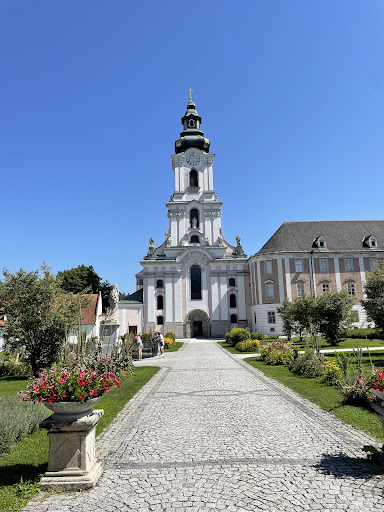
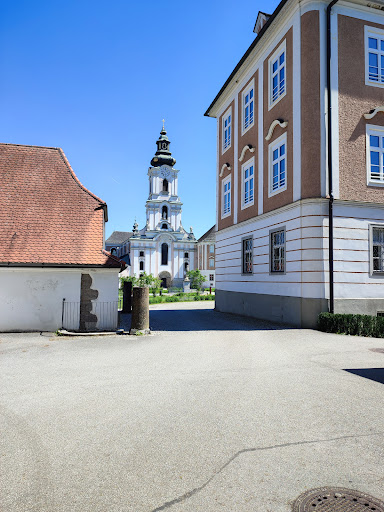
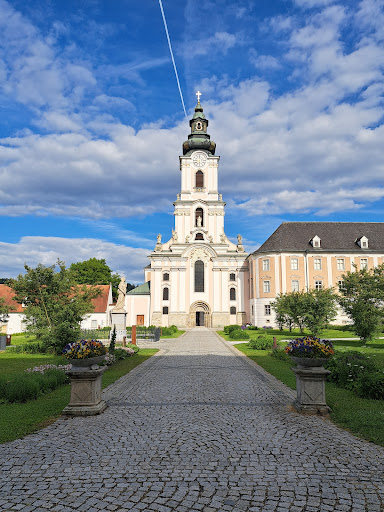
Wilhering Abbey is a Cistercian monastery in Wilhering in Upper Austria, about 8 km from Linz. Stift Wilhering is the oldest Cistercian monastery in Upper Austria. The buildings, re-constructed in the 18th century, are known for their spectacular Rococo decoration.
Nearby attractions
Nearby restaurants
Gasthaus Dürnberg
Dürnberg 31, 4100 Ottensheim, Austria
Nearby hotels
Related posts
Keywords
Wilhering Abbey tourism.Wilhering Abbey hotels.Wilhering Abbey bed and breakfast. flights to Wilhering Abbey.Wilhering Abbey attractions.Wilhering Abbey restaurants.Wilhering Abbey travel.Wilhering Abbey travel guide.Wilhering Abbey travel blog.Wilhering Abbey pictures.Wilhering Abbey photos.Wilhering Abbey travel tips.Wilhering Abbey maps.Wilhering Abbey things to do.
Wilhering Abbey things to do, attractions, restaurants, events info and trip planning

Wilhering Abbey
AustriaUpper AustriaWilheringWilhering Abbey

Basic Info

Wilhering Abbey

Linzer Str. 4, 4073 Wilhering, Austria
4.7(435)
Open 24 hours
Save
spot

Ratings & Description

Info

Wilhering Abbey is a Cistercian monastery in Wilhering in Upper Austria, about 8 km from Linz. Stift Wilhering is the oldest Cistercian monastery in Upper Austria. The buildings, re-constructed in the 18th century, are known for their spectacular Rococo decoration.

Cultural
Scenic
Relaxation
Family friendly
Accessibility
attractions: , restaurants: Gasthaus Dürnberg
logoLearn more insights from Wanderboat AI.
Phone
+43 7226 231112
Website
stiftwilhering.at

Plan your stay

hotel
Pet-friendly Hotels in Wilhering
Find a cozy hotel nearby and make it a full experience.
hotel
Affordable Hotels in Wilhering
Find a cozy hotel nearby and make it a full experience.
hotel
The Coolest Hotels You Haven't Heard Of (Yet)
Find a cozy hotel nearby and make it a full experience.
hotel
Trending Stays Worth the Hype in Wilhering
Find a cozy hotel nearby and make it a full experience.

Reviews

Nearby restaurants of Wilhering Abbey

Gasthaus Dürnberg

Gasthaus Dürnberg

Gasthaus Dürnberg

4.5

(143)

Click for details
Get the Appoverlay
Get the AppOne tap to find yournext favorite spots!
Wanderboat LogoWanderboat

Your everyday Al companion for getaway ideas

CompanyAbout Us
InformationAI Trip PlannerSitemap
SocialXInstagramTiktokLinkedin
LegalTerms of ServicePrivacy Policy

Get the app

© 2025 Wanderboat. All rights reserved.

Posts

Nadia MustafaNadia Mustafa
Such a gorgeous interior, definitely worth a visit!!! Visiting the church and the chapel is free, the museum requires a ticket. The monastery was founded in 1146. After a fire in 1733, the church was rebuilt into the most important rococo church in Austria. The 850-year-old Cistercian monastery shaped the community in many ways. The interior is decisive for the reputation of the building. The effect is based on the harmony of the extremely varied, colorful, picturesque, figurative, ornamental decoration as well as on the well thought-out incidence of light. Guided tours of the monastery are offered, and a café and museum store invite visitors to linger and browse. The garden can also be visited, with a baroque pavilion and a palm house from the Biedermeier period, as well as an educational tree trail.
Gaspar Le MassonGaspar Le Masson
L’abbaye fut fondée en 1146 lorsque les frères Ulrich et Kolo de Wilhering offrirent leur ancien château à l’ordre cistercien, conformément aux souhaits de leur défunt père. Elle fut initialement peuplée par des chanoines réguliers, mais ceux-ci furent rapidement remplacés par des moines cisterciens venus de l’abbaye de Rein, en Styrie, dès le 30 septembre 1146 . Toutefois, à la fin du XIIᵉ siècle, la communauté faillit disparaître suite à des difficultés persistantes : en 1185, il ne restait plus que deux moines. L’abbaye fut alors repeuplée par des moines de l’abbaye d’Ebrach . Protégée par le duc Léopold VI et gratifiée de donations, l’abbaye prospéra, fondant à son tour plusieurs monastères : Hohenfurth (aujourd’hui Vyšší Brod, 1259), Engelszell (1293) et Säusenstein (1336) . Durant la Réforme, l’abbaye fut sérieusement menacée : l’abbé Erasmus Mayer s’enfuit à Nuremberg avec les fonds du monastère et se maria. En 1585, l’abbatiale était vide. C’est l’abbé Alexander a Lacu, nommé dans le cadre de la Contre-Réforme, qui restaura l’ordre, remit en ordre la gestion et redonna vie à la communauté religieuse . Un incendie majeur en 1733, allumé par une agitation populaire, détruisit presque entièrement l’abbaye. Reconstruite rapidement, elle fut remeublée dans le style rococo, devenant l’un des monuments sacrés rococo les plus remarquables d’Autriche . En 1895, l’abbé Theobald Grasböck fonda un gymnasium (collège d’enseignement secondaire). Fermé sous le régime nazi en 1938, il fut rétabli dès la fin de la Seconde Guerre mondiale . Pendant la guerre, l’abbaye fut confisquée, les moines expulsés, certains envoyés en camps, et l’abbé Bernhard Burgstaller mourut en détention en 1941. Reprise par les Américains en 1945, la vie monastique et l’école furent rapidement rétablies . Le Stift Wilhering demeure une abbaye cistercienne active, implantée dans un cadre naturel remarquable avec forêts et terres agricoles qui assurent son autosuffisance . L’église abbatiale est particulièrement réputée pour son décor rococo d’exception : fresques, stucs dorés, sculptures et peintures créent une atmosphère céleste harmonieuse et captivante
Sebastian .D. HofmannSebastian .D. Hofmann
Das gute liegt viel zu oft sehr nahe. So war es in diesem Fall mit Stift Wilhering. Ich habe schon einige Stifte besucht, und nun war endlich auch einmal die Zeit für diesen Ort. Ich habe mich für eine Führung entschieden und es wahrlich nicht bereut. Sehr engagiert und ausführlich, in einem sehr freundlichen Miteinander, wurde die kleine Besucher Gruppe gut betreut. Mit vielen Informationen versorgt, konnten teile des Stiftes besichtigt werden. Eventuelle Fragen wurden gerne und geduldig beantwortet. Das Stift ist definitiv einen Besuch wert. Es ist eine imposante Anlage und der Höhepunkt ist die barocke und prächtige Stifts Kirche. Dazu ein kleiner aber entzückender Park mit vielen Informationen zu den Bäumen und Pflanzen. Parkplätze sind ausreichend vorhanden und auch eine Möglichkeit zur Pause mit Getränken und Verzehr ist im Innenbereich des Stiftes vorhanden. Der Stifts Laden ist eher ernüchternd, das habe ich schon sehr viel besser erleben dürfen. Dafür entschädigen dann aber 800 Engel in der Stifts Kirche, wie ein kleines Ratespiel ergeben hat. Mir hat der Besuch dort viel Freude gemacht, und so liegt es an mir, ein merci zu sagen für die freundliche Begegnung.
See more posts
See more posts
hotel
Find your stay

Pet-friendly Hotels in Wilhering

Find a cozy hotel nearby and make it a full experience.

Such a gorgeous interior, definitely worth a visit!!! Visiting the church and the chapel is free, the museum requires a ticket. The monastery was founded in 1146. After a fire in 1733, the church was rebuilt into the most important rococo church in Austria. The 850-year-old Cistercian monastery shaped the community in many ways. The interior is decisive for the reputation of the building. The effect is based on the harmony of the extremely varied, colorful, picturesque, figurative, ornamental decoration as well as on the well thought-out incidence of light. Guided tours of the monastery are offered, and a café and museum store invite visitors to linger and browse. The garden can also be visited, with a baroque pavilion and a palm house from the Biedermeier period, as well as an educational tree trail.
Nadia Mustafa

Nadia Mustafa

hotel
Find your stay

Affordable Hotels in Wilhering

Find a cozy hotel nearby and make it a full experience.

Get the Appoverlay
Get the AppOne tap to find yournext favorite spots!
L’abbaye fut fondée en 1146 lorsque les frères Ulrich et Kolo de Wilhering offrirent leur ancien château à l’ordre cistercien, conformément aux souhaits de leur défunt père. Elle fut initialement peuplée par des chanoines réguliers, mais ceux-ci furent rapidement remplacés par des moines cisterciens venus de l’abbaye de Rein, en Styrie, dès le 30 septembre 1146 . Toutefois, à la fin du XIIᵉ siècle, la communauté faillit disparaître suite à des difficultés persistantes : en 1185, il ne restait plus que deux moines. L’abbaye fut alors repeuplée par des moines de l’abbaye d’Ebrach . Protégée par le duc Léopold VI et gratifiée de donations, l’abbaye prospéra, fondant à son tour plusieurs monastères : Hohenfurth (aujourd’hui Vyšší Brod, 1259), Engelszell (1293) et Säusenstein (1336) . Durant la Réforme, l’abbaye fut sérieusement menacée : l’abbé Erasmus Mayer s’enfuit à Nuremberg avec les fonds du monastère et se maria. En 1585, l’abbatiale était vide. C’est l’abbé Alexander a Lacu, nommé dans le cadre de la Contre-Réforme, qui restaura l’ordre, remit en ordre la gestion et redonna vie à la communauté religieuse . Un incendie majeur en 1733, allumé par une agitation populaire, détruisit presque entièrement l’abbaye. Reconstruite rapidement, elle fut remeublée dans le style rococo, devenant l’un des monuments sacrés rococo les plus remarquables d’Autriche . En 1895, l’abbé Theobald Grasböck fonda un gymnasium (collège d’enseignement secondaire). Fermé sous le régime nazi en 1938, il fut rétabli dès la fin de la Seconde Guerre mondiale . Pendant la guerre, l’abbaye fut confisquée, les moines expulsés, certains envoyés en camps, et l’abbé Bernhard Burgstaller mourut en détention en 1941. Reprise par les Américains en 1945, la vie monastique et l’école furent rapidement rétablies . Le Stift Wilhering demeure une abbaye cistercienne active, implantée dans un cadre naturel remarquable avec forêts et terres agricoles qui assurent son autosuffisance . L’église abbatiale est particulièrement réputée pour son décor rococo d’exception : fresques, stucs dorés, sculptures et peintures créent une atmosphère céleste harmonieuse et captivante
Gaspar Le Masson

Gaspar Le Masson

hotel
Find your stay

The Coolest Hotels You Haven't Heard Of (Yet)

Find a cozy hotel nearby and make it a full experience.

hotel
Find your stay

Trending Stays Worth the Hype in Wilhering

Find a cozy hotel nearby and make it a full experience.

Das gute liegt viel zu oft sehr nahe. So war es in diesem Fall mit Stift Wilhering. Ich habe schon einige Stifte besucht, und nun war endlich auch einmal die Zeit für diesen Ort. Ich habe mich für eine Führung entschieden und es wahrlich nicht bereut. Sehr engagiert und ausführlich, in einem sehr freundlichen Miteinander, wurde die kleine Besucher Gruppe gut betreut. Mit vielen Informationen versorgt, konnten teile des Stiftes besichtigt werden. Eventuelle Fragen wurden gerne und geduldig beantwortet. Das Stift ist definitiv einen Besuch wert. Es ist eine imposante Anlage und der Höhepunkt ist die barocke und prächtige Stifts Kirche. Dazu ein kleiner aber entzückender Park mit vielen Informationen zu den Bäumen und Pflanzen. Parkplätze sind ausreichend vorhanden und auch eine Möglichkeit zur Pause mit Getränken und Verzehr ist im Innenbereich des Stiftes vorhanden. Der Stifts Laden ist eher ernüchternd, das habe ich schon sehr viel besser erleben dürfen. Dafür entschädigen dann aber 800 Engel in der Stifts Kirche, wie ein kleines Ratespiel ergeben hat. Mir hat der Besuch dort viel Freude gemacht, und so liegt es an mir, ein merci zu sagen für die freundliche Begegnung.
Sebastian .D. Hofmann

Sebastian .D. Hofmann

See more posts
See more posts

Reviews of Wilhering Abbey

4.7
(435)
avatar
5.0
30w

Ein wunderschönes Stift und Zisterzienserkloster, 1146 gegründet, mit einer Kirche, die zwischen 1733 bis 1751 nach einem Brand im überprächtigsten Rokoko gestaltet wurde. Bereits der Gang vom Parkplatz zur Kirche ist ein Erlebnis. Man nähert sich über den Hof, links Kultur und Kulinarik mit Cafe, Shop, Museum u. a., allerdings sehr dezent, gepflegt und entspannt, rechts das Gymnasium, das Hauptgebäude und überall schönster Rasen und bunte Blumen. Natürlich vorausgesetzt, man kommt im Frühling oder Sommer. Je näher man der Kirche kommt, desto tiefer versinkt man in die Erwartung, die sich anstaut und darauf vorbereitet, durch die Kirchentür zu treten. Tagsüber steht sie offen. Also betritt man sie. Ist der erste Schritt in die Kirche getan, öffnet man seitlich eine Tür. Die Spannung wächst. Und dann wird es für einen Augenblick dunkler und stiller und kühler. Man tut ein paar Schritte nach vorn. Und merkt, dass man bereits eingetaucht ist in eine Welt, die sich hier erst öffnet. Sie erstrahlt prunkvoll und verspielt, aber immer mit Ruhe und Würde. Die Weite, die draußen noch bis zum Horizont mit seinen grünen Hügeln reichte, wird hier zur Tiefe. In ihrem Zentrum steht der Altar. Egal, was man tut, man wird von ihm angezogen. Selbst, wenn man nach links und rechts schaut und die Gemälde und Statuen und Engel betrachtet. Selbst, wenn man sich auf halbem Wege umdreht und zur Empore mit der Orgel blickt. Selbst, wenn die Augen nach oben wandern und sich staunend in der frohen Farblichkeit der Decke verlieren. Und ja, das tut jeder, der hier hereinkommt. Vor dem Altar bleibt man stehen, kniet. Es herrscht Schweigen. Und es duftet nach Weihrauch. Also setzt man sich in eine Bank, um den Augenblick zu genießen, ebenfalls zu schweigen und den Duft in sich aufzunehmen. Nach einer Weile erhebt man sich, bekreuzigt sich, dreht sich um und geht zurück. Langsam, ganz langsam. Dabei betrachtet man nochmals die Seiten, die Orgel und die Decke. Eigentlich will man die Kirche gar nicht verlassen. Draußen sollte man in den Stiftspark, wo eine fast 900 Jahre alte Eibe steht, ein Mammutbaum, der seinem Namen alle Ehre macht und ein Brunnen vor sich hinsprudelt. Man kann auch zur Donau hinunterspazieren, am Teich vorbei. Dort führt der sogenannte Treppelweg, an dem früher die Schiffe von Pferden gezogen wurden bzw. gezogen werden sollten. Heute ziehen die Boote von allein vorbei. Man schaut nach links Richtung Ottensheim, man blickt nach rechts Richtung Linz. Und dann kehrt man zurück zum Parkplatz. Wirft der Kirche zwischen den Gebäuden und Bäumen noch einen Blick zu. Dann steigt man ins Auto ein und fährt los. Egal, wohin man fährt, man nimmt ein Stück vom Stift Wilhering mit...

   Read more
avatar
5.0
1y

Such a gorgeous interior, definitely worth a visit!!! Visiting the church and the chapel is free, the museum requires a ticket.

The monastery was founded in 1146. After a fire in 1733, the church was rebuilt into the most important rococo church in Austria. The 850-year-old Cistercian monastery shaped the community in many ways. The interior is decisive for the reputation of the building. The effect is based on the harmony of the extremely varied, colorful, picturesque, figurative, ornamental decoration as well as on the well thought-out incidence of light.

Guided tours of the monastery are offered, and a café and museum store invite visitors to linger and browse. The garden can also be visited, with a baroque pavilion and a palm house from the Biedermeier period, as well as an...

   Read more
avatar
5.0
16w

L’abbaye fut fondée en 1146 lorsque les frères Ulrich et Kolo de Wilhering offrirent leur ancien château à l’ordre cistercien, conformément aux souhaits de leur défunt père. Elle fut initialement peuplée par des chanoines réguliers, mais ceux-ci furent rapidement remplacés par des moines cisterciens venus de l’abbaye de Rein, en Styrie, dès le 30 septembre 1146 . Toutefois, à la fin du XIIᵉ siècle, la communauté faillit disparaître suite à des difficultés persistantes : en 1185, il ne restait plus que deux moines. L’abbaye fut alors repeuplée par des moines de l’abbaye d’Ebrach .

Protégée par le duc Léopold VI et gratifiée de donations, l’abbaye prospéra, fondant à son tour plusieurs monastères : Hohenfurth (aujourd’hui Vyšší Brod, 1259), Engelszell (1293) et Säusenstein (1336) .

Durant la Réforme, l’abbaye fut sérieusement menacée : l’abbé Erasmus Mayer s’enfuit à Nuremberg avec les fonds du monastère et se maria. En 1585, l’abbatiale était vide. C’est l’abbé Alexander a Lacu, nommé dans le cadre de la Contre-Réforme, qui restaura l’ordre, remit en ordre la gestion et redonna vie à la communauté religieuse .

Un incendie majeur en 1733, allumé par une agitation populaire, détruisit presque entièrement l’abbaye. Reconstruite rapidement, elle fut remeublée dans le style rococo, devenant l’un des monuments sacrés rococo les plus remarquables d’Autriche .

En 1895, l’abbé Theobald Grasböck fonda un gymnasium (collège d’enseignement secondaire). Fermé sous le régime nazi en 1938, il fut rétabli dès la fin de la Seconde Guerre mondiale . Pendant la guerre, l’abbaye fut confisquée, les moines expulsés, certains envoyés en camps, et l’abbé Bernhard Burgstaller mourut en détention en 1941. Reprise par les Américains en 1945, la vie monastique et l’école furent rapidement rétablies .

Le Stift Wilhering demeure une abbaye cistercienne active, implantée dans un cadre naturel remarquable avec forêts et terres agricoles qui assurent son autosuffisance . L’église abbatiale est particulièrement réputée pour son décor rococo d’exception : fresques, stucs dorés, sculptures et peintures créent une atmosphère céleste harmonieuse...

   Read more
Page 1 of 7
Previous
Next