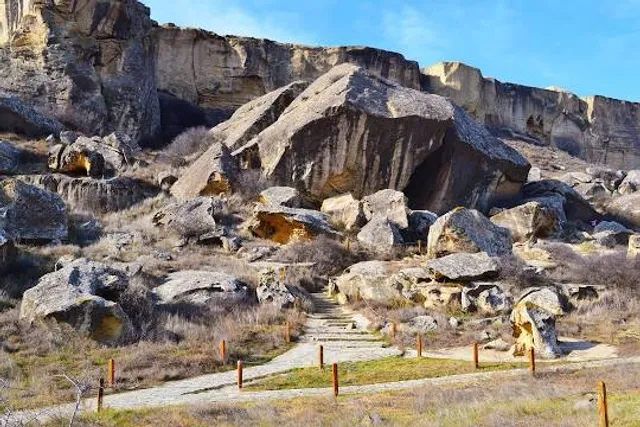
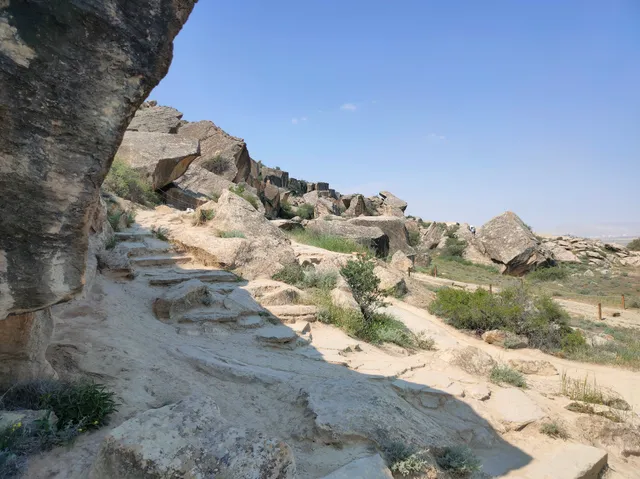
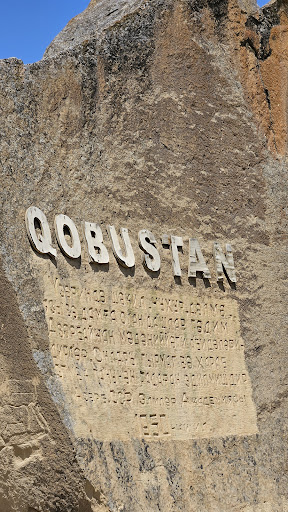
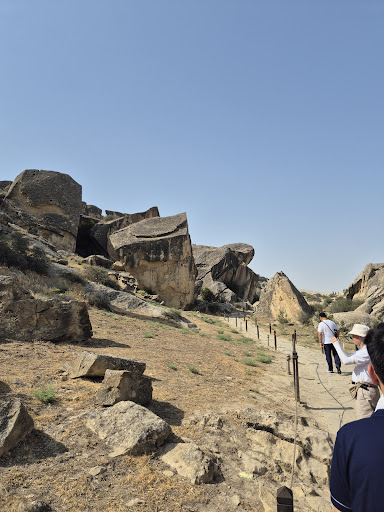
The Gobustan Rock Art Museum and its surrounding cultural reserve offer a rare fusion of prehistoric art, cultural heritage, and natural wonder. Whether you're interested in archaeology, nature, or both, the experience is immersive-layered with human history and shaped by millennia of time and tradition. The Museum & Reserve Offers:
Ancient Rock Art -
Visitors can observe depictions of daily life over millennia: hunting scenes, ritual dances, camel caravans, boats, celestial symbols, warriors, and even bullfights. These images chronicle cultures from the Paleolithic through the Middle Ages.
Museum Experience -
The Petroglyph Museum has 12 exhibition halls. It features immersive displays, a 45‑seat 3D cinema, and exhibits highlighting Gobustan’s place among 200 similar global monuments.
Unique Natural Attractions -
Gaval Dash ("Tambourine Stone"): a natural musical rock that produces a resonant sound when struck—exclusive to Gobustan.
Mud Volcanoes: you can also visit a Mud Volcano Tourism Complex which includes quad‑bike paths, therapeutic baths and a minerals exhibition.
At the entrance to the Museum you will find number of cars that are ready to take you to the Mud volcanos with small payment. It costs 5 to 10 azn per person (depends on your bargain skills) to have a ride to volcanos and back.
At the Museum you will also find souvenir shop, small kiosk with refreshments like cold drinks...
Read moreAfter visiting the Gobustan Museum, we continued on to the Gobustan Rock Art Cultural Landscape, and it was a truly unforgettable experience. This site is a UNESCO World Heritage Site, home to one of the world’s richest collections of prehistoric rock engravings, dating back as far as 40,000 years ago.
The area contains over 6,000 petroglyphs carved into limestone rocks, depicting scenes of hunting, dancing, rituals, animals, boats, and symbolic markings. These engravings provide deep insight into the lives, beliefs, and environment of prehistoric humans who lived here during the Upper Paleolithic, Mesolithic, Neolithic, and even Bronze and Iron Ages.
What makes Gobustan truly unique is its continuity — the petroglyphs span thousands of years, showing the evolution of human thought and social life. Some of the carvings even suggest early forms of music and communal ceremonies, as seen in dancing figures and drum-like patterns.
The site also features:
Natural caves and rock shelters where ancient people once lived,
A stunning view of the surrounding semi-desert and Caspian basin,
And Roman inscriptions, including one from the 1st century AD — rare proof of Roman presence this far east.
Walking through the rocks feels like stepping into a prehistoric time capsule. With the right lighting, the engravings come to life, and the silence of the landscape enhances...
Read moreLa posizione indicata in Google Maps è precisa, facilmente raggiungibile con auto propria da Baku (centro città). Ci sono anche indicazioni lungo la strada. Quello che a noi non era chiaro era la correlazione tra questo sito storico-archeologico e i vulcani di fango. Non avevamo trovato nessuna indicazione in merito alla modalità di visita all'area interessata dal fenomeno dei mud volcanoes. Quindi abbiamo seguito le indicazioni per la riserva (erano circa le ore 13:00) e in prossimità dell'ingresso siamo stati fermati prima da un signore che si è proposto di portarci a vedere i vulcani di fango spiegandoci che al ritorno poi avremmo avuto tutto il tempo di visitare il museo (che sarebbe stato aperto fino alle 17). Noi abbiamo declinato perché si capiva che non era una guida ufficiale e ci siamo diretti verso l'ingresso della riserva/museo. A quel punto siamo stati fermati dai poliziotti all'ingresso i quali ci hanno spiegato che per visitare i vulcani di fango avremmo dovuto essere accompagnati da una persona del posto e che avremmo potuto parcheggiare la nostra auto proprio lì davanti sul bordo strada. Ci hanno ripetuto che avremmo poi avuto tutto il tempo di visitare il museo e il sito archeologico. Quindi ci hanno indicato un signore con un'auto (taxi) tipo LADA modello piuttosto vecchio (non una jeep). Questo signore era parcheggiato vicino al primo signore che ci aveva fermato inizialmente. I poliziotti ci hanno spiegato che avremmo dovuto pagare 40 Manat in totale e che se il signore avesse chiesto un extra avremmo dovuto rifiutarci di pagarlo ma che non avremmo dovuto riferire a lui che erano stati loro a dircelo. Così siamo saliti a bordo della LADA. Il signore sembrava molto cordiale. Dopo qualche minuto di percorrenza ha cercato di spiegarci (parlava pochissimo inglese) che c'era un vulcano più grande e che avrebbe potuto accompagnarci ma che avremmo dovuto pagare un extra etc...noi abbiamo declinato. Nel frattempo la strada che stavamo percorrendo era piuttosto dissestata ma il panorama molto bello. Una volta arrivati al sito c'erano molti visitatori arrivati come noi con con autisti locali a bordo di auto simili a quella su cui avevamo viaggiato noi ma anche diverse jeep (che sono in effetti più adatte alla situazione) e gruppi più strutturati. Siamo scesi e abbiamo fatto una piccola esplorazione, saremo rimasti circa 15 minuti. Ad un certo punto il nostro autista ci ha fatto cenno che dovevamo rientrare (perchè per lui il tempo era prezioso) ma noi volevamo percorrere qualche metro in più a piedi per goderci il panorama e vedere un altro cratere poco distante (veramente pochi metri). Da lì si è aperta una discussione molto spiacevole in merito al famoso extra che avremmo dovuto pagare ma che noi per principio non abbiamo accordato. In sostanza la nostra visita è stata rovinata e ci siamo sentiti presi in giro oltreché non abbiamo avuto abbastanza tempo per goderci il panorama e capire il fenomeno naturale dei vulcani. Abbiamo passato più tempo a discutere che a fare la visita. Infine, quello che invece abbiamo capito è che bisogna accettare di essere trasportati da questi signori (privati) locali e che tale pratica è accettata e condivisa a tutti i livelli... Una volta ritornati all'ingresso del museo siamo entrati nell'area archeologica, abbiamo pagato il biglietto di ingresso. E' stato quindi finalmente chiaro che l'area vulcanica e quella dei petroglifi sono situazioni distinte. Visitato il museo (semplice ma interessante), con la nostra auto abbiamo raggiunto il punto dal quale poi si sarebbe proceduto a piedi per vedere da vicino i petroglifi. Il percorso è curatissimo e il panorama stupendo! Consigliamo per la visita un orario tardo pomeridiano perché se la giornata è limpida la luce è bellissima. Speriamo che in un futuro tutta l'area venga gestita da un ente governativo, che venga adeguatamente salvaguardata e che le visite siano formalizzate anche dando la possibilità alla popolazione locale di gestire i trasporti ma senza dover incorrere in spiacevoli...
Read more