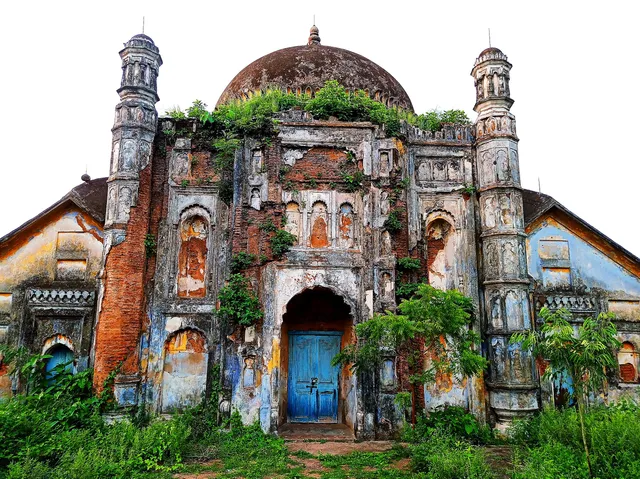
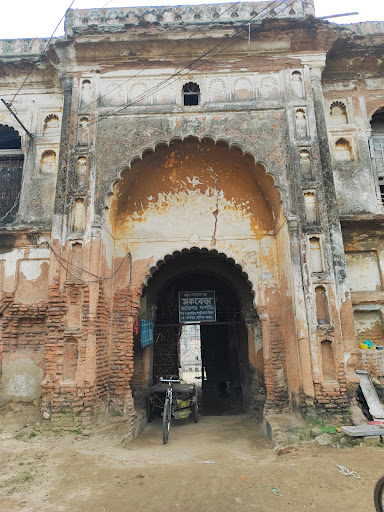
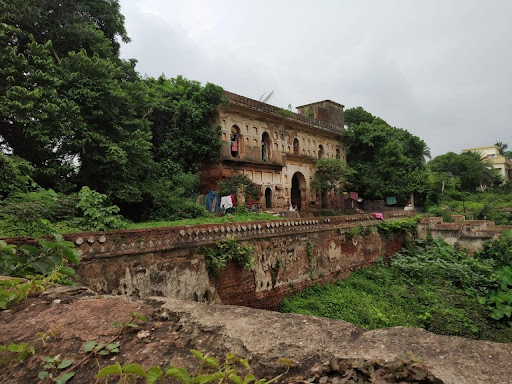
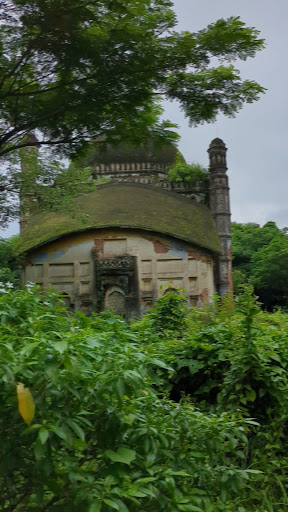
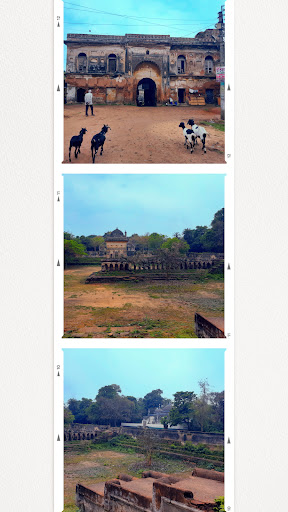
This place needs to be preserved urgently. Those responsible for its upkeep are failing. This place has historical significance. Notably, the Nababbari Palace, constructed in 1718 by the Mughal Emperor Farrukhsiyar, is a testament to the architectural brilliance and grandeur of the era. It has witnessed numerous historical events and has been a cornerstone of local heritage. Protecting this site means preserving a vital piece of our history for future generations.
Additionally, the Mausoleum of Khwaja Anwar, who was the Amir of the Governor of Bengal Azim-us-Shan, the grandson of the last great Mughal Emperor Aurangzeb, is located here. Khwaja Anwar was killed in an ambush in 1698. Later in 1718, the then Mughal emperor Farrukhsiyar built a magnificent tomb in his honor. This tomb also stands as a significant historical monument within this site. This place urgently needs government attention to ensure the preservation of our invaluable...
Read moreThe Nawab Bari of Khaja Anwar Berh is a three hundred years old building which is situated in southern Bardhaman. Surrounded by high walls on all the sides, this structure belongs the Mughal era and the style of architecture employed to construct this building is a perfect blend of the Indo-Syrian style of architecture. The building houses the tombs of Syed Khaja Anowar and Syed Abul Kasem, who were the commanders of the Mughal army and had been conspired to be murdered at this place. The Nawab Bari was basically set up centring the graves of these two Mughal commanders of the army. It also has a deep pond inside the building and a wind-hall or ‘hawa-ghar’ is situated right in the middle of this pond.
The style of architecture of this place is often compared to the architecture of the tomb of Sher Shah Suri in Sasaram. The place is quite a famous tourist spot as hundreds of visitors come here on the occasion of the holy bath on the first...
Read moreLocated at the southern part of Purba Burdwan district, this is a 300+ years old Indo-syrian architecture. In 1715, Mughat emperor Farrukhsiyar built this magnificent monument along with a functional mosque on the tomb of Syed Khaja Anwar, commander of the mughal army. This complex is surrounded with high walls and a deep pond. There is a small pavilion in the middle of the pond which is known as Wind-hall or Hawa-Mahal. Though this property is under West Bengal Heritage Commission, no hopeful maintenance is noticed for several years. Nowadays, no tourist or local is allowed to visit this historical sculpture except people who offer namaz in the mosque.
One of the caretakers told that the most preferable time to visit the tomb is on the occasion of the holy bath on the first day of Magha (a month in Hindu calendar) when hundreds of visitors are welcomed in Nawab Bari to see...
Read more