Narayanganj is located on the Sitalakhya River, which plays an important role in transporting people and goods. It was the same even 300 years ago. The river was the main channel for any merchant ships coming to the area. To stop any unwanted entries through the river, several observation forts were built along it. The Hajiganj Fort is one of those.
The fort was situated on the western bank of the Sitalakhya at Hajiganj in Narayanganj district. The fort bears the characteristics of a water fort; it was originally built at the point where the old Buriganga discharged into the Sitalakhya. The exact year of the fort’s establishment is uncertain, but it was likely built in the 17th century during Mughal era.
The fort, also known as Khizirpur Fort, appears to be a contemporary of the Sonakanda Fort on the eastern bank of the Sitalakhya in Narayanganj, and Idrakpur Fort in Munshiganj. Most probably it was established during the time of Mir Jumla, a Mughal subahdar of Bengal, to counter the raids of Magh (Arakanese) and Portuguese pirates.
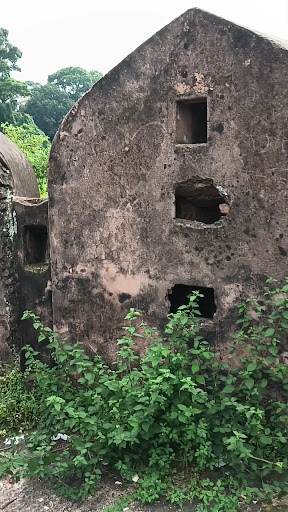
Unlike other forts in Bangladesh, the Hajiganj Fort is hexagonal in shape, with round corner bastions that were used to place cannons. Three of the bastions that face the river are larger in diameter, while the other three are smaller. On the inner side of the curtain wall, there is a 1.22 metre-high rampart walkway from the base of the fortified wall, which contains several musket holes. Each of the corner bastions has a staircase leading up to the rampart, which has a parapet with merlons and wide crenels meant for firing guns.
The fort has a facade on the northeast side. The only small gateway of the fort faces the river, which indicates that communication was by water. A pentagonal gateway is built on a rectangular structure, with engraved rectangular arches on both sides. The top of the gateway is decorated with a lotus finial.
The fort has an observatory tower inside which is now in ruins. As there are no other structures inside the fort, it seems it was occupied only during the rainy season when pirates were expected. The fort’s occupants probably used tents for shelter.
Hajiganj Fort is a significant example of the brilliant defence strategy of the Mughals. The fort area is now being used as the Fire Brigade headquarters of...
Read moreFort area was a sports complex before the World War-II. Annual Sports of the local schools used to be held in the open ground around the Fort. During the World War-II it was converted to a temporary camp for the American soldiers with a Field Hospital built in a portion of the Fort. The Field Hospital was converted to a Maternity Hospital after the end of the war and later it was given to the Fire Brigade. Fire Brigade has been shifted to its own building nearby and the Archaeology Department has recently reconstructed the site to return it to its original shape.
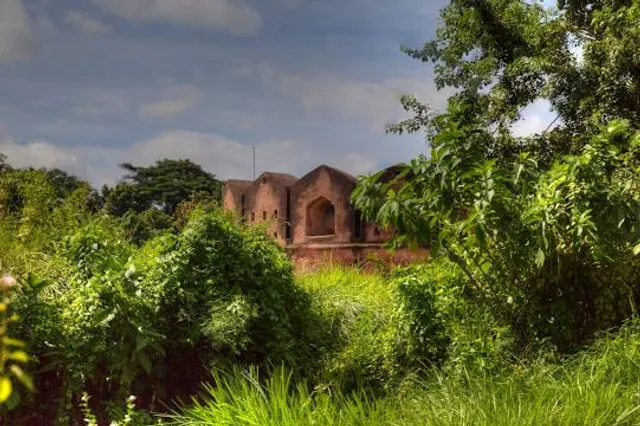
After partition of the country in 1947, Jute based activities started to shift from Kolkata to Narayanganj area in the newly created country. At that time to meet the demand for storage area, the Jute Board constructed a number of jute godowns in this open space. On the decline of jute based activities, Jute Board has leased out almost the entire godown area to private individuals. Thus the process of premature death of this open space was completed.
Fort side open area has been converted in to godowns for storage of jute during fifties of the last century. After liberation, due to decline of jute related activities, these godowns along with remaining vacant land have been sold out or leased out to private individuals. The buyers/leaseholders of this land have converted these godowns in to mostly dyeing factories without effluent treatment plant. This has created large scale pollution in the area and resulted in the complete loss of this valuable open space and...
Read moreHajiganj Fort: A Glimpse into the Mughal Era
Hajiganj Fort, located in Narayanganj, is a fascinating historical site that offers a glimpse into the Mughal era in Bangladesh. This ancient fort, built around 1610, stands as a testament to the strategic importance of the region during that time.
Key Features:
Impressive Architecture: The fort's pentagonal structure, machicolated walls, and bastions showcase the architectural brilliance of the Mughal era.
Strategic Significance: Its location on the banks of the river made it a crucial defensive outpost against potential threats.
Historical Significance: The fort played a significant role in the region's history, witnessing various political and military events.
Visiting the Fort:
While the fort is currently used as a fire brigade headquarters, visitors can still explore its impressive structure and imagine the grandeur of its past. It's a great place for history enthusiasts and those interested in exploring the architectural marvels of Bangladesh.
Things to Consider:
Accessibility: The fort is easily accessible by road and local transportation.
Best Time to Visit: The best time to visit is during the dry season when the weather is pleasant.
Photography: Photography is allowed, but it's important to respect the historical significance of the site.
If you're interested in history and architecture, Hajiganj Fort is definitely worth a visit. It's a reminder of the rich cultural heritage of Bangladesh and the enduring legacy of the...
Read more