HTML SitemapExplore
logo
Find Things to DoFind The Best Restaurants

Murapara Jamidar Bari — Attraction in Dhaka Division

Name
Murapara Jamidar Bari
Description
Nearby attractions
Nearby restaurants
Nearby hotels
Related posts
Keywords
Murapara Jamidar Bari tourism.Murapara Jamidar Bari hotels.Murapara Jamidar Bari bed and breakfast. flights to Murapara Jamidar Bari.Murapara Jamidar Bari attractions.Murapara Jamidar Bari restaurants.Murapara Jamidar Bari travel.Murapara Jamidar Bari travel guide.Murapara Jamidar Bari travel blog.Murapara Jamidar Bari pictures.Murapara Jamidar Bari photos.Murapara Jamidar Bari travel tips.Murapara Jamidar Bari maps.Murapara Jamidar Bari things to do.
Murapara Jamidar Bari things to do, attractions, restaurants, events info and trip planning
Murapara Jamidar Bari
BangladeshDhaka DivisionMurapara Jamidar Bari

Basic Info

Murapara Jamidar Bari

Rupgonj Upazila Rd, Murapara, Bangladesh
4.3(735)
Closed
Save
spot

Ratings & Description

Info

Cultural
Scenic
Family friendly
attractions: , restaurants:
logoLearn more insights from Wanderboat AI.
Open hoursSee all hours
Tue9 AM - 6 PMClosed

Plan your stay

hotel
Pet-friendly Hotels in Dhaka Division
Find a cozy hotel nearby and make it a full experience.
hotel
Affordable Hotels in Dhaka Division
Find a cozy hotel nearby and make it a full experience.
hotel
The Coolest Hotels You Haven't Heard Of (Yet)
Find a cozy hotel nearby and make it a full experience.
hotel
Trending Stays Worth the Hype in Dhaka Division
Find a cozy hotel nearby and make it a full experience.

Reviews

Get the Appoverlay
Get the AppOne tap to find yournext favorite spots!
Wanderboat LogoWanderboat

Your everyday Al companion for getaway ideas

CompanyAbout Us
InformationAI Trip PlannerSitemap
SocialXInstagramTiktokLinkedin
LegalTerms of ServicePrivacy Policy

Get the app

© 2025 Wanderboat. All rights reserved.
logo

Posts

tapash ghoshtapash ghosh
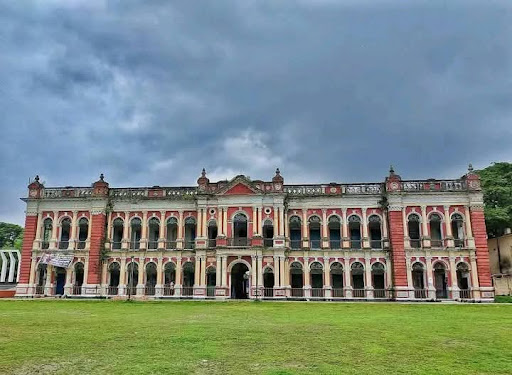
Murapara Rajbari, also known as Murapara Zamindar Palace, is a historic palace located in Murapara village, Rupganj Upazila of Narayanganj District, Bangladesh. Situated approximately 25 kilometers southeast of Dhaka, it stands as a testament to the country's rich architectural heritage. Historical Background The palace was established by Ramratan Banerjee, who served as a treasurer under the Natore estate during the British colonial period. Construction of the palace began in 1889. Over the years, the palace has witnessed significant events, including serving as a refuge during the 1971 Liberation War. Post-independence, it was repurposed as an educational institution and now houses the Murapara Degree College. Architectural Features The two-story palace showcases a blend of Indo-Saracenic Revival and Bengali architectural styles. Its grand frontage spans approximately 200 feet, featuring semicircular arches and a 10-foot-wide verandah that runs along both levels, providing access to the rooms. The expansive grounds encompass two large ponds—one at the front and another at the back of the palace—adding to its scenic beauty. Additionally, there are two old temples located on the western side of the premises, known as the Durga and Shiva temples. Visiting Information For those interested in exploring Murapara Rajbari, it is accessible via the Dhaka-Chittagong highway. Travelers can reach the palace by taking the Rupganj road from the highway and then following directions to Murapara College, a well-known landmark in the area. The palace is open to visitors from 9:00 AM to 6:00 PM. A visit to Murapara Rajbari offers a glimpse into Bangladesh's zamindari past and architectural splendor, making it a worthwhile destination for history enthusiasts and casual visitors alike.
Mohammed RubelMohammed Rubel
Murapara Rajbari is one of the archeological monuments and century-old zamindar house of Bangladesh located in Rupganj upazila of Narayanganj district. At various times this zamindar house was renovated and extended by several zamindars. It is located in the village called Murapara of the upazila. Its distance by road from Dhaka, the capital city of Bangladesh, is about 18 km. [1] Locals also call it Matherghat Zamindar Bari. The Murapara palace is situated on 62 bigha land. This zamindar house was built by Babu Ramratan Banerjee who established Murapara zamindari in the area. The palace was later renovated and expanded by some of his descendants. In 1889, the landlord Pratap Chandra Banerjee extended the rear part of this building and started living here with his family. His son Vijay Chandra Banerjee constructed a building in front of the palace and dug 2 ponds in 1899 AD. In 1909, his two sons, Jagdish Chandra Banerjee and Ashutosh Chandra Banerjee, completed the two-story building of the palace.[2] After the partition of the Indian subcontinent in 1947, Jagdish Chandra moved to Calcutta with his family. Since then the house has been abandoned. In 1948, the then government of Pakistan took over the house and started operating a hospital and juvenile correctional center here. School and college activities were conducted here in 1966 AD. After the independence of Bangladesh in 1986, Bangladesh Directorate of Archeology took charge of the house and listed it as an archaeological site. Presently it is known as Government Murapara College.
Afsar shaonAfsar shaon
Murapara Rajbari is a well known palace in Rupganj Upazila of Narayanganj District, Bangladesh. The palace is situated in Murapara village, about 25 km southeast of Dhaka on the Narsindghi road. It is connected 5 km stretch of bumpy brick-paved feeder road on the west of main Dhaka- Sylhet trunk road "Murapara Rajbari" is one of the examples of such activity of an affluent community located in Murapara village, about 25 kilometres southeast of Dhaka on the western side of the Dhaka-Narsingdi road.The Murapara Jomidarbari/Palace was established by the founder of the Murapara Raj family named Ramratan Banerjee. He was appointed as treasurer of the Natore estate and rose to a high position and acquired large properties by dint of his honesty. One source says it was Ramratan Banarjee who constructed the palace in 1889 but the other source says he just established the basement of the structure. It was Protap Chandra Banarjee who left his old traditional house and made new palace behind the old one in 1889. The two-storey picturesque palace is rectangular in plan and has a grand frontage facing west of about 200 feet long. A 10 feet wide verandah runs in front of the palace at both levels, providing access to the rooms. The depth of the verandah is used as a shading device from the western sun. It has semicircular arches. The areas in the arches are filled with cast iron tracery decorated with green, red and blue glasses, so that the floor of the verandah demonstrates as a colourful mosaic pattern by casting shadow from the sun. #Collected
See more posts
See more posts
hotel
Find your stay

Pet-friendly Hotels in Dhaka Division

Find a cozy hotel nearby and make it a full experience.

Murapara Rajbari, also known as Murapara Zamindar Palace, is a historic palace located in Murapara village, Rupganj Upazila of Narayanganj District, Bangladesh. Situated approximately 25 kilometers southeast of Dhaka, it stands as a testament to the country's rich architectural heritage. Historical Background The palace was established by Ramratan Banerjee, who served as a treasurer under the Natore estate during the British colonial period. Construction of the palace began in 1889. Over the years, the palace has witnessed significant events, including serving as a refuge during the 1971 Liberation War. Post-independence, it was repurposed as an educational institution and now houses the Murapara Degree College. Architectural Features The two-story palace showcases a blend of Indo-Saracenic Revival and Bengali architectural styles. Its grand frontage spans approximately 200 feet, featuring semicircular arches and a 10-foot-wide verandah that runs along both levels, providing access to the rooms. The expansive grounds encompass two large ponds—one at the front and another at the back of the palace—adding to its scenic beauty. Additionally, there are two old temples located on the western side of the premises, known as the Durga and Shiva temples. Visiting Information For those interested in exploring Murapara Rajbari, it is accessible via the Dhaka-Chittagong highway. Travelers can reach the palace by taking the Rupganj road from the highway and then following directions to Murapara College, a well-known landmark in the area. The palace is open to visitors from 9:00 AM to 6:00 PM. A visit to Murapara Rajbari offers a glimpse into Bangladesh's zamindari past and architectural splendor, making it a worthwhile destination for history enthusiasts and casual visitors alike.
tapash ghosh

tapash ghosh

hotel
Find your stay

Affordable Hotels in Dhaka Division

Find a cozy hotel nearby and make it a full experience.

Get the Appoverlay
Get the AppOne tap to find yournext favorite spots!
Murapara Rajbari is one of the archeological monuments and century-old zamindar house of Bangladesh located in Rupganj upazila of Narayanganj district. At various times this zamindar house was renovated and extended by several zamindars. It is located in the village called Murapara of the upazila. Its distance by road from Dhaka, the capital city of Bangladesh, is about 18 km. [1] Locals also call it Matherghat Zamindar Bari. The Murapara palace is situated on 62 bigha land. This zamindar house was built by Babu Ramratan Banerjee who established Murapara zamindari in the area. The palace was later renovated and expanded by some of his descendants. In 1889, the landlord Pratap Chandra Banerjee extended the rear part of this building and started living here with his family. His son Vijay Chandra Banerjee constructed a building in front of the palace and dug 2 ponds in 1899 AD. In 1909, his two sons, Jagdish Chandra Banerjee and Ashutosh Chandra Banerjee, completed the two-story building of the palace.[2] After the partition of the Indian subcontinent in 1947, Jagdish Chandra moved to Calcutta with his family. Since then the house has been abandoned. In 1948, the then government of Pakistan took over the house and started operating a hospital and juvenile correctional center here. School and college activities were conducted here in 1966 AD. After the independence of Bangladesh in 1986, Bangladesh Directorate of Archeology took charge of the house and listed it as an archaeological site. Presently it is known as Government Murapara College.
Mohammed Rubel

Mohammed Rubel

hotel
Find your stay

The Coolest Hotels You Haven't Heard Of (Yet)

Find a cozy hotel nearby and make it a full experience.

hotel
Find your stay

Trending Stays Worth the Hype in Dhaka Division

Find a cozy hotel nearby and make it a full experience.

Murapara Rajbari is a well known palace in Rupganj Upazila of Narayanganj District, Bangladesh. The palace is situated in Murapara village, about 25 km southeast of Dhaka on the Narsindghi road. It is connected 5 km stretch of bumpy brick-paved feeder road on the west of main Dhaka- Sylhet trunk road "Murapara Rajbari" is one of the examples of such activity of an affluent community located in Murapara village, about 25 kilometres southeast of Dhaka on the western side of the Dhaka-Narsingdi road.The Murapara Jomidarbari/Palace was established by the founder of the Murapara Raj family named Ramratan Banerjee. He was appointed as treasurer of the Natore estate and rose to a high position and acquired large properties by dint of his honesty. One source says it was Ramratan Banarjee who constructed the palace in 1889 but the other source says he just established the basement of the structure. It was Protap Chandra Banarjee who left his old traditional house and made new palace behind the old one in 1889. The two-storey picturesque palace is rectangular in plan and has a grand frontage facing west of about 200 feet long. A 10 feet wide verandah runs in front of the palace at both levels, providing access to the rooms. The depth of the verandah is used as a shading device from the western sun. It has semicircular arches. The areas in the arches are filled with cast iron tracery decorated with green, red and blue glasses, so that the floor of the verandah demonstrates as a colourful mosaic pattern by casting shadow from the sun. #Collected
Afsar shaon

Afsar shaon

See more posts
See more posts

Reviews of Murapara Jamidar Bari

4.3
(735)
avatar
5.0
23w

Murapara Jamidar Bari, also known as Murapara Rajbari or Matherghat Zamindar Bari, is a magnificent historical zamindar house located in Rupganj Upazila of Narayanganj District, Bangladesh. It's a significant archaeological monument and a testament to the opulent lifestyle of the zamindars during the colonial era. Here's a breakdown of what makes it noteworthy: History and Establishment: The palace was primarily established by Babu Ramratan Banerjee in 1889. His descendants, including Pratap Chandra Banerjee, Vijay Chandra Banerjee, and later Jagadish Chandra Banerjee and Ashutosh, contributed to its renovation and expansion over the years. Architecture: It's a grand, two-storied structure built on approximately 62 bighas (around 17.5 acres) of land. The architecture is a mix of Indo-Saracenic Revival and Bengali styles, featuring intricate carvings, semicircular arches, and a 10-foot wide verandah. It reportedly has 95 elaborate rooms, a temple with a 30-foot high spire, a storehouse, kachari house, guesthouse, meeting room, stables, and a spectacular dance hall. Two large ponds are located in front and back of the main building. Post-Zamindari Era: After the partition of India in 1947, the zamindar family moved to Calcutta, leaving the house abandoned. In 1948, the Government of Pakistan used it as a juvenile correctional center and hospital. Later, around 1966, it housed a school-college. In 1986, the Bangladesh Directorate of Archaeology listed Murapara Zamindar Bari as an archaeological site. Current Use: Currently, a college known as Govt. Murapara College has been established within the premises. While some parts might show signs of neglect, it remains a popular spot for visitors interested in history and architecture. Location: Murapara Jamidar Bari is situated about 25 km southeast of Dhaka, making it a feasible day trip destination. It's easily accessible by road and offers a glimpse into the region's rich cultural and historical heritage. It's a place that offers a fascinating insight into the zamindari system and the architectural grandeur of a bygone era...

   Read more
avatar
4.0
37w

Murapara Rajbari, also known as Murapara Zamindar Palace, is a historic palace located in Murapara village, Rupganj Upazila of Narayanganj District, Bangladesh. Situated approximately 25 kilometers southeast of Dhaka, it stands as a testament to the country's rich architectural heritage.

Historical Background

The palace was established by Ramratan Banerjee, who served as a treasurer under the Natore estate during the British colonial period. Construction of the palace began in 1889. Over the years, the palace has witnessed significant events, including serving as a refuge during the 1971 Liberation War. Post-independence, it was repurposed as an educational institution and now houses the Murapara Degree College.

Architectural Features

The two-story palace showcases a blend of Indo-Saracenic Revival and Bengali architectural styles. Its grand frontage spans approximately 200 feet, featuring semicircular arches and a 10-foot-wide verandah that runs along both levels, providing access to the rooms. The expansive grounds encompass two large ponds—one at the front and another at the back of the palace—adding to its scenic beauty. Additionally, there are two old temples located on the western side of the premises, known as the Durga and Shiva temples.

Visiting Information

For those interested in exploring Murapara Rajbari, it is accessible via the Dhaka-Chittagong highway. Travelers can reach the palace by taking the Rupganj road from the highway and then following directions to Murapara College, a well-known landmark in the area. The palace is open to visitors from 9:00 AM to 6:00 PM.

A visit to Murapara Rajbari offers a glimpse into Bangladesh's zamindari past and architectural splendor, making it a worthwhile destination for history enthusiasts and casual...

   Read more

avatar
5.0
3y

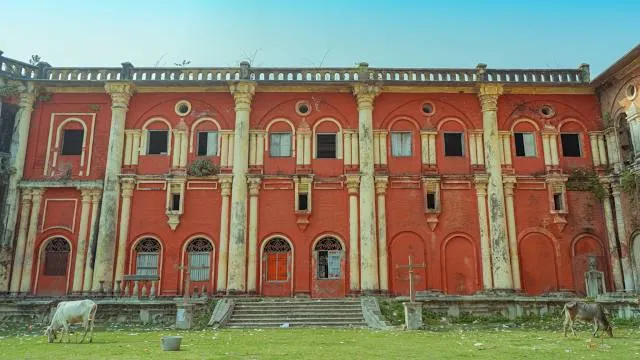
Murapara Rajbari is one of the archeological monuments and century-old zamindar house of Bangladesh located in Rupganj upazila of Narayanganj district. At various times this zamindar house was renovated and extended by several zamindars. It is located in the village called Murapara of the upazila. Its distance by road from Dhaka, the capital city of Bangladesh, is about 18 km. [1] Locals also call it Matherghat Zamindar Bari. The Murapara palace is situated on 62 bigha land. This zamindar house was built by Babu Ramratan Banerjee who established Murapara zamindari in the area. The palace was later renovated and expanded by some of his descendants. In 1889, the landlord Pratap Chandra Banerjee extended the rear part of this building and started living here with his family.

His son Vijay Chandra Banerjee constructed a building in front of the palace and dug 2 ponds in 1899 AD. In 1909, his two sons, Jagdish Chandra Banerjee and Ashutosh Chandra Banerjee, completed the two-story building of the palace.[2]

After the partition of the Indian subcontinent in 1947, Jagdish Chandra moved to Calcutta with his family. Since then the house has been abandoned. In 1948, the then government of Pakistan took over the house and started operating a hospital and juvenile correctional center here. School and college activities were conducted here in 1966 AD. After the independence of Bangladesh in 1986, Bangladesh Directorate of Archeology took charge of the house and listed it as an archaeological site. Presently it is known as Government...

   Read more
Page 1 of 7
Previous
Next