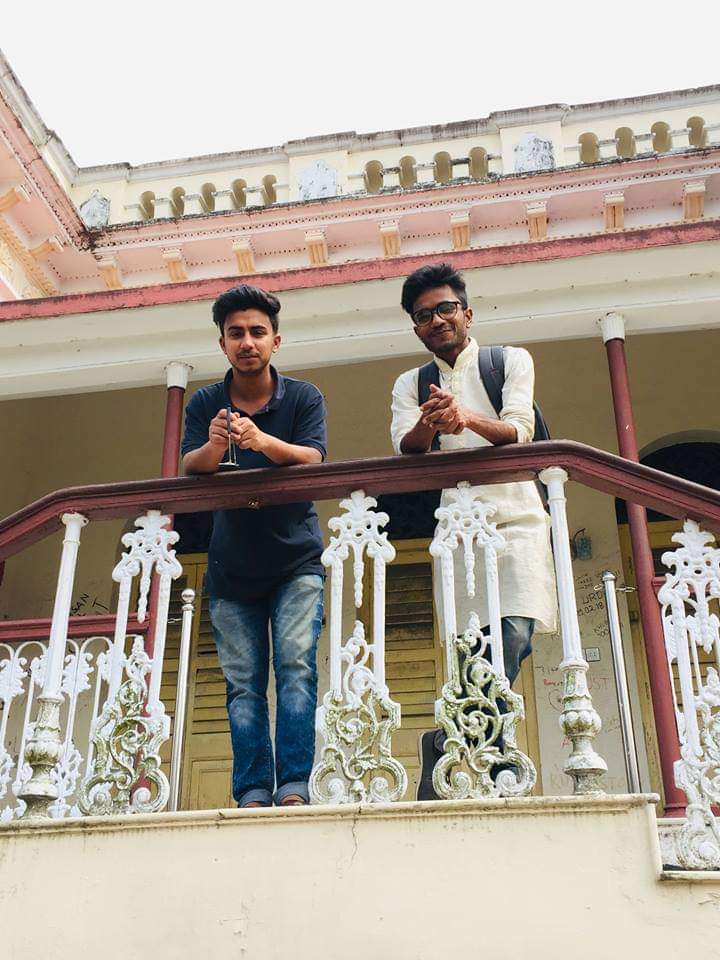
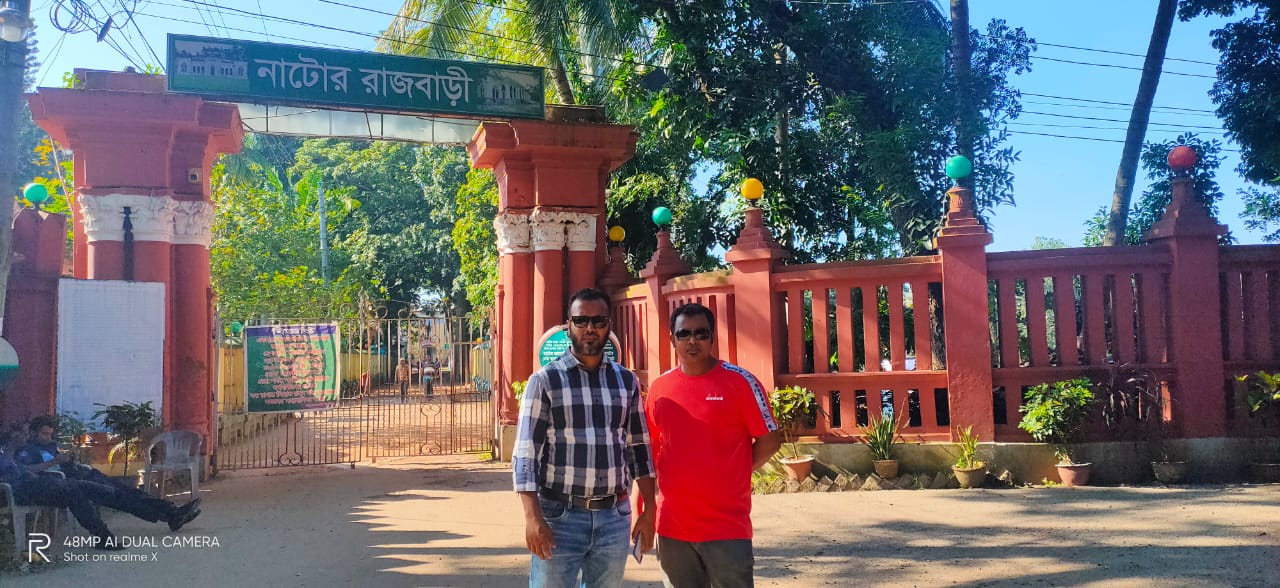
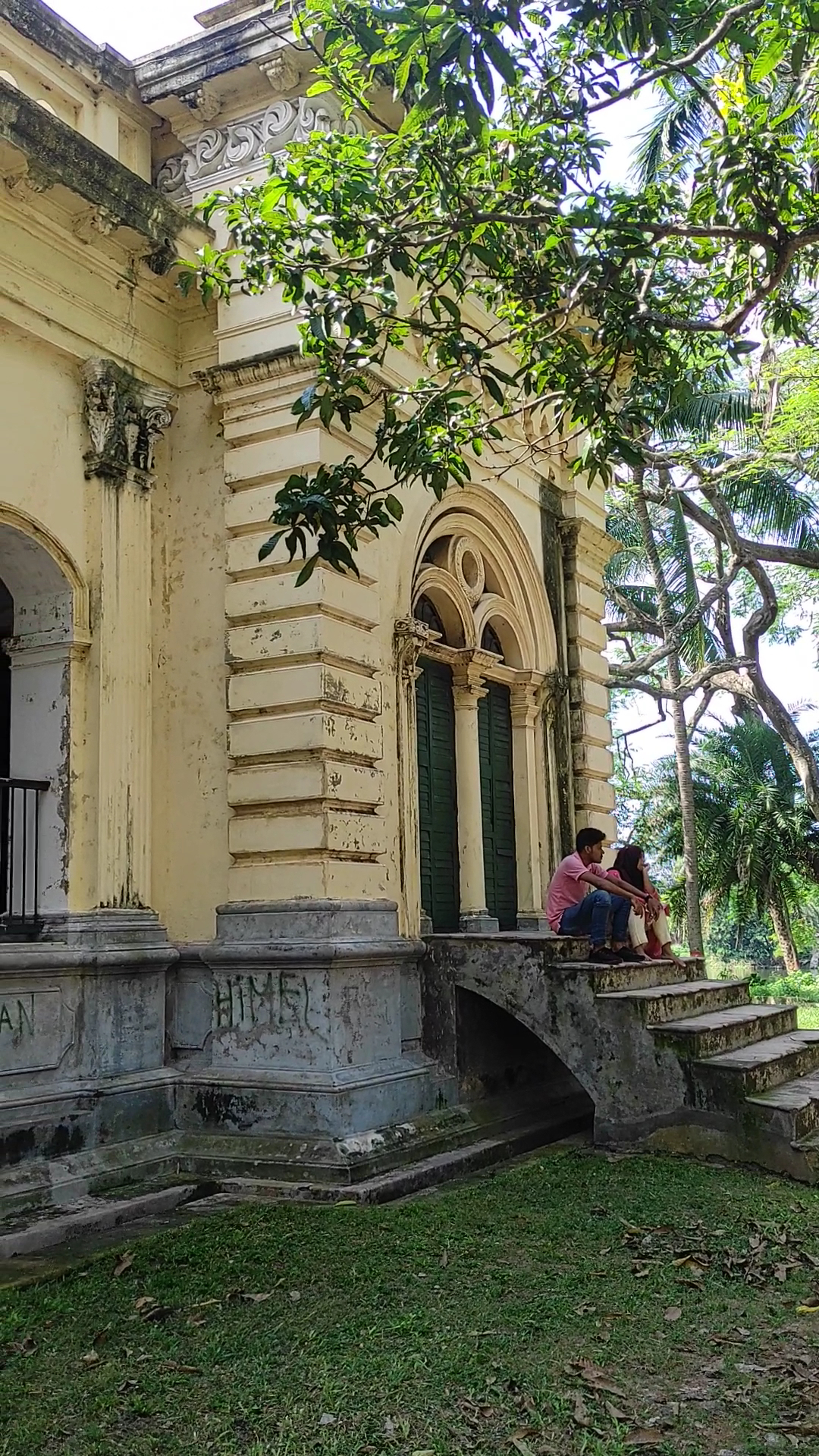
Natore is a city of history and heritage. Ardhabangeshwari Rani Bhavani was the Maharani of the Natore kingdom that developed during the Nawabi period. He was the brightest character of the Nato dynasty. Rani Bhabani ruled Rajshahi, Pabna, Bogra, Kushtia, Jessore, Rangpur and Birbhum and Malda districts of West Bengal. The memory of Rani Bhavani is still bright for the people of Bengal because of her extraordinary personality. It is said that even though no one from the dynasty of the very kind queen Bhavani is here, they have many architectures. Thousands of tourists from home and abroad come here to see Rani Bhavani's house. This palace of Rani Bhavani was established by King Ramjivan between 1706 and 1710. After King Ramjivan died in 1734, his adopted son Ramkant became the king of Natore. After the death of Raja Ramkant in 1748, Nawab Alivardi Khan entrusted the management of the state to his wife Rani Bhavani. After Rani Bhavani took over, the boundaries of the kingdom increased. It covered Rajshahi, Pabna, Bogra, Kushtia, Jessore, Rangpur and Birbhum and Maldah districts of West Bengal. After Rani Bhavani's death in 1802, her adopted son Ramakrishna assumed the throne. After the death of Ramakrishna, this vast zamindari was divided between his two sons Vishwanath and Shivnath Roy, and two separate zamindaris named Big Taraf and Chota Taraf arose. The younger son Shivnath's part is called Chota Taraf. Birendranath was the last king of the younger side of the Nato dynasty. He was the zamindar of this small side from 1897 to 1955.Natore history researcher Khalid-bin-Jalal said that the total area of undivided Bengal was 77 thousand 521 square miles. Out of this Rani Bhavani's kingdom was 12 thousand 999 square miles. However, he ruled the major part of the two Bengals. Claiming that Rani Bhavani was philanthropic, this history researcher said that she donated one lakh bigha of land among her subjects free of rent. According to Khalid-bin-Jalal, after the last Nawab of Bengal, Siraj-ud-Daula, was defeated by the British in 1757, Rani Bhawani's kingdom and power began to decline. Rani Bhavani's monumental main building is 'Rani Bhavani's Rajbari' i.e. the traditional palace of Natore. Although the main building of Rani Bhavani is on the verge of destruction, the big side and the small side are standing tall. It has 8 small and big buildings, two deep ponds and 5 small ponds. There is a huge pond at the entrance under the jurisdiction of the Department of Archaeology. Anyone is bound to be impressed by the shaanbandhano ghat of that pond. Jalatungi, Tarkeswar, Gopinath, Anand and Mahal Rajbari are the names of the small ponds. The Rajbari is surrounded by a two-tiered berdchowki. It is known that this fence used to protect the palace from outside enemies. There are eight temples in the Nato Rajbari premises, including a huge Shiva temple. Regular worship is still performed here according to the custom. The beauty of Drishtinandan temple impresses everyone. The temple is surrounded by various works of art including a Shiva idol, hooded snake idol, a Baul idol. The walls of the temple are covered with terracotta artwork. A rest house called Honey Queen, a meeting room, Malkhana, Rani Bhavani's open stage. The whole palace is surrounded by huge trees...
Read moreNatore Rajbari, a palace located in the Natore Sadar upazila of Bangladesh, is a monument to the Natore dynasty. The total area of the palace is 120 acres. There are total 8 big and smaller buildings. There are 2 deep ponds and 5 small ponds. The palace has two levels of walkways. The whole area is divided into 2 parts - small side and big side. Notable temples of Rajbari are Shyamsundar Temple, Anandamayi Kalibari Temple, Tarakeswar Shiva Temple.
It is located about 196.2 km from Dhaka. Both the road and the railway can be reached in Natore. Natore Uttora Ganabhaban is 4.5 km north of Zero Point. Normally local vehicles have to reach Uttora Ganabhaban in the north.
Bus: There are AC-NONAC buses to reach Natore from Gabtali and Mohakhali bus terminals in Dhaka. Among these are Desh Travels, National Travels, Hanif Enterprise, Tuhin Elite, Grameen Travels. Trainsporting
Train: There are many luxury intercity services every day between Dhaka and Natore. The chief ones are Padma Express, Silk City Express and Dhumketu Express.
Silk City Express - Rajshahi to 2 pm and Dhaka to Natore at 7:15.
Padma Express - 10:45 am to Rajshahi and Natore to Dhaka 11 am.
Dhumketu Express - The train that started from Dhaka at 6:30 am reached Rajshahi at 12:00 pm and the train leaving from Rajshahi at 11:20 pm reached the Dhaka at 4:20 pm.
Currently Silk City Express is not serving them on Sunday, Padma Express is not providing them with service on Tuesday, and Comet Express is shutting down on Monday.
The main station for the long distance train is Rajshahi Railway Station, which is located in the heart of Rajshahi city. Sometimes travel times for special reasons may change.
Air-path:
Shah Makhdum Airport is located in Rajshahi, about 50 km west of Natore. Here, the aircraft operates on the Rajshahi-Dhaka-Rajshahi route.
Where you Stay:
Hotels and guesthouses for accommodation in Natore district include:
Hotel VIP, Bara Harishpur, Natore (This hotel is located 1 km west of the central bus terminal and east of the Madrasa intersection).
Hotel Millat, Madrasa More, Natore Sadar, Natore (This hotel is located 1 km west of the central bus terminal and east of the Madrasa Mansion.)
Hotel Bonful, Ahmedpur, Barigram, Natore.
Zilla Parishad Dak Bungalow, Bagatipara, Bagatipara Upazila (adjacent to Bagatipara Upazila Chairman's Bus Building and Upazila Parishad Mosque).
Hotel Prince, Railway Station Market, Natore Sadar, Natore (adjacent to Natore Railway Station).
Hotel Raj, Madrasa More, Natore Sadar, Natore.
Hotel Rukhsana, Kanikhali, Old Bus Stand, Natore Sadar, Natore.
Natore Boarding, Nichabazar, Hospital Road, Natore Headquarters, Natore.
Natore Sugar Mills guesthouse, Natore Sugar Mills area, Natore Sadar, Natore.
Bismillah Hotel, Gurdaspur Upazila Complex, Gurdaspur, Natore.
Chanchair Hotel and Restaurant: Chanchair Bazar, Gurdaspur Upazila, Natore (Chanchakir Hotel and Restaurant is located in Chanchakir Bazar of...
Read moreNatore Rajbari situated in Natore, a district town about 48 km east of Rajshahi, was the zamindari headquarters of the natore raj. Like most of the feudal palaces in Bangladesh the palace ruins of Natore are approached through a long avenue, fringed on either side with carefully planted rows of bottle palms.
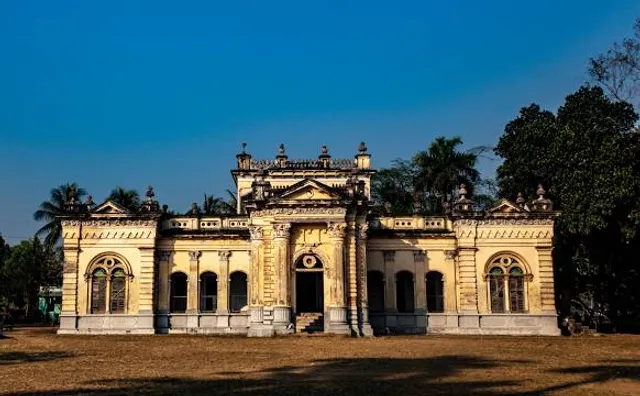
Natore Rajbari Ramjivan, the real founder of the Raj family, made his headquarters at Natore and built most of the Rajbari complex, the tanks, temples, orchards and flower gardens. Originally Natore was a small settlement under Taraf Kanaikhali in Lashkarpur Pargana.
The present site of the palace complex, occupying an area of 37.20 acres of land, was enclosed within two rings of defensive moats, originally known as Chai Bhangar Beel. Silt and weed-choked tanks, surrounding the derelict ruins of seven surviving detached palace blocks now mark the moats. Subsequently the palace complex was considerably developed and extended by rani bhabani
Of the surviving seven palace blocks only four are in a tolerable state of preservation, occupied by various offices of the district administration and the others have been reduced to amorphous mounds of disintegrating structures. The single storied northern block, now housing the Deputy Commissioner's Office faces a large open lawn to the south. Two other blocks on south and west overlook the lawn and are laid out in the form of English 'U' with the open side to the east.
The main northern block has a frontage of about 30.48m with a prominently projecting porch in the middle and two slightly projecting bays on either end, and relieved with triangular pediments above. The elegant central porch and the veranda in front of the apartments are supported on rows of semi-Corinthian columns and relived above with segmented arches in the classical Roman fashion. This block accommodates 11 spacious apartments flanking the large reception hall in the middle. The lofty ceiling of the central hall (18.29m' 9.14m) rises to a height of 9.14m and is lit by 18 clerestory windows originally fitted with coloured glass. Some of the capitals of the columns contain classical nude female figure.
The western single storied block with about 60.96-m front has also an arched projecting bay in the middle. A strip of veranda with a series of Doric columns reins the entire length of the block. There is a nat-mandap (dancing hall) at the back and beyond that farther west is a Krsna temple. This small family shrine about 15.24 m wide with a 3.05m wide veranda at the back, has a row of double Corinthian columns. Built at right angle to this block is another north-facing single-storied building with about 45.72m frontage. A projected central porch leads to a veranda at the back, behind which are a series of apartments, overlooking a large tank choked with weed. The rear side of this elegant block is decorated with plasterwork. At present the office of the superintendent of police...
Read more