Certainly. Here is the revised version of the article, incorporating the historical detail about the Muslim invasion, including the name of the conqueror traditionally associated with the destruction of Somapura Mahavihara:
Somapura Mahavihara: A Forgotten Jewel of Buddhist Heritage
Nestled in the quiet village of Paharpur in northern Bangladesh lies the awe-inspiring ruins of Somapura Mahavihara—a monumental reminder of the subcontinent’s rich Buddhist past. With its massive quadrangular structure, striking terracotta artistry, and deep spiritual legacy, Somapura Mahavihara is not just an archaeological marvel but a symbol of the intellectual and cultural flowering of ancient Bengal.
A Glimpse Into the Glorious Past
Built in the late 8th century CE by Dharma Pala, the second ruler of the Pala dynasty, Somapura Mahavihara emerged as one of the largest and most renowned Buddhist monastic complexes in South Asia. The Pala rulers, known for their patronage of Mahayana Buddhism, envisioned a network of scholarly monasteries across their empire. Somapura was a centerpiece of this vision.
It was not just a place for worship; it was a university, a research center, and a hub for international exchange of ideas. Monks and scholars from Tibet, China, Nepal, and Southeast Asia walked its terracotta-lined corridors, discussing philosophy, medicine, astronomy, and logic. The famous Buddhist scholar Atish Dipankar, who later traveled to Tibet, is believed to have studied and taught here.
Architectural Grandeur
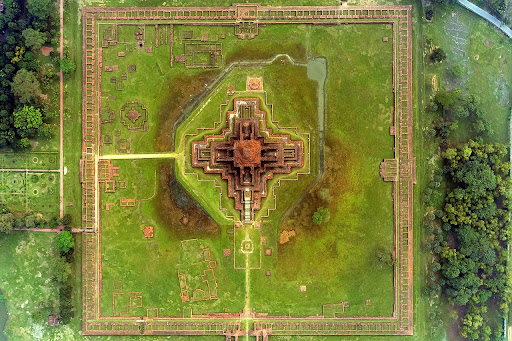
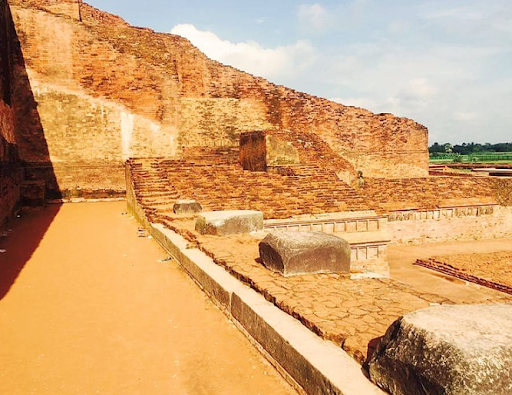
The architectural design of Somapura Mahavihara reflects both religious symbolism and technical sophistication. The monastery is laid out in a massive square measuring about 900 feet on each side, with 177 monk cells arranged around a central courtyard. In the middle stands a grand cruciform shrine, rising on three terraces and culminating in a now-ruined tower that once touched the skies.
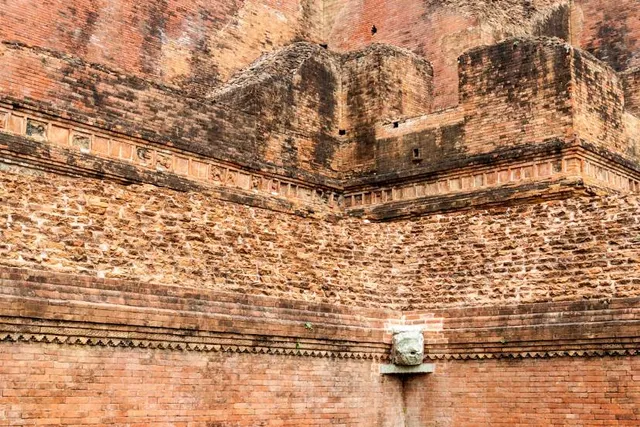
The outer walls of the monastery are adorned with exquisite terracotta plaques depicting stories from the Jataka tales, Hindu epics, and local folklore. These decorations not only served an aesthetic purpose but also acted as a visual guide to the spiritual and moral teachings of the time.
The blending of Buddhist, Hindu, and Jain motifs on the walls of Somapura hints at a period of cultural harmony and religious tolerance, where diverse beliefs coexisted and enriched one another.
Destruction During Muslim Invasion
The decline of Somapura Mahavihara was not a slow natural process, but a violent one. In the early 13th century, the monastery suffered a catastrophic attack during the Muslim conquest of Bengal. According to historical sources and archaeological evidence, the Turkic general Bakhtiyar Khalji, who led the early Muslim invasions into Bengal under the Ghurid Empire, is most likely responsible for the destruction.
Bakhtiyar Khalji is infamous for his raids on Buddhist institutions, including the burning of Nalanda and Vikramashila, two of the most prominent centers of Buddhist learning in India. Somapura Mahavihara, being part of this same network, was also targeted. His forces likely looted, burned, and destroyed the monastery, causing irreparable damage. The fire left blackened ruins and charred walls, marking the abrupt end of a flourishing academic and religious hub.
This invasion, coupled with the shift in patronage under Islamic rule, ensured that Somapura was never rebuilt or revived. Buddhism, which had already been in decline, virtually disappeared from Bengal in the centuries that followed.
Rediscovery and World Heritage Status
Somapura Mahavihara remained forgotten for centuries until British surveyors and archaeologists began exploring the site in the 19th century. Full-scale excavations in the early 20th century revealed the scale and significance of the complex.
In 1985, UNESCO declared Somapura Mahavihara a World Heritage Site, recognizing it as a masterpiece of Buddhist architecture and a vital link in the chain of ancient educational institutions like Nalanda and...
Read moreSomapura Mahavihara: A Jewel of Ancient Bengal
Somapura Mahavihara, located in Paharpur, Naogaon district of Bangladesh, is one of the most significant archaeological sites in South Asia. This magnificent Buddhist monastery is a UNESCO World Heritage Site and a testament to the rich cultural and religious heritage of ancient Bengal. Built in the 8th century CE during the reign of the Pala dynasty, it is considered one of the largest and most well-preserved monastic complexes in the Indian subcontinent.
Historical Background Somapura Mahavihara was commissioned by Dharmapala, the second ruler of the Pala dynasty, a dynasty that actively supported Mahayana Buddhism. The term "Somapura" means "Abode of the Moon," reflecting its spiritual and celestial significance. The monastery served as a major center for Buddhist learning, attracting scholars and monks from various parts of Asia, including China, Tibet, and Southeast Asia.
The site was also an important hub for cultural exchange, fostering the growth of Buddhist art and architecture. It continued to thrive for several centuries until the decline of Buddhism in Bengal and the rise of Islam in the region. By the 13th century, the site was abandoned, and over time, it fell into ruins.
Architectural Significance The layout of Somapura Mahavihara reflects the ingenuity and creativity of ancient Bengali architects. The entire complex is built in the shape of a quadrangle, covering an area of approximately 27 acres. At the center of the complex stands the grand stupa, a multi-tiered pyramidal structure rising about 21 meters high. This stupa is surrounded by 177 monastic cells, where monks lived and meditated.
The monastery is enclosed by a high wall with gateways on all four sides, symbolizing the cosmic order and the spiritual journey from the material to the divine. The central stupa, adorned with intricate terracotta plaques, depicts various scenes from Buddhist mythology, as well as everyday life, flora, and fauna.
The unique architectural style of Somapura Mahavihara influenced the construction of other Buddhist monasteries in the region, including those in Sri Lanka, Myanmar, and Indonesia. The monastery also showcases the fusion of indigenous art forms with Buddhist architectural principles, making it a masterpiece of cultural syncretism.
Cultural and Educational Hub Somapura Mahavihara was not just a place of worship but also a center of learning. It housed libraries, classrooms, and meditation halls, where monks and scholars engaged in philosophical debates and scholarly pursuits. The monastery played a pivotal role in the dissemination of Buddhist teachings and practices, contributing to the spread of Buddhism across Asia.
Rediscovery and Preservation The site was rediscovered in the early 20th century during archaeological excavations conducted by the Archaeological Survey of India. Subsequent excavations revealed the grandeur of the complex and unearthed numerous artifacts, including statues, pottery, and inscriptions.
Efforts to preserve and restore Somapura Mahavihara have been ongoing since its rediscovery. Today, it is a popular tourist destination and a symbol of Bangladesh's cultural heritage.
Conclusion Somapura Mahavihara stands as a remarkable example of ancient Buddhist architecture and a testament to the intellectual and cultural achievements of the Pala dynasty. Its enduring legacy continues to inspire awe and admiration, reminding us of the rich history and spiritual...
Read morePaharpur Buddhist Vihara or Sompur Vihar or Sompur Mahavihar is an ancient Buddhist Vihara which is now destroyed. Sri Dharmapala Deva (781-821), the second king of the Palavansh dynasty, was building this vihara in the late 8th or 9th century. Sir Alexander Cunningham discovered this huge structure in 1879 AD. Paharpur Vihara or Sompur Buddhist Vihara is the second largest Buddhist Vihara in Southern Himalayas according to UNESCO. In size it can be compared to the Nalanda Mahavihara in India. It was the most famous Buddhist teaching center for 300 years. Not only from different parts of the subcontinent, but Buddhists from countries like China, Tibet, Myanmar (now Brahmadesh), Malaysia, Indonesia etc. used to come here to acquire religious knowledge. Acharya of Bihar in 10th century AD was Atish Dipankar Srijnana. UNESCO recognized it as a World Heritage Site in 1985.
Hiuen Tsang came to Pundravardhana in the middle of the 7th century, but there is no mention of the monastery and temple at Sompur in his detailed account. Gopal's son Dharma Pal (781 - 822 AD) ascended the throne and ruled for a long time and expanded the kingdom beyond Bengali Bihar to Gandhara on the north-west border of Pakistan. Emperor Dharmapala was a very devout Buddhist and it was he who founded Vikramshila and Sompur Viharas. According to another view, the author of the famous Tibetan history book "Pag Sam Zon Zhang" very clearly mentions the huge monastery and lofty temple built at Sompur by Dharmapala's son Devapala (810-850)[2]. It is mentioned in various inscriptions that the monks of Sompur Vihar used to donate money and jewels to various Indian Buddhist pilgrimage sites like Nalanda, Buddha Gaya, etc., which indicates a prosperous condition in the 10th - 11th centuries. Apart from Sompur Bihar, Agrapur (Agradiguna of Rajshahi), Ushmpur, Gotpur, Etapur and Jagaddal (Jagadal of Rajshahi) Bihars are mentioned under the patronage of Pala kings till 9th century. In the late 9th century, Gurjara Raja I Bhoja and Mahendra Pala, inflicted particular damage on the Pala Empire. Later in the late 10th century, the Pala dynasty king Mahipala (995 - 1043) restored the empire and repaired Sompur Vihar. But after the death of Mahipala and his son Nayapala, the Pala dynasty started to decline again. On this occasion, Chedi Raja Karna of Central India, Chola Raja Rajendra and a native Kaivarta feudal lord named Dibbo successively attacked Varendrabhumi. The destruction of the Paharpur temple and Vihar at Nalanda is probably related to the invasion of this period. In the 11th century Rampala of the Pala dynasty restored Hritrajya. In the 12th century, the Sena kings from Karnataka in the Deccan occupied Bengal. Sompur lost royal patronage during the reign of those kings. At this time, the fall of Sompur began for the last time. About the vihara on the verge of collapse under Sen rule, one scholar wrote, "The remains of the vihara and matha at Paharpur bear no clear signs of large-scale destruction. The decline of this institution through the abandonment or destruction of the vihara must have been the effect of the widespread unrest and population displacement caused by the...
Read more