HTML SitemapExplore
logo
Find Things to DoFind The Best Restaurants

Panchagarh Rocks Museum — Attraction in Rangpur Division

Name
Panchagarh Rocks Museum
Description
Nearby attractions
Nearby restaurants
Nearby hotels
Related posts
Keywords
Panchagarh Rocks Museum tourism.Panchagarh Rocks Museum hotels.Panchagarh Rocks Museum bed and breakfast. flights to Panchagarh Rocks Museum.Panchagarh Rocks Museum attractions.Panchagarh Rocks Museum restaurants.Panchagarh Rocks Museum travel.Panchagarh Rocks Museum travel guide.Panchagarh Rocks Museum travel blog.Panchagarh Rocks Museum pictures.Panchagarh Rocks Museum photos.Panchagarh Rocks Museum travel tips.Panchagarh Rocks Museum maps.Panchagarh Rocks Museum things to do.
Panchagarh Rocks Museum things to do, attractions, restaurants, events info and trip planning
Panchagarh Rocks Museum
BangladeshRangpur DivisionPanchagarh Rocks Museum

Basic Info

Panchagarh Rocks Museum

8HM5+PJ6, Pachagarth 5000, Bangladesh
4.3(362)
Closed
Save
spot

Ratings & Description

Info

Cultural
Family friendly
Accessibility
attractions: , restaurants:
logoLearn more insights from Wanderboat AI.
Open hoursSee all hours
Tue10 AM - 5 PMClosed

Plan your stay

hotel
Pet-friendly Hotels in Rangpur Division
Find a cozy hotel nearby and make it a full experience.
hotel
Affordable Hotels in Rangpur Division
Find a cozy hotel nearby and make it a full experience.
hotel
The Coolest Hotels You Haven't Heard Of (Yet)
Find a cozy hotel nearby and make it a full experience.
hotel
Trending Stays Worth the Hype in Rangpur Division
Find a cozy hotel nearby and make it a full experience.

Reviews

Get the Appoverlay
Get the AppOne tap to find yournext favorite spots!
Wanderboat LogoWanderboat

Your everyday Al companion for getaway ideas

CompanyAbout Us
InformationAI Trip PlannerSitemap
SocialXInstagramTiktokLinkedin
LegalTerms of ServicePrivacy Policy

Get the app

© 2025 Wanderboat. All rights reserved.
logo

Posts

Fazla RabbyFazla Rabby
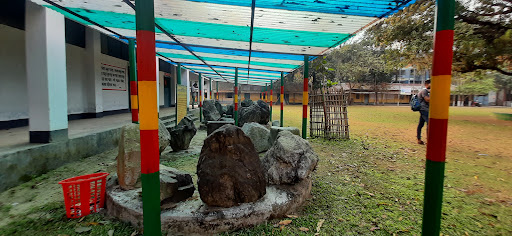
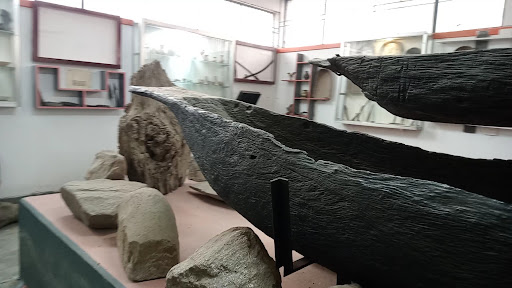
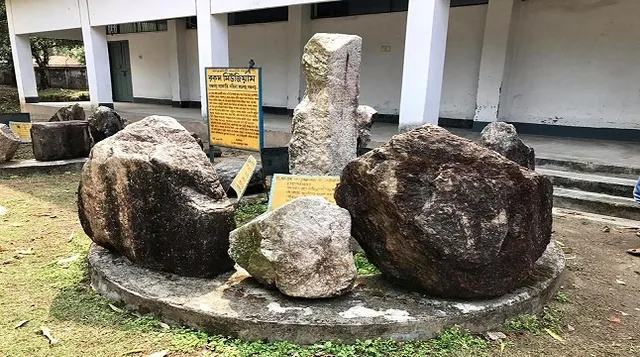
Panchagarh district near the Himalayas compared to other regions in terms of geologic characteristics. There is a lot of gravel stones in the land. Rocks Museum has been built in Panchagarh Government Women's College with chronological samples of underground gravel stone. College principal Dr. It was developed in 1997 by Nazmul Huq's personal initiative. The museum was set up for collecting and collecting land-properties, prehistoric samples, collection and research of the region's territory. There are two internal and open galleries in the Rocks Museum. The internal gallery is in. Various shapes, colors and features of volcanic, sedimentary shelves and gravel stones, silica gravel and silica sand, yellow and dark yellow sand, mineral, white soil, waved flat stones, limits and solid shoes. A nattraneous collection has been set up in this gallery. Here are the accessories used by the indigenous people of Panchagarh and the incompatible woods under the river and underground, brick statue of brick stones and stoneware designs in the old buildings of 300 to two thousand years old buildings and terracotta designs. Open Gallery is a huge shape sandy stone, granite stone, quarters, basalt, shell, marble names and rocks, rock ornamented ornamental lines, written arts and illustrated rocks and painted rocks and There are two boats here. Cut a shawl, two huge boats were made. The length of the boat is 22 feet 6 inches. Its age is about three hundred years. These boats are thinking that ancient indigenous people used in Dipappur of the Pacific Ocean. The name of a stone was 'stone Thakur' in the name of the place. Here is the image of the 'arrow-bow' and the image of the goddess. One is Tibetan, Chinese alphabet. A fivefoot tall quaroyite stone was probably in a cemetery. Many experts say analyzing the characteristics of the stones, in the time of nearby Darjeeling, the religion and life of the neo stone era in Panchagarh region were well in the Panchagar region. There is still a lot of tools and tools and tools in Bangladesh are not found in Bangladesh. If the search continues, the archaeological archae of Panchagarh may be discovered in Panchagarh district. To keep the ancient history of our original heritage, to save the country's rare museum to keep alive alive.
Rishad HaqueRishad Haque
About seven crore years ago, the Panchmahal region, along with the population of the Himalayas, was broadly known as 'Tethis', a shallow sea. Two continents, 'Gonduaana' and 'Laureasia', have been moving from one side of the sea to each other. The Himalayan Mountains rise in the 'Myosene' era about two million years ago, due to the severe pressure of 'Tethys' deposited on the oceans. The sea 'Tethys' is lost forever. Panchagarh region was part of the Himalayan sub-progressive cave. In the Panchagarh underground 'Tarsiari' era (approximately 1.66 million years ago) rock level and pre-Camrian (approximately 1.16 billion years ago), the rock and the existing. The lowest rocking layer on this foundation rock is 130 meters thick, which is very high in the Panchagarh area and gradually sloping in the south. Pre-Cameria has been developed in the developed flat country, Ruhia side country, Rangpur, Saddle etc. Panchagarh is located in Padma plains. The land of this land is approximately 10 to 20 thousand years old. Tertiary era stone found in 16 million to 6 crore years has been found in Jalpaiguri and Darjeeling districts. Very ancient and similar stones are found in Panchagarh lands.Navajapartara era tool tool has been discovered in Darjeeling area adjacent to Panchagarh. The period of Neolithic Period is roughly BCE to 8000 BC. Even though the tool of Nevapartara era of Panchagarh has not been discovered, smooth and uneven rocks are found. These rocks have been used in bridges in ancient times. Even in modern times, eating dishes, dishes, house pies, bread made paddy, paddy sticks and stairs As the extensive usage of Panchagarh stones is in use. On the other hand, slabs were used to cut huge stone puja. The stones used to be used in stone carving stone, arrows, bow, eyes and letters ornaments, etc. proved that in Panchagarh region.The culture of the Neolithic era was fully developed. Rocks Museum has been established to promote prehistoric images of this marginal region of Bangladesh.
rezaul karim nomanrezaul karim noman
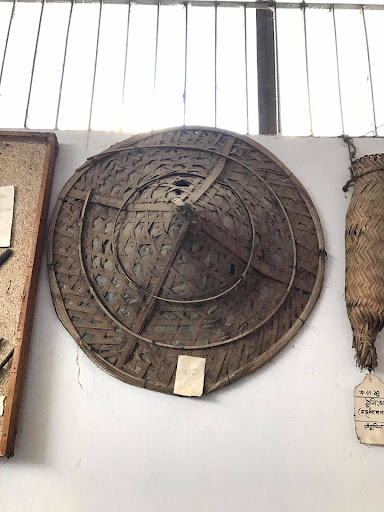
The Panchagarh Rocks Museum is the first rocks museum of Bangladesh. It is located in Panchagarh Govt. Women College. Prof. Nazmul Haque, Ex. principal of Panchagarh Govt. Mohila College, established the rocks museum on March 1, 1997. The Rocks museum is separate into two galleries, external and internal. In the external gallery there has a vast number of rocks; and in the internal gallery, there are small stones of different ages. Collection of Rocks: Petrified Wood and Fossilized Rocks, Granite, Quartzite Shell, Lime Stone, Sits, Hard Rock, Basalt, Silica, Nice, Clay-Rock etc. have been keep in the Rocks museum for display. These are almost 60 pieces of rocks from different age sized by 3-4 inches to 10 feet. In the museum there are some other important collections. Two antiquarian boats which built with only one truck of tree and about 500 to 1000 years ago and Multicolored sand and earth, petrified ‘shall wood’ and net, very old pictured bamboo fearing and different types of local antics. This musium is in College Campus. So in the college/official time you have to viait there. As it is a women's college, you have to maintain all activities properly. There is supervision under teachers room for visiting this place. You should first take the permission from the office or through the peon/gatekeeper. There is a token for visiting rhis musium of Tk. 10 for each.
See more posts
See more posts
hotel
Find your stay

Pet-friendly Hotels in Rangpur Division

Find a cozy hotel nearby and make it a full experience.

Panchagarh district near the Himalayas compared to other regions in terms of geologic characteristics. There is a lot of gravel stones in the land. Rocks Museum has been built in Panchagarh Government Women's College with chronological samples of underground gravel stone. College principal Dr. It was developed in 1997 by Nazmul Huq's personal initiative. The museum was set up for collecting and collecting land-properties, prehistoric samples, collection and research of the region's territory. There are two internal and open galleries in the Rocks Museum. The internal gallery is in. Various shapes, colors and features of volcanic, sedimentary shelves and gravel stones, silica gravel and silica sand, yellow and dark yellow sand, mineral, white soil, waved flat stones, limits and solid shoes. A nattraneous collection has been set up in this gallery. Here are the accessories used by the indigenous people of Panchagarh and the incompatible woods under the river and underground, brick statue of brick stones and stoneware designs in the old buildings of 300 to two thousand years old buildings and terracotta designs. Open Gallery is a huge shape sandy stone, granite stone, quarters, basalt, shell, marble names and rocks, rock ornamented ornamental lines, written arts and illustrated rocks and painted rocks and There are two boats here. Cut a shawl, two huge boats were made. The length of the boat is 22 feet 6 inches. Its age is about three hundred years. These boats are thinking that ancient indigenous people used in Dipappur of the Pacific Ocean. The name of a stone was 'stone Thakur' in the name of the place. Here is the image of the 'arrow-bow' and the image of the goddess. One is Tibetan, Chinese alphabet. A fivefoot tall quaroyite stone was probably in a cemetery. Many experts say analyzing the characteristics of the stones, in the time of nearby Darjeeling, the religion and life of the neo stone era in Panchagarh region were well in the Panchagar region. There is still a lot of tools and tools and tools in Bangladesh are not found in Bangladesh. If the search continues, the archaeological archae of Panchagarh may be discovered in Panchagarh district. To keep the ancient history of our original heritage, to save the country's rare museum to keep alive alive.
Fazla Rabby

Fazla Rabby

hotel
Find your stay

Affordable Hotels in Rangpur Division

Find a cozy hotel nearby and make it a full experience.

Get the Appoverlay
Get the AppOne tap to find yournext favorite spots!
About seven crore years ago, the Panchmahal region, along with the population of the Himalayas, was broadly known as 'Tethis', a shallow sea. Two continents, 'Gonduaana' and 'Laureasia', have been moving from one side of the sea to each other. The Himalayan Mountains rise in the 'Myosene' era about two million years ago, due to the severe pressure of 'Tethys' deposited on the oceans. The sea 'Tethys' is lost forever. Panchagarh region was part of the Himalayan sub-progressive cave. In the Panchagarh underground 'Tarsiari' era (approximately 1.66 million years ago) rock level and pre-Camrian (approximately 1.16 billion years ago), the rock and the existing. The lowest rocking layer on this foundation rock is 130 meters thick, which is very high in the Panchagarh area and gradually sloping in the south. Pre-Cameria has been developed in the developed flat country, Ruhia side country, Rangpur, Saddle etc. Panchagarh is located in Padma plains. The land of this land is approximately 10 to 20 thousand years old. Tertiary era stone found in 16 million to 6 crore years has been found in Jalpaiguri and Darjeeling districts. Very ancient and similar stones are found in Panchagarh lands.Navajapartara era tool tool has been discovered in Darjeeling area adjacent to Panchagarh. The period of Neolithic Period is roughly BCE to 8000 BC. Even though the tool of Nevapartara era of Panchagarh has not been discovered, smooth and uneven rocks are found. These rocks have been used in bridges in ancient times. Even in modern times, eating dishes, dishes, house pies, bread made paddy, paddy sticks and stairs As the extensive usage of Panchagarh stones is in use. On the other hand, slabs were used to cut huge stone puja. The stones used to be used in stone carving stone, arrows, bow, eyes and letters ornaments, etc. proved that in Panchagarh region.The culture of the Neolithic era was fully developed. Rocks Museum has been established to promote prehistoric images of this marginal region of Bangladesh.
Rishad Haque

Rishad Haque

hotel
Find your stay

The Coolest Hotels You Haven't Heard Of (Yet)

Find a cozy hotel nearby and make it a full experience.

hotel
Find your stay

Trending Stays Worth the Hype in Rangpur Division

Find a cozy hotel nearby and make it a full experience.

The Panchagarh Rocks Museum is the first rocks museum of Bangladesh. It is located in Panchagarh Govt. Women College. Prof. Nazmul Haque, Ex. principal of Panchagarh Govt. Mohila College, established the rocks museum on March 1, 1997. The Rocks museum is separate into two galleries, external and internal. In the external gallery there has a vast number of rocks; and in the internal gallery, there are small stones of different ages. Collection of Rocks: Petrified Wood and Fossilized Rocks, Granite, Quartzite Shell, Lime Stone, Sits, Hard Rock, Basalt, Silica, Nice, Clay-Rock etc. have been keep in the Rocks museum for display. These are almost 60 pieces of rocks from different age sized by 3-4 inches to 10 feet. In the museum there are some other important collections. Two antiquarian boats which built with only one truck of tree and about 500 to 1000 years ago and Multicolored sand and earth, petrified ‘shall wood’ and net, very old pictured bamboo fearing and different types of local antics. This musium is in College Campus. So in the college/official time you have to viait there. As it is a women's college, you have to maintain all activities properly. There is supervision under teachers room for visiting this place. You should first take the permission from the office or through the peon/gatekeeper. There is a token for visiting rhis musium of Tk. 10 for each.
rezaul karim noman

rezaul karim noman

See more posts
See more posts

Reviews of Panchagarh Rocks Museum

4.3
(362)
avatar
5.0
1y

Rocks Museum is the only rock museum located in the Panchagarh Government Women's College in Panchagarh Sadar. In 1997, the then principal of the college, Professor Dr. Md. Namjul Haque built this Rocks Museum in 1997 as a personal initiative with a single effort. This museum has archaeological and folk collections of Panchagarh district more than 1,000 (one thousand) in number. The Rocks Museum has both indoor and outdoor galleries. The inner gallery contains – igneous rocks of various shapes, colors and properties, sedimentary rocks and pebbles, silica gravels and silica sands, yellow and dark yellow sands, mineral sands, white clays, wavy flat stones, limestones, silts and clays and hard rocks. Bricks, terracotta statues of many years old buildings can be seen here. The Rocks Museum was initially set up in a room of the Government Women's College but later shifted to its own building. In 2008, the government constructed a second storey building for the Rocks Museum. But the big stones are lying outside, here and there in the college yard. The stones and sand collected from the country and abroad are arranged in the room with descriptions. The stones arranged outside are collected from different places. Along with the stones, the items used by the tribal small anthropological population of the region, the bricks of the thousand-year-old building, the stone statues etc. There are also two thousand-year-old boats. Researchers believe that they were used in the Pacific region. Thousands of years old treaties, silver and copper coins of Mughal Empire and British rule are preserved here. Household items, agricultural implements and various items of religious worship of the small ethnographic community are arranged here. Not only that, the printing of Sino-Nepali script written on the stone can be seen here. Varieties of colored sand have enriched this museum. Sand and soil have been collected from the bottom of various rivers to help quench the thirst for knowledge of the curious visitor. Visitors come here throughout the year. However, the number of tourists increases in winter.  To see Kanchenjunga from Tetulia in Panchagarh, many tourists travel to Panchagarh in the beginning of winter. And then they do not miss to visit this...

   Read more
avatar
5.0
4y

Panchagarh district near the Himalayas compared to other regions in terms of geologic characteristics. There is a lot of gravel stones in the land. Rocks Museum has been built in Panchagarh Government Women's College with chronological samples of underground gravel stone. College principal Dr. It was developed in 1997 by Nazmul Huq's personal initiative. The museum was set up for collecting and collecting land-properties, prehistoric samples, collection and research of the region's territory. There are two internal and open galleries in the Rocks Museum. The internal gallery is in. Various shapes, colors and features of volcanic, sedimentary shelves and gravel stones, silica gravel and silica sand, yellow and dark yellow sand, mineral, white soil, waved flat stones, limits and solid shoes. A nattraneous collection has been set up in this gallery. Here are the accessories used by the indigenous people of Panchagarh and the incompatible woods under the river and underground, brick statue of brick stones and stoneware designs in the old buildings of 300 to two thousand years old buildings and terracotta designs. Open Gallery is a huge shape sandy stone, granite stone, quarters, basalt, shell, marble names and rocks, rock ornamented ornamental lines, written arts and illustrated rocks and painted rocks and There are two boats here. Cut a shawl, two huge boats were made. The length of the boat is 22 feet 6 inches. Its age is about three hundred years. These boats are thinking that ancient indigenous people used in Dipappur of the Pacific Ocean. The name of a stone was 'stone Thakur' in the name of the place. Here is the image of the 'arrow-bow' and the image of the goddess. One is Tibetan, Chinese alphabet. A fivefoot tall quaroyite stone was probably in a cemetery. Many experts say analyzing the characteristics of the stones, in the time of nearby Darjeeling, the religion and life of the neo stone era in Panchagarh region were well in the Panchagar region. There is still a lot of tools and tools and tools in Bangladesh are not found in Bangladesh. If the search continues, the archaeological archae of Panchagarh may be discovered in Panchagarh district. To keep the ancient history of our original heritage, to save the country's rare museum to keep...

   Read more
avatar
4.0
8y

About seven crore years ago, the Panchmahal region, along with the population of the Himalayas, was broadly known as 'Tethis', a shallow sea. Two continents, 'Gonduaana' and 'Laureasia', have been moving from one side of the sea to each other. The Himalayan Mountains rise in the 'Myosene' era about two million years ago, due to the severe pressure of 'Tethys' deposited on the oceans. The sea 'Tethys' is lost forever. Panchagarh region was part of the Himalayan sub-progressive cave. In the Panchagarh underground 'Tarsiari' era (approximately 1.66 million years ago) rock level and pre-Camrian (approximately 1.16 billion years ago), the rock and the existing. The lowest rocking layer on this foundation rock is 130 meters thick, which is very high in the Panchagarh area and gradually sloping in the south. Pre-Cameria has been developed in the developed flat country, Ruhia side country, Rangpur, Saddle etc. Panchagarh is located in Padma plains. The land of this land is approximately 10 to 20 thousand years old.

Tertiary era stone found in 16 million to 6 crore years has been found in Jalpaiguri and Darjeeling districts. Very ancient and similar stones are found in Panchagarh lands.Navajapartara era tool tool has been discovered in Darjeeling area adjacent to Panchagarh. The period of Neolithic Period is roughly BCE to 8000 BC. Even though the tool of Nevapartara era of Panchagarh has not been discovered, smooth and uneven rocks are found. These rocks have been used in bridges in ancient times. Even in modern times, eating dishes, dishes, house pies, bread made paddy, paddy sticks and stairs As the extensive usage of Panchagarh stones is in use. On the other hand, slabs were used to cut huge stone puja. The stones used to be used in stone carving stone, arrows, bow, eyes and letters ornaments, etc. proved that in Panchagarh region.The culture of the Neolithic era was fully developed. Rocks Museum has been established to promote prehistoric images of this marginal region...

   Read more

Page 1 of 7
Previous
Next