HTML SitemapExplore
logo
Find Things to DoFind The Best Restaurants

Lawachara National Park — Attraction in Sylhet Division

Name
Lawachara National Park
Description
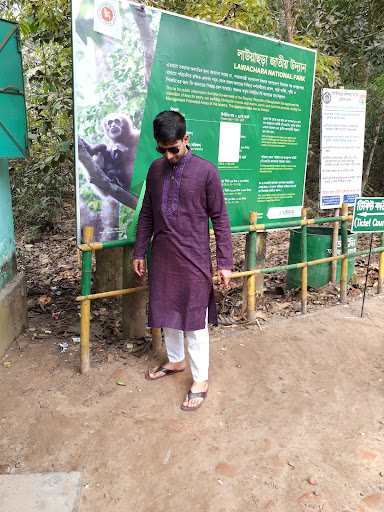
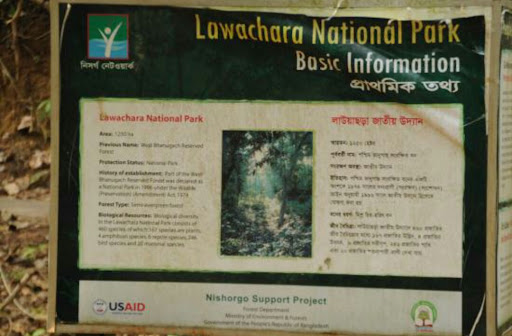
Lawachara National Park is a major national park and nature reserve in Bangladesh. The park is located at Kamalganj Upazila, Moulvibazar District in the northeastern region of the country. It is located within the 2,740 ha West Bhanugach Reserved Forest.

Nearby attractions
Nearby restaurants
Nearby hotels
Related posts
Keywords
Lawachara National Park tourism.Lawachara National Park hotels.Lawachara National Park bed and breakfast. flights to Lawachara National Park.Lawachara National Park attractions.Lawachara National Park restaurants.Lawachara National Park travel.Lawachara National Park travel guide.Lawachara National Park travel blog.Lawachara National Park pictures.Lawachara National Park photos.Lawachara National Park travel tips.Lawachara National Park maps.Lawachara National Park things to do.
Lawachara National Park things to do, attractions, restaurants, events info and trip planning
Lawachara National Park
BangladeshSylhet DivisionLawachara National Park

Basic Info

Lawachara National Park

Kamalganj, Bangladesh
4.4(2.7K)
Open 24 hours
Save
spot

Ratings & Description

Info

Lawachara National Park is a major national park and nature reserve in Bangladesh. The park is located at Kamalganj Upazila, Moulvibazar District in the northeastern region of the country. It is located within the 2,740 ha West Bhanugach Reserved Forest.

Outdoor
Adventure
Scenic
Family friendly
Off the beaten path
attractions: , restaurants:
logoLearn more insights from Wanderboat AI.

Website
bforest.gov.bd

Plan your stay

hotel
Pet-friendly Hotels in Sylhet Division
Find a cozy hotel nearby and make it a full experience.
hotel
Affordable Hotels in Sylhet Division
Find a cozy hotel nearby and make it a full experience.
hotel
The Coolest Hotels You Haven't Heard Of (Yet)
Find a cozy hotel nearby and make it a full experience.
hotel
Trending Stays Worth the Hype in Sylhet Division
Find a cozy hotel nearby and make it a full experience.

Reviews

Get the Appoverlay
Get the AppOne tap to find yournext favorite spots!
Wanderboat LogoWanderboat

Your everyday Al companion for getaway ideas

CompanyAbout Us
InformationAI Trip PlannerSitemap
SocialXInstagramTiktokLinkedin
LegalTerms of ServicePrivacy Policy

Get the app

© 2025 Wanderboat. All rights reserved.
logo

Reviews of Lawachara National Park

4.4
(2,702)
avatar
5.0
6y

We visited Lawachara National Park in November. We reached the park driving from Dhaka, a long driving also because we stopped at Panam City for an interesting visit.

The gate is a few kilometers after Sreemangal and there is a free parking next to the entrance where we left the car because in the park you can only enter on foot. The entrance fee for foreigners was 1000 Taka for 2 persons plus 500 Taka for the mandatory naturalistic guide. The Lawachara NP is a small area of original forest left in its natural state after the whole area had been turned into tea plantations. Even if small in size, the park is of extreme naturalistic importance because it houses some specimens of the Western Hoolock Gibbon Hoolock Hoolock, one endangered primate.

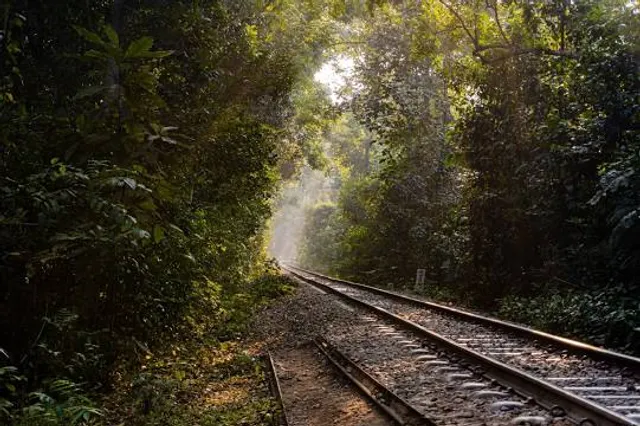
Two hundred meters after the entrance you have to cross the single track of the railway line that crosses the park and on which very crowded and noisy local trains pass frequently. There is a very small bar and a toilet a few meters further. The park is quite frequented during the weekends because the area is a destination for domestic tourism. Since our visit took place in two working days we were practically the only visitors. During these two days, we had three walks of about 4 hours each, two of which early in the morning and one in the evening. While walking on one of the very few footpaths we saw gibbons two times. Both times it was a family of 3 and 4 individuals respectively. Being on very tall trees, the gibbons have shown a relative disinterest in our presence by continuing to feed and move naturally. Having a camera with a good lens, this was a fantastic opportunity to take great photos. After this experience and speaking with the guide, we can say that there are very good chances to see gibbons visiting the park, also because these monkeys frequently emit strong calls that can be used by the guide to better locate them.

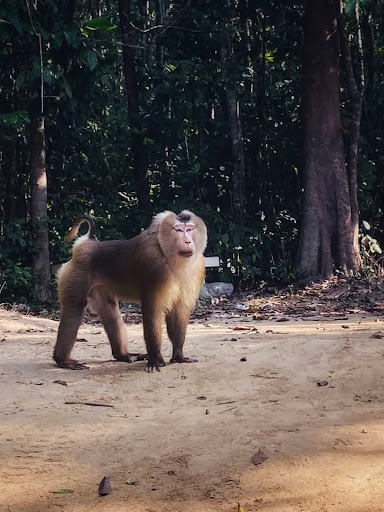
Having not seen other animals other than Irrawady Squirrels and because there were almost no mosquitos, we decided to leave the footpath following one of the numerous sandy bedded streams. Since in the stream there were just a few inches of water we could proceed in the creek bed even if several fallen trees made our progress impervious and requiring a certain agility to proceed. As we advanced, the number of spider webs increased and soon we had to start removing the leeches that frequently climbed on our shoes. This decision to proceed off the footpath was a mistake and this it was also confirmed the next day when we had to remove a couple of small ticks from our skin. We saw only very few monkeys belonging to three species: Phayre’s Leaf Monkey, Trachy Pithecus Phayrei, Capped Langur Trachy Pithecus Pileatus and Pig Tailed Macaque Macaca Leonina.

Unlike the gibbons, these monkeys showed great fear and fled very quickly. This behavior, and the presence of armed patrols of rangers, indicate the possible presence of poaching. The naturalistic guide then told us to cancel from the checklist of the mammalian fauna of the Lawachara National Park the Asiatic black bear, because it is now extinct in the park, and that the last sighting of the clouded leopard took place 3 years ago. Although many species of birds live in the park, the dense vegetation does not allow to see and photograph them and we have seen only a few red junglefowls and lesser racket-tailed drongos.

The experience of seeing the rare Western Hoolock Gibbons makes the visit of the park unique and of extreme interest, while the possibility of seeing other animals is very low and for sure we do not recommend making excursions out of the few...

   Read more
avatar
4.0
33w

Lawachara National Park, located in Kamalganj upazila of Moulvibazar district, is a protected forest area in Bangladesh. Nature has generously bestowed its beauty here. Various species of trees and diverse wild animals such as deer, monkeys, different species of snakes, jungle fowl, and fishing cats can be found in the park. It is a tropical evergreen and semi-evergreen forest with an area of 1,250 hectares.

One scene of the famous movie “Around the World in 80 Days,” based on Jules Verne’s renowned novel, was shot in this forest. The railway that runs through the forest was the location for that particular scene. The scene shows a train rushing through the forest. Suddenly, the driver notices a herd of elephants leisurely walking across the tracks. The train stops. The protagonist, David Niven, steps out to investigate. A ritual of Sati was happening in a nearby village, and the hero rushes to save the girl—Shirley MacLaine. This scene was filmed in the railway area of Lawachara.

Biodiversity Lawachara National Park is home to 167 species of plants including teak, chapalish, agar, and raktan. There are 4 species of amphibians, 6 species of reptiles, 246 species of birds, and 20 species of mammals. Bangladesh’s only living African teak tree is located in this park. The endangered gibbon, found in only four countries in the world, has its largest population in Bangladesh at Lawachara. There are about 276 species of wildlife here including pangolins, pythons, and many types of birds. Inside the park is the centuries-old Khasia Punji, a tribal village that preserves its unique culture and heritage.

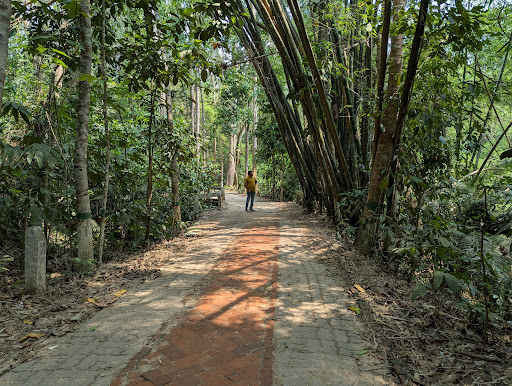
Visiting Lawachara The park offers three hiking trails of different lengths—30 minutes, 1 hour, and 3 hours—allowing visitors to experience nature up close. These trails are designed to avoid disturbing the environment, and a variety of insects, plants, birds, and orchids can be seen. Lucky visitors might even spot monkeys or gibbons. Both local and foreign tourists visit Lawachara year-round, with winter being the most popular season. 30-Minute Trail: This trail starts on the left after crossing the railway line. High in the trees, one may see Capped langurs. The path leads through dense forest, offering a peaceful and thrilling experience. Wild orchids can be seen on the tall tree branches, although this may not be their blooming season. The trail loops back to its starting point. 1-Hour Trail: This trail begins with the massive Gandharui tree, also known as Kasturi, believed to have a fragrance used in perfumes. Along this path are trees like jhawa, jagdumur, mooli bamboo, kathali chapa, and leha. Old chapalish and gamari trees are also found here. The fruits of various fig trees attract gibbons, monkeys, and many other wild animals. If you're lucky, you might see a barking deer or jungle fowl. 3-Hour Trail: This adventurous trail passes the Magurchhara Punji, a Khasi village where the residents primarily cultivate betel leaves. The village was established by the Forest Department in the 1950s. Along the trail are large bamboo groves inhabited by Capped langurs and rare slow lorises, which are nocturnal and usually sleep during the day in bamboo clusters. Various bird species are also seen along the way, and towards the end, one might spot gibbons—Lawachara’s main attraction—which live high in the trees in groups.

Entry Fees Adults: 20 BDT Students and minors: 10 BDT Foreigners: 5 USD or equivalent in BDT Parking (cars, jeeps, microbuses): 25 BDT Guides: 200–600 BDT based on category Picnic spot: 10...

   Read more
avatar
4.0
1y

السَّلاَمُ عَلَيْكُمْ وَرَحْمَةُ اللهِ وَبَرَكَاتُهُ It was 24 March 2017 , I visited this Place with my CA firms Friends. It is one of the most memorable days' of my life. For those seeking a taste of a mysterious rainforest, Lawachara is an ideal destination. The meticulously preserved forest provides abundant opportunities for trekking and jungle walks, allowing visitors to encounter over 460 different species of birds, mammals, and reptiles, including deer, wild chickens, squirrels, pythons, endangered hoolock gibbons, capped langurs, slow lorises, birds, snakes, banana spiders, and more. Nature enthusiasts can immerse themselves in the lush surroundings and close proximity to wildlife by exploring the numerous trails within the forest.

Situated in the northeastern region of Bangladesh, Lawachara National Park is a significant nature reserve located in Kamalganj Upazila, Maulvi Bazar District, encompassing the West Bhanugach Reserved Forest spanning 2,740 hectares (27.4 km2). The park, covering approximately 1,250 hectares (12.5 km2) of semi-evergreen and mixed deciduous forests, was designated as a national park by the Bangladesh government on July 7, 1996, under the Wildlife Act of 1974.

How to Reach Travel from Dhaka to Kamalapur or the Airport Railway Station to Srimangal, Moulvibazar Railway Station via Upban, Jayantika, Parabat, or Kalni Express Train. Alternatively, take a bus from Dhaka to Fakirapul or Saidabad, using Hanif Enterprise, Shyamoli Paribahan, Sylhet Express, ENA, etc., non-AC buses to Srimangal, Moulvibazar. Srimangal can also be reached by bus or train from Chittagong. Trains like Paharika and Udayan Express run six days a week from Chittagong to Srimangal. Lawachara Rain Forest is located 30 km from Moulvibazar district town.

Lawachara National Park is a haven for nature lovers. Its lush greenery and diverse wildlife provide a perfect blend of adventure and tranquility. The park boasts remarkable biodiversity, with various bird species and primates making each step a thrilling exploration. The Canopy Walkway offers an exhilarating experience, providing a unique perspective of the forest canopy. Well-maintained trails cater to both novice and experienced hikers, offering opportunities to spot elusive Hoolock Gibbons and other captivating creatures. Friendly and helpful park staff enhance the overall experience, making it a must-visit for those seeking a glimpse of Bangladesh's extraordinary natural beauty.

My visit to Lawachara was a fantastic experience. Considered one of the largest national parks in Bangladesh, it showcases numerous rare species of trees, animals, and insects. Walking through the forest, you'll notice a significant drop in temperature, especially during winter. The train line running through the forest adds to the scenic ambiance, making it a delightful sight. Despite being a peaceful forest, maintaining it requires considerable effort. Unfortunately, visitors sometimes disturb the natural animals by throwing stones and shouting, and authorities often fail to address this issue. The presence of a busy rail line within the forest poses a threat to animals, as they are sometimes killed by fast-moving trains.

In conclusion, Lawachara is a must-visit destination for nature enthusiasts, offering a captivating experience amidst its diverse flora and...

   Read more
Page 1 of 7
Previous
Next

Posts

ItsRahulKaushik {Rudrañ}ItsRahulKaushik {Rudrañ}
We visited Lawachara National Park in November. We reached the park driving from Dhaka, a long driving also because we stopped at Panam City for an interesting visit. The gate is a few kilometers after Sreemangal and there is a free parking next to the entrance where we left the car because in the park you can only enter on foot. The entrance fee for foreigners was 1000 Taka for 2 persons plus 500 Taka for the mandatory naturalistic guide. The Lawachara NP is a small area of original forest left in its natural state after the whole area had been turned into tea plantations. Even if small in size, the park is of extreme naturalistic importance because it houses some specimens of the Western Hoolock Gibbon Hoolock Hoolock, one endangered primate. Two hundred meters after the entrance you have to cross the single track of the railway line that crosses the park and on which very crowded and noisy local trains pass frequently. There is a very small bar and a toilet a few meters further. The park is quite frequented during the weekends because the area is a destination for domestic tourism. Since our visit took place in two working days we were practically the only visitors. During these two days, we had three walks of about 4 hours each, two of which early in the morning and one in the evening. While walking on one of the very few footpaths we saw gibbons two times. Both times it was a family of 3 and 4 individuals respectively. Being on very tall trees, the gibbons have shown a relative disinterest in our presence by continuing to feed and move naturally. Having a camera with a good lens, this was a fantastic opportunity to take great photos. After this experience and speaking with the guide, we can say that there are very good chances to see gibbons visiting the park, also because these monkeys frequently emit strong calls that can be used by the guide to better locate them. Having not seen other animals other than Irrawady Squirrels and because there were almost no mosquitos, we decided to leave the footpath following one of the numerous sandy bedded streams. Since in the stream there were just a few inches of water we could proceed in the creek bed even if several fallen trees made our progress impervious and requiring a certain agility to proceed. As we advanced, the number of spider webs increased and soon we had to start removing the leeches that frequently climbed on our shoes. This decision to proceed off the footpath was a mistake and this it was also confirmed the next day when we had to remove a couple of small ticks from our skin. We saw only very few monkeys belonging to three species: Phayre’s Leaf Monkey, Trachy Pithecus Phayrei, Capped Langur Trachy Pithecus Pileatus and Pig Tailed Macaque Macaca Leonina. Unlike the gibbons, these monkeys showed great fear and fled very quickly. This behavior, and the presence of armed patrols of rangers, indicate the possible presence of poaching. The naturalistic guide then told us to cancel from the checklist of the mammalian fauna of the Lawachara National Park the Asiatic black bear, because it is now extinct in the park, and that the last sighting of the clouded leopard took place 3 years ago. Although many species of birds live in the park, the dense vegetation does not allow to see and photograph them and we have seen only a few red junglefowls and lesser racket-tailed drongos. The experience of seeing the rare Western Hoolock Gibbons makes the visit of the park unique and of extreme interest, while the possibility of seeing other animals is very low and for sure we do not recommend making excursions out of the few existing footpaths.
Pushpa KhanPushpa Khan
Lawachara National Park, located in Kamalganj upazila of Moulvibazar district, is a protected forest area in Bangladesh. Nature has generously bestowed its beauty here. Various species of trees and diverse wild animals such as deer, monkeys, different species of snakes, jungle fowl, and fishing cats can be found in the park. It is a tropical evergreen and semi-evergreen forest with an area of 1,250 hectares. One scene of the famous movie “Around the World in 80 Days,” based on Jules Verne’s renowned novel, was shot in this forest. The railway that runs through the forest was the location for that particular scene. The scene shows a train rushing through the forest. Suddenly, the driver notices a herd of elephants leisurely walking across the tracks. The train stops. The protagonist, David Niven, steps out to investigate. A ritual of Sati was happening in a nearby village, and the hero rushes to save the girl—Shirley MacLaine. This scene was filmed in the railway area of Lawachara. Biodiversity Lawachara National Park is home to 167 species of plants including teak, chapalish, agar, and raktan. There are 4 species of amphibians, 6 species of reptiles, 246 species of birds, and 20 species of mammals. Bangladesh’s only living African teak tree is located in this park. The endangered gibbon, found in only four countries in the world, has its largest population in Bangladesh at Lawachara. There are about 276 species of wildlife here including pangolins, pythons, and many types of birds. Inside the park is the centuries-old Khasia Punji, a tribal village that preserves its unique culture and heritage. Visiting Lawachara The park offers three hiking trails of different lengths—30 minutes, 1 hour, and 3 hours—allowing visitors to experience nature up close. These trails are designed to avoid disturbing the environment, and a variety of insects, plants, birds, and orchids can be seen. Lucky visitors might even spot monkeys or gibbons. Both local and foreign tourists visit Lawachara year-round, with winter being the most popular season. 30-Minute Trail: This trail starts on the left after crossing the railway line. High in the trees, one may see Capped langurs. The path leads through dense forest, offering a peaceful and thrilling experience. Wild orchids can be seen on the tall tree branches, although this may not be their blooming season. The trail loops back to its starting point. 1-Hour Trail: This trail begins with the massive Gandharui tree, also known as Kasturi, believed to have a fragrance used in perfumes. Along this path are trees like jhawa, jagdumur, mooli bamboo, kathali chapa, and leha. Old chapalish and gamari trees are also found here. The fruits of various fig trees attract gibbons, monkeys, and many other wild animals. If you're lucky, you might see a barking deer or jungle fowl. 3-Hour Trail: This adventurous trail passes the Magurchhara Punji, a Khasi village where the residents primarily cultivate betel leaves. The village was established by the Forest Department in the 1950s. Along the trail are large bamboo groves inhabited by Capped langurs and rare slow lorises, which are nocturnal and usually sleep during the day in bamboo clusters. Various bird species are also seen along the way, and towards the end, one might spot gibbons—Lawachara’s main attraction—which live high in the trees in groups. Entry Fees Adults: 20 BDT Students and minors: 10 BDT Foreigners: 5 USD or equivalent in BDT Parking (cars, jeeps, microbuses): 25 BDT Guides: 200–600 BDT based on category Picnic spot: 10 BDT per person
Khan Abdul LatifKhan Abdul Latif
السَّلاَمُ عَلَيْكُمْ وَرَحْمَةُ اللهِ وَبَرَكَاتُهُ It was 24 March 2017 , I visited this Place with my CA firms Friends. It is one of the most memorable days' of my life. For those seeking a taste of a mysterious rainforest, Lawachara is an ideal destination. The meticulously preserved forest provides abundant opportunities for trekking and jungle walks, allowing visitors to encounter over 460 different species of birds, mammals, and reptiles, including deer, wild chickens, squirrels, pythons, endangered hoolock gibbons, capped langurs, slow lorises, birds, snakes, banana spiders, and more. Nature enthusiasts can immerse themselves in the lush surroundings and close proximity to wildlife by exploring the numerous trails within the forest. Situated in the northeastern region of Bangladesh, Lawachara National Park is a significant nature reserve located in Kamalganj Upazila, Maulvi Bazar District, encompassing the West Bhanugach Reserved Forest spanning 2,740 hectares (27.4 km2). The park, covering approximately 1,250 hectares (12.5 km2) of semi-evergreen and mixed deciduous forests, was designated as a national park by the Bangladesh government on July 7, 1996, under the Wildlife Act of 1974. *How to Reach* Travel from Dhaka to Kamalapur or the Airport Railway Station to Srimangal, Moulvibazar Railway Station via Upban, Jayantika, Parabat, or Kalni Express Train. Alternatively, take a bus from Dhaka to Fakirapul or Saidabad, using Hanif Enterprise, Shyamoli Paribahan, Sylhet Express, ENA, etc., non-AC buses to Srimangal, Moulvibazar. Srimangal can also be reached by bus or train from Chittagong. Trains like Paharika and Udayan Express run six days a week from Chittagong to Srimangal. Lawachara Rain Forest is located 30 km from Moulvibazar district town. Lawachara National Park is a haven for nature lovers. Its lush greenery and diverse wildlife provide a perfect blend of adventure and tranquility. The park boasts remarkable biodiversity, with various bird species and primates making each step a thrilling exploration. The Canopy Walkway offers an exhilarating experience, providing a unique perspective of the forest canopy. Well-maintained trails cater to both novice and experienced hikers, offering opportunities to spot elusive Hoolock Gibbons and other captivating creatures. Friendly and helpful park staff enhance the overall experience, making it a must-visit for those seeking a glimpse of Bangladesh's extraordinary natural beauty. My visit to Lawachara was a fantastic experience. Considered one of the largest national parks in Bangladesh, it showcases numerous rare species of trees, animals, and insects. Walking through the forest, you'll notice a significant drop in temperature, especially during winter. The train line running through the forest adds to the scenic ambiance, making it a delightful sight. Despite being a peaceful forest, maintaining it requires considerable effort. Unfortunately, visitors sometimes disturb the natural animals by throwing stones and shouting, and authorities often fail to address this issue. The presence of a busy rail line within the forest poses a threat to animals, as they are sometimes killed by fast-moving trains. In conclusion, Lawachara is a must-visit destination for nature enthusiasts, offering a captivating experience amidst its diverse flora and fauna. Khan Abdul Latif
See more posts
See more posts
hotel
Find your stay

Pet-friendly Hotels in Sylhet Division

Find a cozy hotel nearby and make it a full experience.

We visited Lawachara National Park in November. We reached the park driving from Dhaka, a long driving also because we stopped at Panam City for an interesting visit. The gate is a few kilometers after Sreemangal and there is a free parking next to the entrance where we left the car because in the park you can only enter on foot. The entrance fee for foreigners was 1000 Taka for 2 persons plus 500 Taka for the mandatory naturalistic guide. The Lawachara NP is a small area of original forest left in its natural state after the whole area had been turned into tea plantations. Even if small in size, the park is of extreme naturalistic importance because it houses some specimens of the Western Hoolock Gibbon Hoolock Hoolock, one endangered primate. Two hundred meters after the entrance you have to cross the single track of the railway line that crosses the park and on which very crowded and noisy local trains pass frequently. There is a very small bar and a toilet a few meters further. The park is quite frequented during the weekends because the area is a destination for domestic tourism. Since our visit took place in two working days we were practically the only visitors. During these two days, we had three walks of about 4 hours each, two of which early in the morning and one in the evening. While walking on one of the very few footpaths we saw gibbons two times. Both times it was a family of 3 and 4 individuals respectively. Being on very tall trees, the gibbons have shown a relative disinterest in our presence by continuing to feed and move naturally. Having a camera with a good lens, this was a fantastic opportunity to take great photos. After this experience and speaking with the guide, we can say that there are very good chances to see gibbons visiting the park, also because these monkeys frequently emit strong calls that can be used by the guide to better locate them. Having not seen other animals other than Irrawady Squirrels and because there were almost no mosquitos, we decided to leave the footpath following one of the numerous sandy bedded streams. Since in the stream there were just a few inches of water we could proceed in the creek bed even if several fallen trees made our progress impervious and requiring a certain agility to proceed. As we advanced, the number of spider webs increased and soon we had to start removing the leeches that frequently climbed on our shoes. This decision to proceed off the footpath was a mistake and this it was also confirmed the next day when we had to remove a couple of small ticks from our skin. We saw only very few monkeys belonging to three species: Phayre’s Leaf Monkey, Trachy Pithecus Phayrei, Capped Langur Trachy Pithecus Pileatus and Pig Tailed Macaque Macaca Leonina. Unlike the gibbons, these monkeys showed great fear and fled very quickly. This behavior, and the presence of armed patrols of rangers, indicate the possible presence of poaching. The naturalistic guide then told us to cancel from the checklist of the mammalian fauna of the Lawachara National Park the Asiatic black bear, because it is now extinct in the park, and that the last sighting of the clouded leopard took place 3 years ago. Although many species of birds live in the park, the dense vegetation does not allow to see and photograph them and we have seen only a few red junglefowls and lesser racket-tailed drongos. The experience of seeing the rare Western Hoolock Gibbons makes the visit of the park unique and of extreme interest, while the possibility of seeing other animals is very low and for sure we do not recommend making excursions out of the few existing footpaths.
ItsRahulKaushik {Rudrañ}

ItsRahulKaushik {Rudrañ}

hotel
Find your stay

Affordable Hotels in Sylhet Division

Find a cozy hotel nearby and make it a full experience.

Get the Appoverlay
Get the AppOne tap to find yournext favorite spots!
Lawachara National Park, located in Kamalganj upazila of Moulvibazar district, is a protected forest area in Bangladesh. Nature has generously bestowed its beauty here. Various species of trees and diverse wild animals such as deer, monkeys, different species of snakes, jungle fowl, and fishing cats can be found in the park. It is a tropical evergreen and semi-evergreen forest with an area of 1,250 hectares. One scene of the famous movie “Around the World in 80 Days,” based on Jules Verne’s renowned novel, was shot in this forest. The railway that runs through the forest was the location for that particular scene. The scene shows a train rushing through the forest. Suddenly, the driver notices a herd of elephants leisurely walking across the tracks. The train stops. The protagonist, David Niven, steps out to investigate. A ritual of Sati was happening in a nearby village, and the hero rushes to save the girl—Shirley MacLaine. This scene was filmed in the railway area of Lawachara. Biodiversity Lawachara National Park is home to 167 species of plants including teak, chapalish, agar, and raktan. There are 4 species of amphibians, 6 species of reptiles, 246 species of birds, and 20 species of mammals. Bangladesh’s only living African teak tree is located in this park. The endangered gibbon, found in only four countries in the world, has its largest population in Bangladesh at Lawachara. There are about 276 species of wildlife here including pangolins, pythons, and many types of birds. Inside the park is the centuries-old Khasia Punji, a tribal village that preserves its unique culture and heritage. Visiting Lawachara The park offers three hiking trails of different lengths—30 minutes, 1 hour, and 3 hours—allowing visitors to experience nature up close. These trails are designed to avoid disturbing the environment, and a variety of insects, plants, birds, and orchids can be seen. Lucky visitors might even spot monkeys or gibbons. Both local and foreign tourists visit Lawachara year-round, with winter being the most popular season. 30-Minute Trail: This trail starts on the left after crossing the railway line. High in the trees, one may see Capped langurs. The path leads through dense forest, offering a peaceful and thrilling experience. Wild orchids can be seen on the tall tree branches, although this may not be their blooming season. The trail loops back to its starting point. 1-Hour Trail: This trail begins with the massive Gandharui tree, also known as Kasturi, believed to have a fragrance used in perfumes. Along this path are trees like jhawa, jagdumur, mooli bamboo, kathali chapa, and leha. Old chapalish and gamari trees are also found here. The fruits of various fig trees attract gibbons, monkeys, and many other wild animals. If you're lucky, you might see a barking deer or jungle fowl. 3-Hour Trail: This adventurous trail passes the Magurchhara Punji, a Khasi village where the residents primarily cultivate betel leaves. The village was established by the Forest Department in the 1950s. Along the trail are large bamboo groves inhabited by Capped langurs and rare slow lorises, which are nocturnal and usually sleep during the day in bamboo clusters. Various bird species are also seen along the way, and towards the end, one might spot gibbons—Lawachara’s main attraction—which live high in the trees in groups. Entry Fees Adults: 20 BDT Students and minors: 10 BDT Foreigners: 5 USD or equivalent in BDT Parking (cars, jeeps, microbuses): 25 BDT Guides: 200–600 BDT based on category Picnic spot: 10 BDT per person
Pushpa Khan

Pushpa Khan

hotel
Find your stay

The Coolest Hotels You Haven't Heard Of (Yet)

Find a cozy hotel nearby and make it a full experience.

hotel
Find your stay

Trending Stays Worth the Hype in Sylhet Division

Find a cozy hotel nearby and make it a full experience.

السَّلاَمُ عَلَيْكُمْ وَرَحْمَةُ اللهِ وَبَرَكَاتُهُ It was 24 March 2017 , I visited this Place with my CA firms Friends. It is one of the most memorable days' of my life. For those seeking a taste of a mysterious rainforest, Lawachara is an ideal destination. The meticulously preserved forest provides abundant opportunities for trekking and jungle walks, allowing visitors to encounter over 460 different species of birds, mammals, and reptiles, including deer, wild chickens, squirrels, pythons, endangered hoolock gibbons, capped langurs, slow lorises, birds, snakes, banana spiders, and more. Nature enthusiasts can immerse themselves in the lush surroundings and close proximity to wildlife by exploring the numerous trails within the forest. Situated in the northeastern region of Bangladesh, Lawachara National Park is a significant nature reserve located in Kamalganj Upazila, Maulvi Bazar District, encompassing the West Bhanugach Reserved Forest spanning 2,740 hectares (27.4 km2). The park, covering approximately 1,250 hectares (12.5 km2) of semi-evergreen and mixed deciduous forests, was designated as a national park by the Bangladesh government on July 7, 1996, under the Wildlife Act of 1974. *How to Reach* Travel from Dhaka to Kamalapur or the Airport Railway Station to Srimangal, Moulvibazar Railway Station via Upban, Jayantika, Parabat, or Kalni Express Train. Alternatively, take a bus from Dhaka to Fakirapul or Saidabad, using Hanif Enterprise, Shyamoli Paribahan, Sylhet Express, ENA, etc., non-AC buses to Srimangal, Moulvibazar. Srimangal can also be reached by bus or train from Chittagong. Trains like Paharika and Udayan Express run six days a week from Chittagong to Srimangal. Lawachara Rain Forest is located 30 km from Moulvibazar district town. Lawachara National Park is a haven for nature lovers. Its lush greenery and diverse wildlife provide a perfect blend of adventure and tranquility. The park boasts remarkable biodiversity, with various bird species and primates making each step a thrilling exploration. The Canopy Walkway offers an exhilarating experience, providing a unique perspective of the forest canopy. Well-maintained trails cater to both novice and experienced hikers, offering opportunities to spot elusive Hoolock Gibbons and other captivating creatures. Friendly and helpful park staff enhance the overall experience, making it a must-visit for those seeking a glimpse of Bangladesh's extraordinary natural beauty. My visit to Lawachara was a fantastic experience. Considered one of the largest national parks in Bangladesh, it showcases numerous rare species of trees, animals, and insects. Walking through the forest, you'll notice a significant drop in temperature, especially during winter. The train line running through the forest adds to the scenic ambiance, making it a delightful sight. Despite being a peaceful forest, maintaining it requires considerable effort. Unfortunately, visitors sometimes disturb the natural animals by throwing stones and shouting, and authorities often fail to address this issue. The presence of a busy rail line within the forest poses a threat to animals, as they are sometimes killed by fast-moving trains. In conclusion, Lawachara is a must-visit destination for nature enthusiasts, offering a captivating experience amidst its diverse flora and fauna. Khan Abdul Latif
Khan Abdul Latif

Khan Abdul Latif

See more posts
See more posts