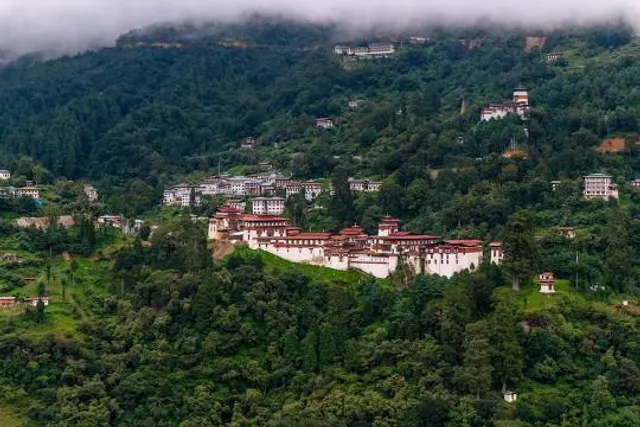
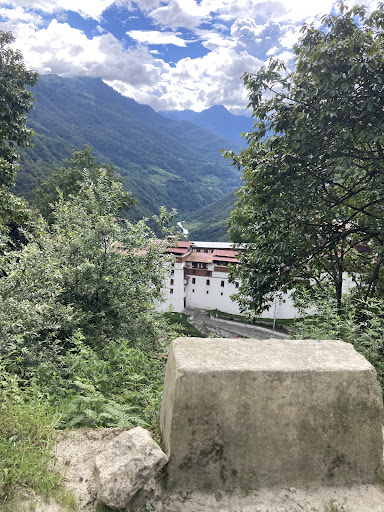
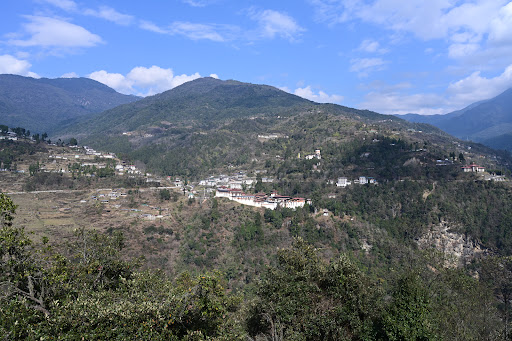
Trongsa Dzong literally means ‘the fortress on the tip of a Dungkhar (conch) of the never-changing country of Druk and the everlasting Dharma’. Trongsa Dzong was built in 1647 during the time of Trongsa Penlop Chogyal Minjur Tenpa. It’s strategically located overlooking the Mangde Chhu (river).
It was the seat of power over central and eastern bhutan. This massive dzong is the largest fortress in Bhutan. You can see the sight of Trongsa Dzong long before you actually reach Trongsa. The intricacy of its buildings is clearly visible from town. Trongsa Dzong is undoubtedly one of the most impressive dzongs in Bhutan. It showcases the magnificence of Bhutanese craftsmanship and traditional Bhutanese architecture.Narrow stone stairs, alleys and corridors connect the buildings.
rongsa Dzong is an important administrative building that provides the headquarters of the Government of Trongsa district. Trongsa is a strategic central location to control Bhutan and for centuries it was the seat of the Wangchuck dynasty. Thus, Trongsa Dzong is closely connected to the royal family. It was in this dzong that the first two Bhutanese kings ruled the country. Tradition also dictates that the crown prince serves as Trongsa penlops (governors) before acceding to the throne.
Trongsa Dzong was founded by Yingzin Ngagi Wangchuk, a descendant of Ngawang Chogyal and a revered follower of Kuenkhen Pema Karpo. In 1541, he meditated at the village of Yueli in Trongsa, a few kilometers from the present dzong. During the meditation, he saw a lighted butter lamp below the ridge at the present goenkhang, which houses the guardian deities, Palden Lhamo (Mahakali) and Yeshey Goenpo (Mahakala).
Considering the place to be sacred, he built mediation quarters. There was once during his meditation in the new quarter, the deity Palden Lhamo appeared and prophesied that this place would play an important role in spreading the teachings of Buddha. After that incident, Yingzin Ngagi Wangchuk constructed a small temple and named it Mondrupley. Over the years, his disciples built many smaller meditation centers near Mondrupley temple, which soon began to resemble a small village. The people of Yueli named this new village Trong-sar (new village). Trongsa Dzong was severely damaged by an earthquake in 1987. Reconstruction was carried out in 1927 by the then penlop of Trongsa, Jigme Namgyal, father of Bhutan’s first king.
There is a watchtower, 25 temples dedicated to Tantric deities, a museum and a printing shop that produce religious texts within Trongsa Dzong. Most of the decoration was designed during the rule of the first king, Ugyen Wangchuck. During winter, the Trongsa rabdey (district monk body) also migrate to Trongsa Dzong from Bumthang Dzong.
The five-day Trongsa tshechu is held in the northern courtyard in December or January. It culminates in the unveiling of a thongdrol (a giant thangka - a painted or embroidered religious...
Read more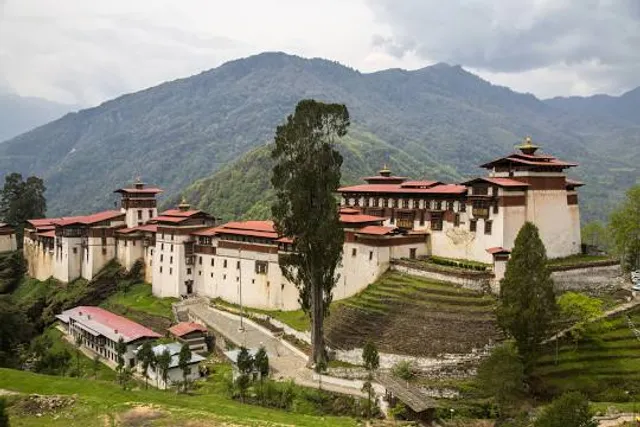
 Learn more insights from Wanderboat AI.