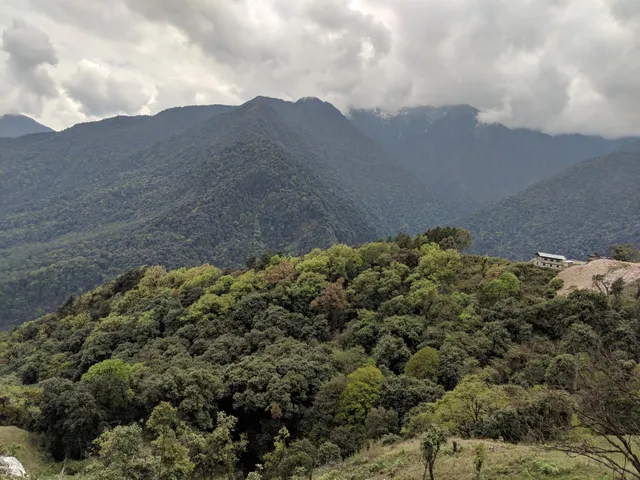
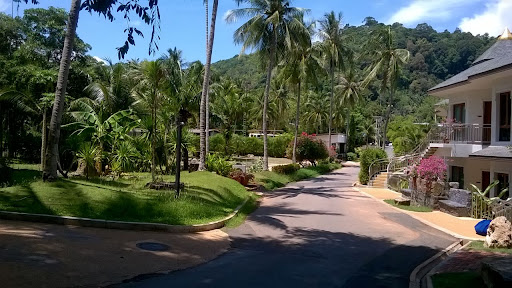
Jigme Singye Wangchuck National Park (formerly Black Mountains National Park) covers an area of 1,730 square kilometres (670 sq mi) in central Bhutan. It protects a large area of the Black Mountains, a sub−range of the Himalayan Range System.
The park occupies most of the Trongsa District, as well as parts of: Sarpang, Tsirang, Wangdue Phodrang, and Zhemgang Districts.
The park is bound to the east by the Mangde Chhu, and reaches the Sankosh River−Punatsangchu basin to the west. Jigme Singye abuts Royal Manas National Park to the southeast.
Along the border of the park from the north to the southeast run Bhutan's main east-west and north-south highways. It is also connected via biological corridors to other national parks in northern, eastern, central, and southern Bhutan. Habitats of the Eastern Himalayan broadleaf forests ecoregion are protected within the park. Jigme Singye Wangchuck National Park is the most centrally located among the national parks of Bhutan. Covering over an area of 1730 km2, it forms a contiguous belt linking Royal Manas National Park in the south to the temperate and alpine vegetation in the north. The park mainly falls under political jurisdiction of five districts namely Tsirang, Sarpang, Wangdue, Zhemgang and Trongsa.
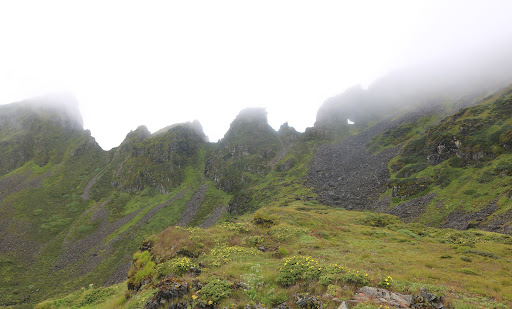
Significance JSWNP represents the best example of the mid-Himalayan ecosystems of the Eastern Himalaya that contain several ecological biomes ranging from sub-tropical forests at lower altitudes to alpine meadows at its highest altitudes. It is the only park that contains an old growth Chir pine forest (Pinus roxburghii). The park is also vital for various migratory faunal species, particularly migratory birds due to its wide range in altitude and vegetation, and central location in the country. It covers wide range of habitat types from permanent ice atop Durshingla peak (Black Mountain), alpine lakes and pastures, down through conifer and broad-leaved forests to temperate forest and sub-tropical forests. The park protects the largest and biodiversity richest temperate forest area in the entire Himalayas.[1]
The high mountains in the central regions of the national park are an important watershed for the streams and rivers that become the headwaters and tributaries of the Mangde Chhu River to the west. The Nika Cchu joins the Mangde Chhu...
Read moreCentrally located and encompassing a wide altitudinal variation & vegetation, JigmeSingyeWangchuck National Park is the third largest Protected Area in the Country. The park borders Royal Manas National Park in the south and it is connected to JigmeDorji National Park and Wangchuck Centennial National Park to the north and Phrumsengla National Park to the north east by biological corridors, thus forming a contagious belt between tropical south and alpine north. Administratively, JSWNP covers 5 districts partially. The 1730 sq.km national park was gazetted in 1995 with objective of securing ecological connectivity and managing & conserving the natural & cultural heritages of Central Bhutan. JSWNP best represents the middle Himalayan ecosystem & contains several ecological biomes ranging from sub-tropical to alpine meadow. The biologically diverse park has recorded the presence of 39 mammals, 270 birds, 139 species of butterflies, 16 fishes, and we are yet to establish the baseline for herpeto fauna, fungal diversity and diversity of orchids and herbal plants.
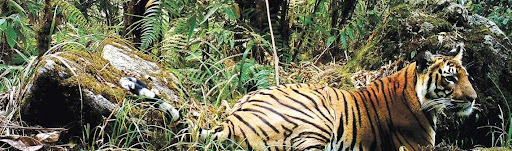
Amongst the mammals, the species includes some of the Asia’s most charismatic species including the Royal Bengal tiger, golden langur, musk deer, clouded leopard, golden cat, marbled cat, red panda, gaur etc. Birds of conservation significance include Rufous-necked Hornbill, Satyr tragopan and Himalayan Monal. JSWNP also harbours 50% of the population of ‘Critically Endangered’ White-bellied Heron.
Over 5000 people reside in the national parks 588 households spread over 6 geogs partially in five districts adapting to various climatic conditions and vegetation covers.
The mission of the park is to “Conserve and manage its Natural Biodiversity in harmony with People’s Values and Aspirations.” This mission is supported by following goals;
(a) Conserve, protect and maintain the viability of specific ecosystems, that would allow natural processes of succession and evolution to continue with minimal human influence.
(b) Protect cultural, historical and religious sites.
(c) Contribute to the socio-economic development of park residents through sustainable use of park...
Read moreJigme Singye Wangchuck National Park, located in Bhutan, spans approximately 4,349 square kilometers of pristine wilderness. Established in 1995, it is named after the former king of Bhutan, Jigme Singye Wangchuck, in recognition of his commitment to environmental conservation.
This national park boasts a diverse range of ecosystems, from subtropical forests at lower altitudes to alpine meadows and snow-capped peaks in the higher elevations. The park is a haven for biodiversity, home to numerous endangered species such as the snow leopard, red panda, and Himalayan black bear.
Its lush forests are adorned with a variety of flora, including rhododendrons and orchids, creating a picturesque landscape. The park is intersected by rivers and streams, contributing to the overall biodiversity and providing a crucial water source for the region.
Beyond its ecological significance, Jigme Singye Wangchuck National Park holds cultural importance, with several sacred sites and monasteries nestled within its boundaries. The park encourages sustainable tourism, offering visitors the chance to experience Bhutan's rich natural and cultural heritage while promoting conservation efforts.
In summary, Jigme Singye Wangchuck National Park stands as a testament to Bhutan's commitment to environmental preservation, blending breathtaking landscapes, rich biodiversity, and cultural heritage in a harmonious sanctuary for both...
Read more