According to a local legend, the sage Padmasambhava prophesized that “a person named Namgyal will arrive at a hill that looks like an elephant”. Ngawang Namgyal, 1st Zhabdrung Rinpoche, found the peak of the hill, which appeared in the shape of trunk of an elephant as prophesized, and built the dzong in 1637-38.
Another legend tells how Zowe Palep, the architect, had a vision in a dream after the Zhabdrung ordered him to sleep under a small structure which contained a statue of the Buddha, known as Dzong Chug "small dzong". In his dream, prompted by the psychic powers of the Zhabdrung, he had a clear vision of a palace for Guru Rinpoche. The vision was imprinted on the architect's mind, enabling him to conceive the plan for the dzong without putting the vision on paper and to build it. On the basis of the dream vision of the architect, the building of the dzong was started in 1637 and completed in 1638, at the place where the Dzong Chug had existed. During this period, Ngawang Namgyal became the first leader of a unified Bhutan, following his concerted efforts to unify the country into one unit.
The dzong was consecrated in the name of Pungthang Dechen Phodrang. In 1639, a commemorative chapel was erected to house the arms seized from the Tibetans who were defeated by the Bhutanese on this spot. The Zhabdrung also set up a monastic order with 600 monks (brought from Cheri Gompa of upper Thimphu valley) and he lived here till his death.
The spire at the top of the utse (the dzong’s central tower or the main tower) was added in 1676 by Gyaltsen Tenzin Rabgye–the abbot of the dzong. Further additions were made during the period 1744 to 1763, when Sherab Wangchuk was the ruler. A large thangka known as chenma (great) thoundral of the Zhabdrung was donated to the Dzong by the Desi (ruler). This thangka is displayed during the tshechuheld once a year here. The 7th Dalai Lama donated the brass roof for the dzong.
The House of Wangchuck currently rules the country. This monarchy was established in 1907. The same year, Punakha Dzong was the site of the coronation of Ugyen Wangchuck (or Deb Nagpo) as the first Druk Gyalpo. At that time, Punakha was the capital of Bhutan. Three years later, a treaty was signed at Punakha whereby the British agreed not to interfere in Bhutanese internal affairs and Bhutan allowed Britain to direct its foreign affairs.
From 1744 to 1763, the dzong was enlarged substantially during the rule of the 13th desi, when Sherab Wangchuk was the chief abbot of Bhutan. Several fires between 1750 and 1849 caused damages to the Dzong. In the 1897 earthquake, the dzong was severely damaged and also suffered numerous fires. In 1986, the dzong was partially...
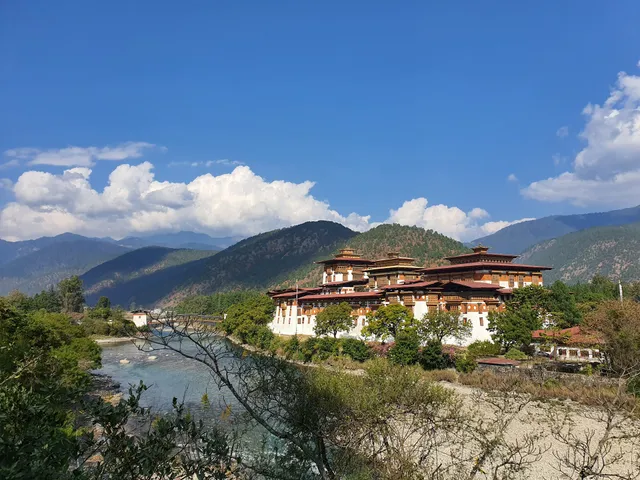
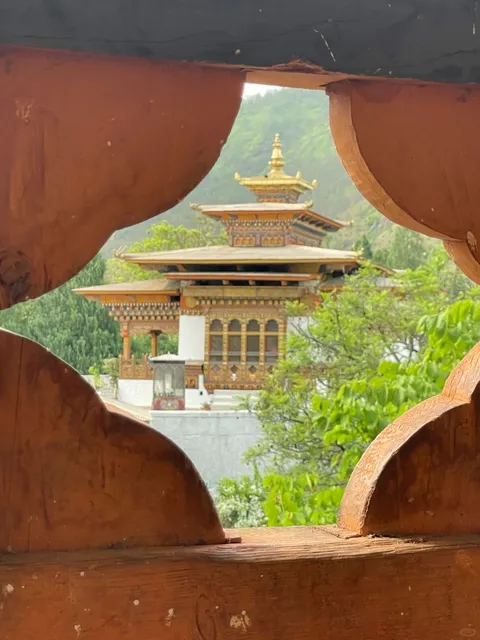
Read moreAn amazing experience that captures the spirit of Bhutanese history, culture, and scenic beauty is a visit to Punakha Dzong. Dating back to the 17th century, this magnificent palace and fortress is a testament to the rich architectural legacy and architectural brilliance of the nation. The Punakha Dzong's serene location, at the meeting point of the Pho Chhu and Mo Chhu rivers, adds to its grandeur and tranquillity. Surrounded by lush greenery and flowing rivers, the dzong's imposing yet elegant structure strikes you as soon as you approach it. With its whitewashed walls, finely carved woodwork, and vivid red and gold accents, the dzong's traditional Bhutanese architecture is a visual feast. Visitors are invited to immerse themselves in the spiritual atmosphere and rich artistic details of the expansive prayer hall, which is adorned with exquisite murals and statues. Witnessing the yearly Punakha Tshechu festival, which brings the dzong to life with vibrant mask dances, music, and traditional ceremonies, is one of the highlights of visiting Punakha Dzong. This festival is incredibly immersive since it offers a rare window into Bhutanese customs and religion. The dzong's charm is enhanced by the tranquil surroundings. The serene atmosphere that is ideal for introspection and relaxation is created by the serene rivers and the magnificent views of the mountains that surround them. Enjoying breathtaking views and an exciting sense of adventure, crossing the charming suspension bridge to reach the dzong is a unique experience. There is great historical significance to Punakha Dzong. It still serves as the Central Monk Body's winter residence and was the administrative hub and seat of government until the middle of the 20th century. As you explore the dzong, with its numerous chapels, courtyards, and the sacred relics housed within, you can feel this rich history. A trip to Punakha Dzong is an exploration of spirituality, beauty, and time. It is a representation of Bhutan's enduring cultural legacy in addition to being a work of architectural wonder. Punakha Dzong will make a deep impression on your heart and mind, regardless of your interests in history, spirituality, or just enjoying the...
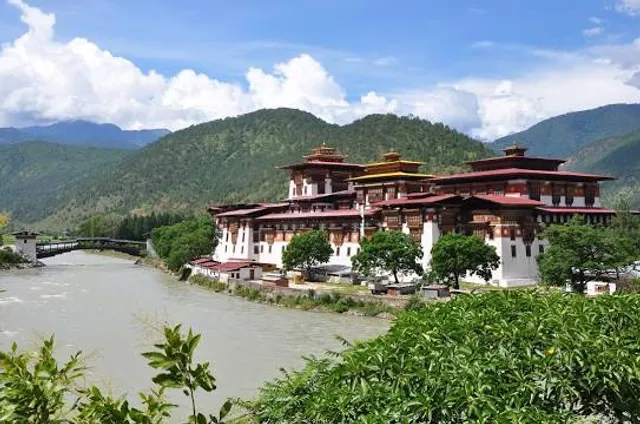
Read morePunakha Dzong, also known as Pungthang Dewa chhenbi Phodrang, is an architectural masterpiece located in the Punakha Valley of Bhutan. Its full name translates to "the palace of great happiness or bliss," which aptly describes the serene and majestic ambiance of the dzong. Built in 1637 by the renowned Ngawang Namgyal, the Zhabdrung Rinpoche, this historic fortress-monastery holds immense cultural and spiritual significance for Bhutanese people.
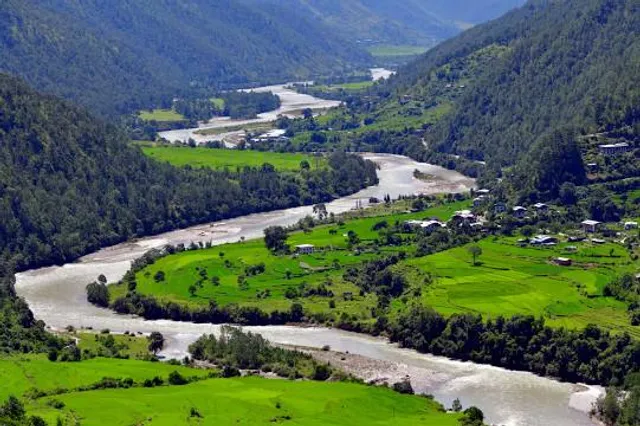
Strategically situated at the confluence of the Pho Chhu (father) and Mo Chhu (mother) rivers, Punakha Dzong boasts stunning views and a picturesque setting. The dzong is not only a marvel of traditional Bhutanese architecture, characterized by its massive whitewashed walls, intricate woodwork, and gilded roofs, but it also serves as a symbol of Bhutan's rich heritage. One of its most remarkable features is the central utse (tower), which rises majestically above the complex, offering a vantage point for breathtaking views of the surrounding valley.
The dzong has witnessed significant historical events, including the coronation of Bhutan's first king, Ugyen Wangchuck, in 1907. It remains an active religious and administrative center, housing the district monastic body and offices of the local government. Visitors are often struck by the tranquility of the interior courtyards, the meticulously maintained gardens, and the detailed murals that depict Bhutanese mythology and Buddhist teachings.
Punakha Dzong is particularly famous for its annual Punakha Tshechu, a vibrant religious festival featuring masked dances and traditional music. This event attracts numerous visitors and offers a unique opportunity to witness Bhutanese culture and spirituality in action. The dzong's rich history, stunning architecture, and spiritual ambiance make it a must-visit destination for anyone...
Read more