🦩 🦩🦩🦩🦩🦩🦩🦩🦩🦩🦩🦩🦩
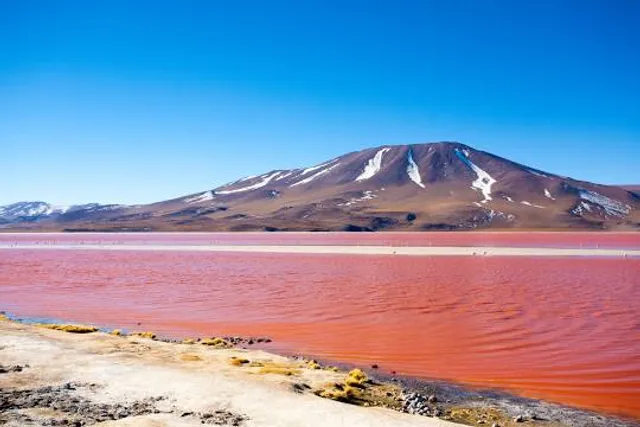
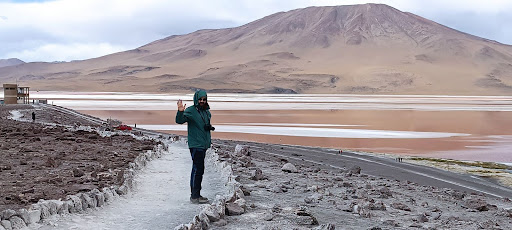
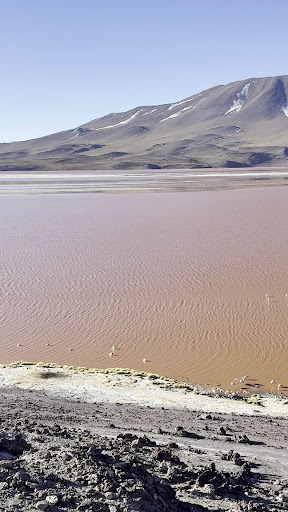
One of the most surreal places I’ve ever stumbled into, like someone Photoshopped Mars, added a dash of flamingo chic, and forgot to invite the rest of the tourists. When I went, it was just us, the flamingos, and the howling silence of high-altitude nothingness. No selfie sticks. No tour buses. Just volcanic mountains and a lake that bleeds red under the Andean sky.
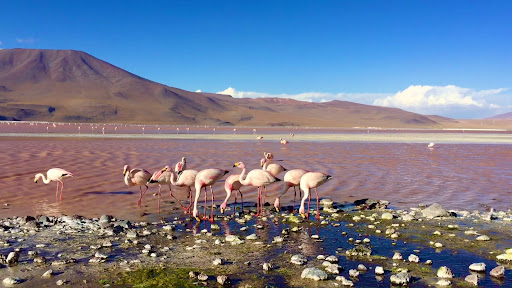
The flamingos 🦩 ? Still hundreds of them.. (as it was low season) strutting around like they own the planet. Which, out here, they kind of do. Mostly James’s, Chilean, and Andean flamingos all doing ballet in freezing shallow waters like it’s no big deal.
May to December, especially September to November when breeding season hits and the population explodes like pink confetti across the lake. Outside of this, you might see fewer of them, but even a dozen flamingos in this red surreal soup is something else.
Andean flamingos are the rarest in the world, and Laguna Colorada is one of their main breeding sites. During the coldest months (June to August), some migrate to lower altitudes, but many remain thanks to geothermal activity that keeps parts of the lake from freezing. Their primary food source is red algae, which not only fuels their feathers but also paints the lake in its iconic crimson hue—basically the most dramatic dinner date imaginable.
At an altitude of 4,278 meters above sea level and covering roughly 60 square kilometers, Laguna Colorada is both breathtaking and breath-snatching. The temperature ranges from freezing to frostbite, the air is thinner than your excuses, and flamingos number in the thousands during peak season. When I explored the lake, tourist count was basically in the single digit, just raw nature, pink birds, and the creeping suspicion that I had entered a flamingo-controlled simulation.
VERDICT: Felt like I was trespassing in a sacred sanctuary on another planet, silent, surreal, and utterly humbling. Would absolutely return, though next time with more thermal layers and less ego. If you value solitude, bone chilling temperatures, and raw untouched nature, this is not just a recommendation, it’s a...
Read more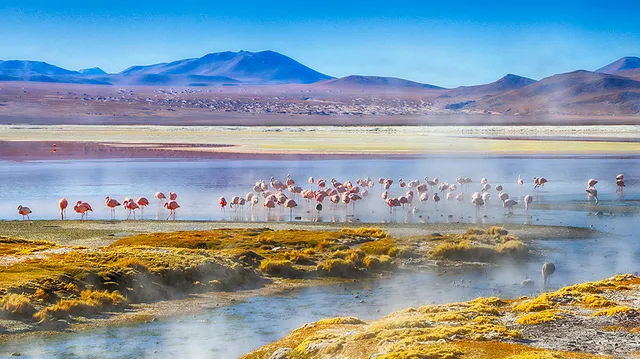
 Learn more insights from Wanderboat AI.