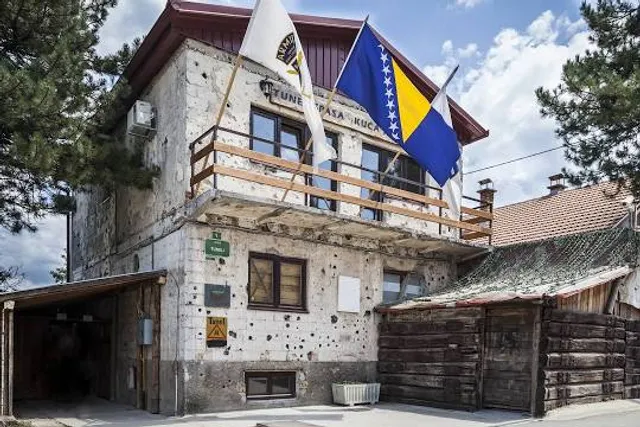
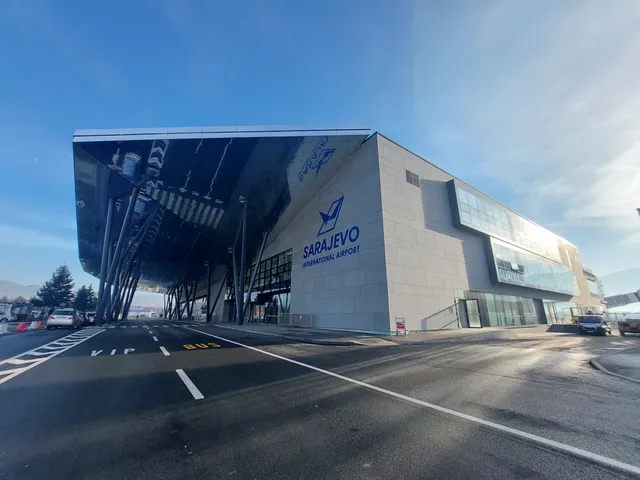
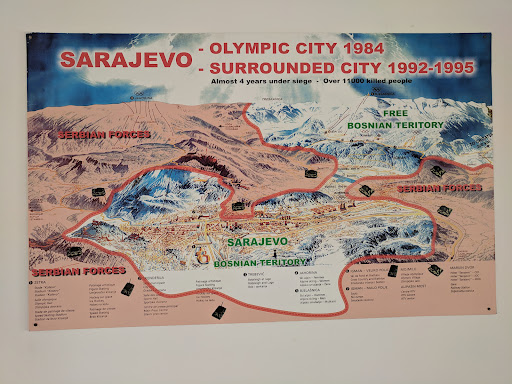
The Tunnel of Hope in Sarajevo is a remarkable and poignant historical site that is an absolute must-visit for anyone interested in the history of the Bosnian War. Located near the Sarajevo airport, this tunnel played a crucial role during the Siege of Sarajevo (1992-1996), providing a lifeline for the city's residents.
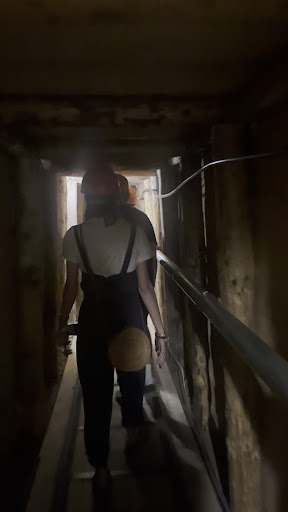
The Tunnel of Hope was built in 1993 under the Sarajevo Airport runway and stretched approximately 800 meters. It served as the primary route for food, medical supplies, and humanitarian aid to reach the besieged city, as well as a passage for people to escape. Constructed by the Bosnian Army and volunteers under extremely perilous conditions, the tunnel symbolizes resilience, ingenuity, and the indomitable spirit of the people of Sarajevo.
Visiting the tunnel today, you can walk through a preserved section of it and view exhibits that include wartime memorabilia, photographs, and video footage that vividly depict the struggle and perseverance of those who relied on it. The museum also features personal stories and artifacts, providing a deeply moving and educational experience.
For the best experience, it's recommended to visit early in the morning to avoid crowds and have a more reflective and intimate visit. The guides are knowledgeable and passionate, offering insights that enrich your understanding of the site's significance.
Overall, the Tunnel of Hope is not just a historical monument but a powerful reminder of the human capacity to endure and overcome adversity. It's an essential stop for anyone seeking to comprehend the profound impacts of the Bosnian War and the resilience of...
Read moreEven though I've never entered this museum I took the liberty of writing a review, here is why. I live nearby to the location and often see people being in doubt and desperatly searching for this place. Not much signs show the location therefore the approach can be tricky. Best is to use google maps or ask the locals around. Sometimes big tourist buses also go lost and such block the traffic on the very narrow street. There are two parkings: one in front of the museum which is designed for cars and one for tourist buses: on the lawn covered by tiny rocks aside of the museum. At the moment a woodden cottage is being built at the back of the bus parking. I hope/assume it will be a coffee place (kafana) where the tourists can get refreshments (right no there is no place to buy things like that). However there is a souvenir shop next to the entrance, less equipped: merchandise and magnets available. The entry fee is much more then the museum provides. The museum represents the tunnel which through the people during the Siege got the food and supplies from the airport. Therefore there is another end of the tunnel (the two are not connected anymore) which is open from the other side of the airport. (on the main airport road a signs shows...
Read moreThis museum is a must see place to understand the suffering of Bosnian people. However, even it was well established, it hasn't been well maintained. The current condition is not good. There is a lack of explanatory information and guidance. We paid an entrance fee of 20 BAM (10 EUR) per person in addition to car park of 3 BAM (1.5 EUR) for one hour. The staff was not helpful or willing to give information. We entered in a room to watch a video about the history of the Serbian siege and construction of the tunnel but it appeared that the guide was not pleased with our existence because he was hired by some other group. He didn't let us in the other room to listen to the remaining part of the demonstration. I downloaded the mobile application to my phone and tried to listen the audio about the specific section of the museum. After one minute or so the application demanded me to pay extra to listen to the remaining part of the recording. Overall, it was a frustrating experience of wild capitalism surpassing the message that should be given to the visitors about the delicate situation of Bosnia and...
Read more