HTML SitemapExplore

Central Kalahari Game Reserve — Attraction in Ghanzi District

Name
Central Kalahari Game Reserve
Description
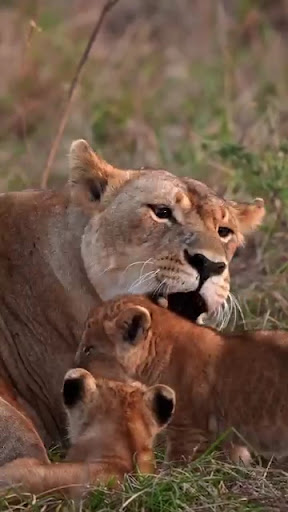
The Central Kalahari Game Reserve covers a large section of central Botswana. Its harsh, sprawling terrain is dominated by grasslands, home to wildlife such as giraffes, cheetahs, hyenas and wild dogs. There are several fossilized river valleys, including Deception Valley and Passarge Valley, which offer basic campsites. Dirt tracks wind south through the reserve's remote landscapes to the Piper’s Pan area.
Nearby attractions
Nearby restaurants
Nearby hotels
Related posts
Keywords
Central Kalahari Game Reserve tourism.Central Kalahari Game Reserve hotels.Central Kalahari Game Reserve bed and breakfast. flights to Central Kalahari Game Reserve.Central Kalahari Game Reserve attractions.Central Kalahari Game Reserve restaurants.Central Kalahari Game Reserve travel.Central Kalahari Game Reserve travel guide.Central Kalahari Game Reserve travel blog.Central Kalahari Game Reserve pictures.Central Kalahari Game Reserve photos.Central Kalahari Game Reserve travel tips.Central Kalahari Game Reserve maps.Central Kalahari Game Reserve things to do.
Central Kalahari Game Reserve things to do, attractions, restaurants, events info and trip planning
Central Kalahari Game Reserve
BotswanaGhanzi DistrictCentral Kalahari Game Reserve

Basic Info

Central Kalahari Game Reserve

JVX7+F65, Botswana
4.3(143)
Open 24 hours
Save
spot

Ratings & Description

Info

The Central Kalahari Game Reserve covers a large section of central Botswana. Its harsh, sprawling terrain is dominated by grasslands, home to wildlife such as giraffes, cheetahs, hyenas and wild dogs. There are several fossilized river valleys, including Deception Valley and Passarge Valley, which offer basic campsites. Dirt tracks wind south through the reserve's remote landscapes to the Piper’s Pan area.

Outdoor
Adventure
Scenic
Off the beaten path
attractions: , restaurants:
logoLearn more insights from Wanderboat AI.
Phone
+267 391 3111
Website
botswanatourism.co.bw

Plan your stay

hotel
Pet-friendly Hotels in Ghanzi District
Find a cozy hotel nearby and make it a full experience.
hotel
Affordable Hotels in Ghanzi District
Find a cozy hotel nearby and make it a full experience.
hotel
The Coolest Hotels You Haven't Heard Of (Yet)
Find a cozy hotel nearby and make it a full experience.
hotel
Trending Stays Worth the Hype in Ghanzi District
Find a cozy hotel nearby and make it a full experience.

Reviews

Get the Appoverlay
Get the AppOne tap to find yournext favorite spots!
Wanderboat LogoWanderboat

Your everyday Al companion for getaway ideas

CompanyAbout Us
InformationAI Trip PlannerSitemap
SocialXInstagramTiktokLinkedin
LegalTerms of ServicePrivacy Policy

Get the app

© 2025 Wanderboat. All rights reserved.

Reviews of Central Kalahari Game Reserve

4.3
(143)
avatar
5.0
28w

The Central Kalahari Game Reserve (CKGR), sprawling over a massive 52,800 square kilometers, is one of the world’s largest and most remote protected areas. A look at its map immediately reveals what makes this reserve so iconic: vast, seemingly endless space, minimal infrastructure, and a raw, untouched wilderness that defines the heart of Botswana’s desert ecosystem.

Unlike parks with dense tourist infrastructure, the CKGR map emphasizes remoteness and self-reliance. The landscape is largely open savannah, with soft undulating dunes, scattered pans, and fossil riverbeds. Names like Deception Valley, Sunday Pan, Piper Pan, and Leopard Pan stand out prominently. These areas, once ancient river systems, now serve as prime wildlife habitats. On the map, they form a rough arc in the northeastern part of the reserve—this is the most frequented area, offering seasonal grasslands that attract large concentrations of herbivores.

The map carefully marks the primitive campsites—typically unfenced and with minimal facilities—such as Deception Camp, Kori, Lekhubu, and Passarge. These are numbered or named and usually spread wide apart, emphasizing privacy and solitude. Travelers planning their routes use these points as key overnight stops, and the distances between them, often over 50–100 km, are clearly indicated on the map for safety planning.

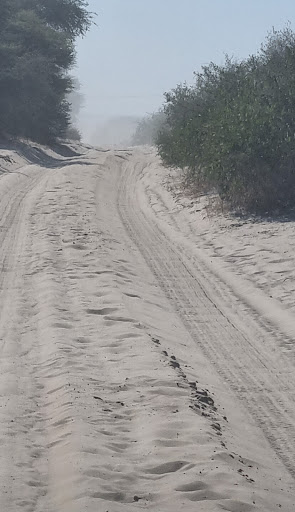
CKGR’s roads are rough sand tracks, marked on the map with varying textures to indicate usability—some may be accessible in dry season only, while others are known to get heavily bogged in rains. There are no fuel stations or shops within the park, and this is reflected in the map’s starkness: there is little beyond terrain, routes, pans, and waterholes. It’s a rare reminder that in CKGR, you’re truly in the wilderness.

The wildlife distribution is not explicitly marked, but experienced travelers use map features like pans and valleys to guess sighting hotspots. Deception Valley, for example, is famed for springbok, gemsbok, giraffes, and the elusive black-maned Kalahari lions. During the rainy season (December to March), many of the fossil riverbeds bloom into green oases, and the map’s elevation and contour details help identify these likely zones.

Another critical part of the CKGR map is its access gates: Matswere Gate (northeast), Tsau Gate, and Xade Gate (west). These entry points are marked with important notes on permit checks and vehicle logs. The nearby settlements of Ghanzi or Rakops are often referenced in insets, showing their importance as logistical bases for fuel, supplies, and bookings.

Also noted are conservation zones and restricted research areas, particularly in the southern sections. The Khutse Game Reserve, while technically separate but adjacent, is often included in CKGR overviews and connected via internal tracks. These adjoining conservation areas help reinforce the region’s ecological importance.

In essence, the map of Central Kalahari Game Reserve is not just a guide—it’s a survival tool and an invitation to one of Africa’s last great wildernesses. It reflects the ethos of CKGR: minimal intervention, maximum immersion. For adventurers, overlanders, and wildlife purists, it offers the promise of silence, starlit skies, raw nature, and untamed beauty—marked not by tourist facilities, but by ancient valleys and the...

   Read more

avatar
1.0
9y

Just not worth it! No refunds.

The drive to CKGR through the Matswere gate is boring, difficult, and an hour long. You must have 4WD and know how to use it as the road gets much worse in the park. There are a lot of opportunities to get stuck. Along the way you pass long brown grass, leafless trees and a handful of animals. Just like the park,  we were to discover.

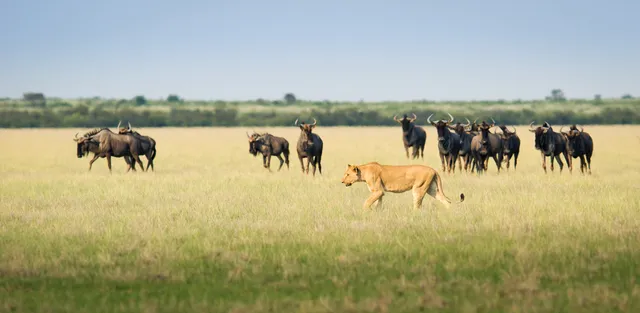
We drove from Pan to Pan.  It is hot during the day and cold at night. There is no cell signal here. Animals seen were a few Oryx, Wildebeest, Jackyl, Fox, Gazelle, and Ostrich.

You have to book the site in advance and then pay the park fees in Maun where they do the usual "the card machine isn't working" trick to force you to exchange money.

The sites are large, a very few with a long drop toilet (where you can practice the hover and plop) and make shift shower (bring your own warer) which might work if the nozzle wasn't broken. The rest of the sites, nothing.

The Pans are all the same The animals congegate around the bore holes in shifts. Only 4 species seen, but most of the animals are here.

There is fuel only in Maun, Mopipi, and sometimes in Racops. You can't drive to or through Orapa without a permit due to mining.

I you have to say that you've been to the Kalahari, drive to the nearest bore hole, turn around and leave. You have seen everything. We paid for 3, stayed for 2 and no refunds for either camp or park fees Be sure to...

   Read more
avatar
3.0
3y

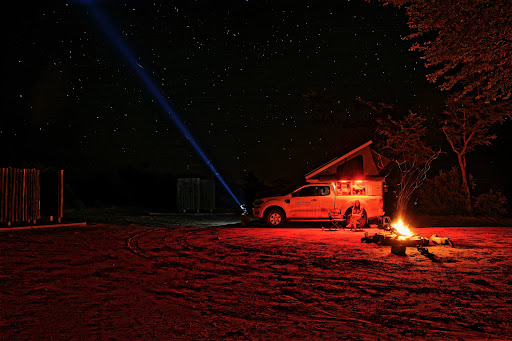
Always humbling to spend time so close to nature. Incredible lion sightings, with piper pan being everthing we hoped for, with jackal paying a visit and lions roaring through the night. Facilities have unfortunately not been well-maintained, with toilets at entrances being in a state of complete disrepair, no running water to the bathrooms and overall unhygienic (bird feces all along the walls, cobwebs all over the show). The camp sites that are maintained by operators such as Big Foot Tours seem to get more attention. Water is a problem, but it is the kalahari after all, always carry plenty of your own water. Roads have improved since we last visited but a 4x4 is still a must. Booking accomodation can be a challenge with some sites being managed by Botswana Parks and others by operators so make sure you know who runs which facilities. Operators accept cash in Euro,USD and Pula on arrival at entrance gates but Botswana Parks only accepts Pula, so make sure you have sufficient cash. Make sure you take your own wood I was very disheartened to see a group of CA vehicles driving around with an entire tree stump on their roof, so don't be that guy, take your own wood in and leave the habitat the way it was...

   Read more
Page 1 of 7
Previous
Next

Posts

krraziekrrazie
The Central Kalahari Game Reserve (CKGR), sprawling over a massive 52,800 square kilometers, is one of the world’s largest and most remote protected areas. A look at its map immediately reveals what makes this reserve so iconic: vast, seemingly endless space, minimal infrastructure, and a raw, untouched wilderness that defines the heart of Botswana’s desert ecosystem. Unlike parks with dense tourist infrastructure, the CKGR map emphasizes remoteness and self-reliance. The landscape is largely open savannah, with soft undulating dunes, scattered pans, and fossil riverbeds. Names like Deception Valley, Sunday Pan, Piper Pan, and Leopard Pan stand out prominently. These areas, once ancient river systems, now serve as prime wildlife habitats. On the map, they form a rough arc in the northeastern part of the reserve—this is the most frequented area, offering seasonal grasslands that attract large concentrations of herbivores. The map carefully marks the primitive campsites—typically unfenced and with minimal facilities—such as Deception Camp, Kori, Lekhubu, and Passarge. These are numbered or named and usually spread wide apart, emphasizing privacy and solitude. Travelers planning their routes use these points as key overnight stops, and the distances between them, often over 50–100 km, are clearly indicated on the map for safety planning. CKGR’s roads are rough sand tracks, marked on the map with varying textures to indicate usability—some may be accessible in dry season only, while others are known to get heavily bogged in rains. There are no fuel stations or shops within the park, and this is reflected in the map’s starkness: there is little beyond terrain, routes, pans, and waterholes. It’s a rare reminder that in CKGR, you’re truly in the wilderness. The wildlife distribution is not explicitly marked, but experienced travelers use map features like pans and valleys to guess sighting hotspots. Deception Valley, for example, is famed for springbok, gemsbok, giraffes, and the elusive black-maned Kalahari lions. During the rainy season (December to March), many of the fossil riverbeds bloom into green oases, and the map’s elevation and contour details help identify these likely zones. Another critical part of the CKGR map is its access gates: Matswere Gate (northeast), Tsau Gate, and Xade Gate (west). These entry points are marked with important notes on permit checks and vehicle logs. The nearby settlements of Ghanzi or Rakops are often referenced in insets, showing their importance as logistical bases for fuel, supplies, and bookings. Also noted are conservation zones and restricted research areas, particularly in the southern sections. The Khutse Game Reserve, while technically separate but adjacent, is often included in CKGR overviews and connected via internal tracks. These adjoining conservation areas help reinforce the region’s ecological importance. In essence, the map of Central Kalahari Game Reserve is not just a guide—it’s a survival tool and an invitation to one of Africa’s last great wildernesses. It reflects the ethos of CKGR: minimal intervention, maximum immersion. For adventurers, overlanders, and wildlife purists, it offers the promise of silence, starlit skies, raw nature, and untamed beauty—marked not by tourist facilities, but by ancient valleys and the tracks of lions.
Sebastian DzuggaSebastian Dzugga
The Central Kalahari is one of the last unspoilt wilderness areas in South Africa. Endless deep sand roads, mopani, mopani, mopani awesome Salt pans, sky of stars beyond words all nights. We have crossed the Kalahari South to North. Khutse Game Reserve and the Camps are very lovely. In our stay we was alone in the area and had some awesome Thunderstorms for fear. Middle of the park is stressful for driving, mopani and trees punch the vehicle all the time on the deep sand roads. Sightings of Animals are very spare in this area. Piper Pan and Letiahau Valley is Lion Land and very impressive for sightings. If you plan to cross the Kalahari, the most important things are: more as enough fuel and water as you need!!!There is no Gas Station anywhere!!! Your vehicle fuel consumption will go up to 20-25l or more when you go 4x4 on deep sand roads. The Park Fee as german is not cheap, but its worth, it was a amazing experience.
georgina de wintergeorgina de winter
Dit jaar 2024 en 2025 december en januari zijn we (weer) van plan de Kalahari van zuid naar noord te gaan rijden. De laatste keer was 2017-2018. Dit willen we nog één keer doen ( gezien onze leeftijd). Niet dat we zo oud zijn, maar toch ook niet meer zo piep. We willen er misschien een week over doen. Dus dat word satelliet telefoon mee, diesel in jerrycans, heel veel water, genoeg te eten en te drinken. En ook iets van een zaag, want voorheen lagen er wel eens wat omgegooide bomen op het pad. ( olifanten). We zijn wel meer hier geweest maar dat was het zuiden of het noorden. Waarom wij dit nog een keer willen doen, is dat het zo ongelooflijk mooi en stil is. Dit ken je niet meer in Nederland. En ook de spanning en wat kom je tegen. De eerste keer dat we hier waren, waren er in 400 km helemaal geen mensen. Behalve wij. Maar bedenk wel dat je heel goed 4&4 moet kunnen rijden. Als je dat niet kan, doe het dan niet. Of rij met meerdere auto’s. Er zijn hier geen restaurants, benzinepompen, geen winkels helemaal niets. We hebben er nu alweer zin in,maar het duurt nog 10 maanden. Eerst alles plannen, ook de Camps moet je ver van te voren boeken. Groetjes Georgina. 10-02-2023
See more posts
See more posts
hotel
Find your stay

Pet-friendly Hotels in Ghanzi District

Find a cozy hotel nearby and make it a full experience.

The Central Kalahari Game Reserve (CKGR), sprawling over a massive 52,800 square kilometers, is one of the world’s largest and most remote protected areas. A look at its map immediately reveals what makes this reserve so iconic: vast, seemingly endless space, minimal infrastructure, and a raw, untouched wilderness that defines the heart of Botswana’s desert ecosystem. Unlike parks with dense tourist infrastructure, the CKGR map emphasizes remoteness and self-reliance. The landscape is largely open savannah, with soft undulating dunes, scattered pans, and fossil riverbeds. Names like Deception Valley, Sunday Pan, Piper Pan, and Leopard Pan stand out prominently. These areas, once ancient river systems, now serve as prime wildlife habitats. On the map, they form a rough arc in the northeastern part of the reserve—this is the most frequented area, offering seasonal grasslands that attract large concentrations of herbivores. The map carefully marks the primitive campsites—typically unfenced and with minimal facilities—such as Deception Camp, Kori, Lekhubu, and Passarge. These are numbered or named and usually spread wide apart, emphasizing privacy and solitude. Travelers planning their routes use these points as key overnight stops, and the distances between them, often over 50–100 km, are clearly indicated on the map for safety planning. CKGR’s roads are rough sand tracks, marked on the map with varying textures to indicate usability—some may be accessible in dry season only, while others are known to get heavily bogged in rains. There are no fuel stations or shops within the park, and this is reflected in the map’s starkness: there is little beyond terrain, routes, pans, and waterholes. It’s a rare reminder that in CKGR, you’re truly in the wilderness. The wildlife distribution is not explicitly marked, but experienced travelers use map features like pans and valleys to guess sighting hotspots. Deception Valley, for example, is famed for springbok, gemsbok, giraffes, and the elusive black-maned Kalahari lions. During the rainy season (December to March), many of the fossil riverbeds bloom into green oases, and the map’s elevation and contour details help identify these likely zones. Another critical part of the CKGR map is its access gates: Matswere Gate (northeast), Tsau Gate, and Xade Gate (west). These entry points are marked with important notes on permit checks and vehicle logs. The nearby settlements of Ghanzi or Rakops are often referenced in insets, showing their importance as logistical bases for fuel, supplies, and bookings. Also noted are conservation zones and restricted research areas, particularly in the southern sections. The Khutse Game Reserve, while technically separate but adjacent, is often included in CKGR overviews and connected via internal tracks. These adjoining conservation areas help reinforce the region’s ecological importance. In essence, the map of Central Kalahari Game Reserve is not just a guide—it’s a survival tool and an invitation to one of Africa’s last great wildernesses. It reflects the ethos of CKGR: minimal intervention, maximum immersion. For adventurers, overlanders, and wildlife purists, it offers the promise of silence, starlit skies, raw nature, and untamed beauty—marked not by tourist facilities, but by ancient valleys and the tracks of lions.
krrazie

krrazie

hotel
Find your stay

Affordable Hotels in Ghanzi District

Find a cozy hotel nearby and make it a full experience.

Get the Appoverlay
Get the AppOne tap to find yournext favorite spots!
The Central Kalahari is one of the last unspoilt wilderness areas in South Africa. Endless deep sand roads, mopani, mopani, mopani awesome Salt pans, sky of stars beyond words all nights. We have crossed the Kalahari South to North. Khutse Game Reserve and the Camps are very lovely. In our stay we was alone in the area and had some awesome Thunderstorms for fear. Middle of the park is stressful for driving, mopani and trees punch the vehicle all the time on the deep sand roads. Sightings of Animals are very spare in this area. Piper Pan and Letiahau Valley is Lion Land and very impressive for sightings. If you plan to cross the Kalahari, the most important things are: more as enough fuel and water as you need!!!There is no Gas Station anywhere!!! Your vehicle fuel consumption will go up to 20-25l or more when you go 4x4 on deep sand roads. The Park Fee as german is not cheap, but its worth, it was a amazing experience.
Sebastian Dzugga

Sebastian Dzugga

hotel
Find your stay

The Coolest Hotels You Haven't Heard Of (Yet)

Find a cozy hotel nearby and make it a full experience.

hotel
Find your stay

Trending Stays Worth the Hype in Ghanzi District

Find a cozy hotel nearby and make it a full experience.

Dit jaar 2024 en 2025 december en januari zijn we (weer) van plan de Kalahari van zuid naar noord te gaan rijden. De laatste keer was 2017-2018. Dit willen we nog één keer doen ( gezien onze leeftijd). Niet dat we zo oud zijn, maar toch ook niet meer zo piep. We willen er misschien een week over doen. Dus dat word satelliet telefoon mee, diesel in jerrycans, heel veel water, genoeg te eten en te drinken. En ook iets van een zaag, want voorheen lagen er wel eens wat omgegooide bomen op het pad. ( olifanten). We zijn wel meer hier geweest maar dat was het zuiden of het noorden. Waarom wij dit nog een keer willen doen, is dat het zo ongelooflijk mooi en stil is. Dit ken je niet meer in Nederland. En ook de spanning en wat kom je tegen. De eerste keer dat we hier waren, waren er in 400 km helemaal geen mensen. Behalve wij. Maar bedenk wel dat je heel goed 4&4 moet kunnen rijden. Als je dat niet kan, doe het dan niet. Of rij met meerdere auto’s. Er zijn hier geen restaurants, benzinepompen, geen winkels helemaal niets. We hebben er nu alweer zin in,maar het duurt nog 10 maanden. Eerst alles plannen, ook de Camps moet je ver van te voren boeken. Groetjes Georgina. 10-02-2023
georgina de winter

georgina de winter

See more posts
See more posts