Moremi Game Reserve - National park in Botswana A 1,900-sq.-mi. game & safari reserve on a river delta, home to cheetahs, rhinos, elephants & lions.
Moremi Game Reserve is a protected area in Botswana. It lies on the eastern side of the Okavango Delta and was named after Chief Moremi of the BaTawana tribe. Moremi was designated as a game reserve, rather than a national park, when it was created. This designation meant that the BaSarwa or Bushmen that lived there were allowed to stay in the reserve.
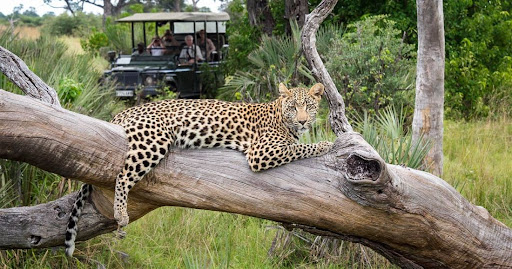
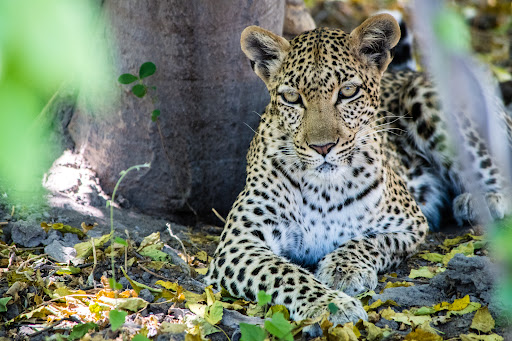
Moremi Game Reserve covers much of the eastern side of the Okavango Delta and combines permanent water with drier areas, which create some startling and unexpected contrasts. Some prominent geographical features of the Reserve are Chiefs Island and the Moremi Tongue. In the Moremi Reserve one can experience excellent views of Savannah game as well as bird-watching on the lagoons. There are also thickly wooded areas, which are home to the Cape wild dog (Lycaon pictus pictus) and leopard. To the northeast lies the Chobe National Park which borders the Moremi Game Reserve.
Although just under 5,000 square kilometres (1,900 sq mi) in extent, it is a surprisingly diverse reserve, combining mopane woodland and acacia forests, floodplains and lagoons. Only about 30% of the reserve is mainland, with the bulk being within the Okavango Delta itself.
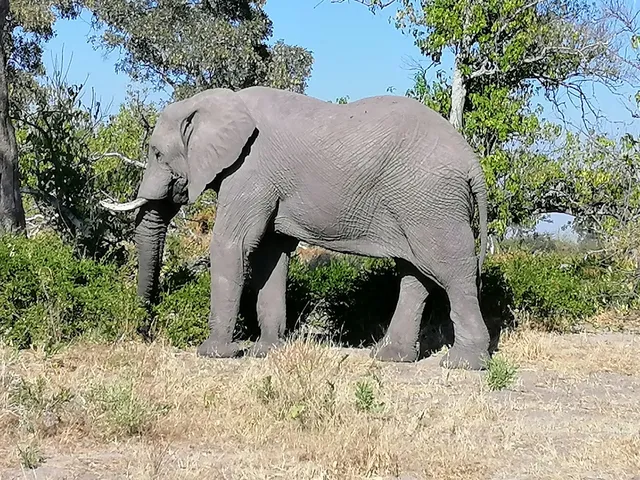
Moremi Game Reserve, although not one of the largest parks, presents insights and views even for the most experienced of travelers. It is home to nearly 500 species of bird (from water birds to forest dwellers), and a vast array of other species of wildlife including Cape buffalo, Angolan giraffe, black rhinoceros, lion, elephant, hippopotamus, zebra, cheetah, hyena, jackal, impala, and red lechwe. Cape wild dogs inhabit this reserve[2] and have been the subject of a project run in the area since 1989; thus this species is often seen wearing collars emplaced by researchers. The Moremi area contains one of the most significant extant habitat areas...
Read moreSand, water and waves of dry grass. Dotting palms around the water and the wilderness living free. It was an amazing experience to see the nature at her glorious full. Lack of time allowed me only to take a day safari. We started early in the morning from Maun and its about 99 km from there. By the time we were in the buffer zone we started spotting Giraffes, Impala, Eagles and zebras. The buffer spreads about 40 kms before you enter the core and start looking for elephants, hippo and others. Unfortunately the big cats were a no show (it's was extremely hot that day and they had retreated to the shades). But thats okay...just to see all others were my heart's full. You can book your safari through Viator, or get to Maun and book it through a Safari operator. Be cautious, the region is extremely dry so carry at least a bottle of water even if the operator provides you with it. The day and the night temperature is vastly different and the wind makes it difficult early in the morning in an open vehicle...a scarf around your face would do great. While the day temperature can hit as high as 40+ °C, the nights are as low as 13 and windy. First about 50 kms is a tar road but after that its just sand so an eye drop for the night would really be good. The breakfast at the South gate of Moremi was very interesting with two hornbills giving us company. We had our lunch in a clearing and just the surrounding made it so tasty. I wish to go back and take the night stay in the reserve (there are designated places for camping for both self driven tourists or the ones arranged by...
Read moreOne of the natural wonders of the world, the Okavango is one of the best safari locations on this planet. You can do it on a budget or go full luxury - I chose to do a drive and overnight in the delta with Island Mobile Safaris and saw such a wealth of predators, birds and rare wildlife that I would not hesitate to do it again. A beautiful changing landscape of gold to bright green make this place just magical and its wonderful to see such a plethora of animals in one place.
My only negative criticism would be that although Wildlife were very helpful when we got stuck in a water crossing, they are severely under-equipped to manage some elements of the park. Wildlife did not even have a single vehicle near third bridge to help people in danger or investigate potential poaching concerns. We got stuck in a shallow crossing near the third bridge because another vehicle had been pulled out of there, leaving a huge crater in the middle that flooded our vehicle. Wildlife were aware of this, but did not have a vehicle to close off the crossing or fix it, and could not even help us out of the water or give us a lift to Xakanaxa to pick up a mechanic to revive our drowned engine.
Thank you however to the wonderful people who helped us. One kind guest and his son came to help winch us out, Kwetsani used their spare game drive vehicle to give us a lift to Xakanaxa, and Xakanaxa helped us by allowing their wonderful mechanics to get our flooded diesel engine back up and running. Truly wonderful people, thank you.
What an...
Read more