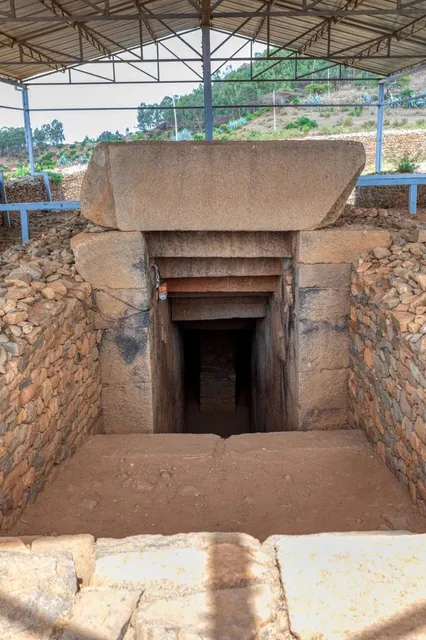
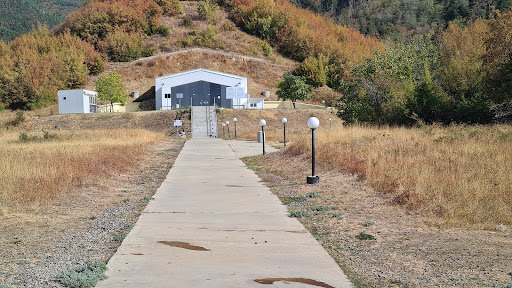
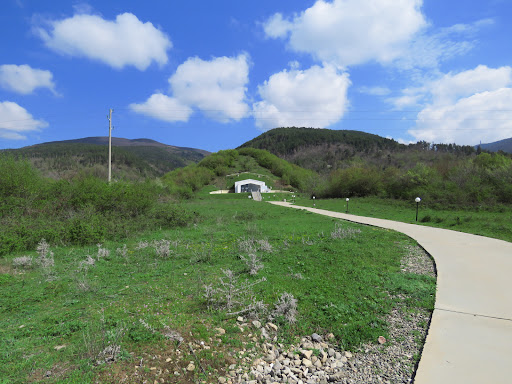
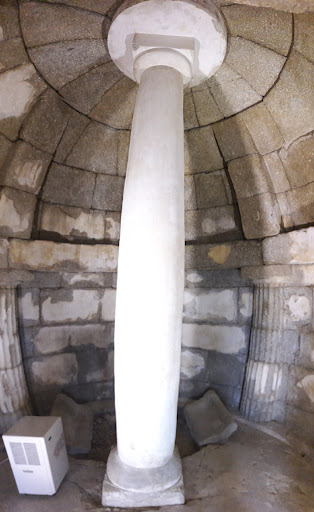
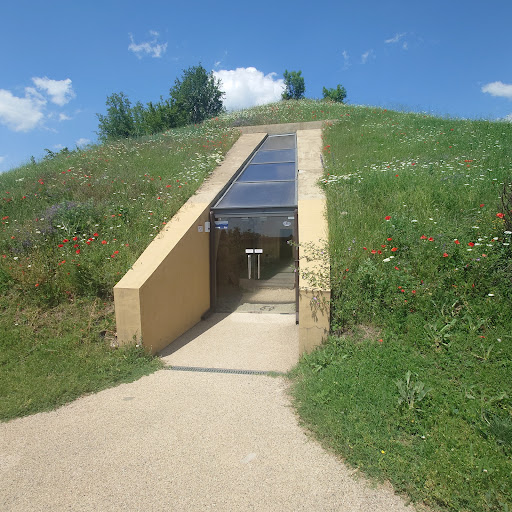
Mound-necropolis consists of five mounds, three of which have open tombs. In the Shushmanets mound, in 1996, a unique Thracian tomb was unveiled. The mound is 20 m high and 200 m in diameter. According to archaeologist Georgi Kitov, the tomb has the highest façade found in Bulgaria - 5.6 m. The dromos is also the widest known so far - 6 m. It is the only one whose entrance is propped up with an Ionian-style column. The antechamber is rectangular with semi-cylindrical cover - Macedonian type, and the chamber is round with domed cover. Such a combination is not common in Bulgaria and in the rest of the antique world. The vault of the tomb is supported by a Dorian column. It is covered with snow-white screed and has a diameter of 0.5 m. On the periphery of the room are modelled another seven columns with fluting. Above them there is a horizontal convex belt and protruding four-legged props. The whole camera was plastered with a pike that fell in places. The diameter and height of the camera are about 4 m. The side walls are divided into three horizontal girders, which probably reflect the image of the world - underground, earth and celestial. The latter - the heavenly one resembles the solar disk, deified by the Thracians through 15 radially located stone blocks. The tomb had a gable, decorated with acronyms and antefixes. He was destroyed. It only retains a side antefix with a half-palm, which resembles a griffin’s head. Above the entrance to the round camera there was a false gable similar to that of the Griffins tomb, but apparently more accurately executed. The entrance to the room is closed with two-door, cassette-door, now - destroyed. The cassettes are carved with ornaments, like a rotating solar disk type, sometime hidden by a thick layer of red paint. Archaeologist Georgi Kitov defines this tomb as a Thracian temple - a mausoleum in which Orphic practices were carried out and subsequently transformed into a tomb. Its construction dates back to the beginning of the 4th century BC. The tomb has been robbed since antiquity. Only one piece of iron, a few insignificant fragments of objects, as well as skeletons of 4 horses and 2 dogs in the antechamber...
Read moreThis tomb from the Valley of Thracian Kings around Kazanlak is different from all the others by its columns. The estimated total number of Thracian tombs in the area is approximately 1200. Only 200 are explored until now. There is also an ancient town from V century B.C. named Seuthopolis, named after its king Seuthes III, which is under the waters of Koprinka dam. The bronze head of this king was found in another tomb, The Tomb of Seuthes III or also named Goliama Kosmatka. It is very close to Sushmanets. You can find a very good replica of the head in the History Museum of Kazanlak. The original is in Archeological Museum in Sofia. One of the photos represents the view from the tomb. An interesting fact is that all Thracian tombs' entrances overlook South. Follow my blog placescases.com for more tips about traveling, staying and dining in Kazanlak and other towns in...
Read moreEach of the tombs in the area are worth seeing, not only because they are such an important historic site, but the museums at each one have been renovated and are state of the art. For those unhappy with the small fee, these renovations were not free, nor the excellent and industry standard protections.
Having been to several museums and historic sites in Bulgaria, it’s obvious a lot of money and effort are going into their cultural heritage, I hope visitors will understand and support this.
As for five minutes, it’s a shame you didn’t stop to admire the meticulous engineering that went into blocks joined that closely with no mortar! Or think about the skill required to accomplish that in the 4th century BCE. Not to mention how far some of the materials were moved, much like the pyramids or Stonehenge. These tombs are...
Read more