The Sambor Preykuk Temple Site – World Cultural Heritage
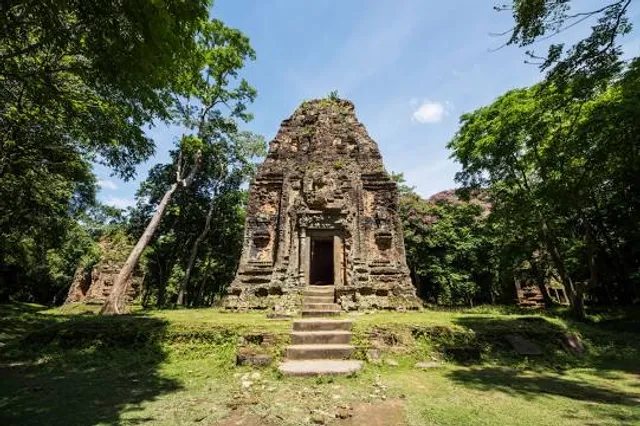
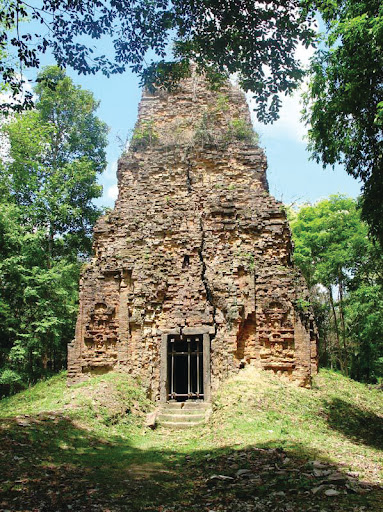
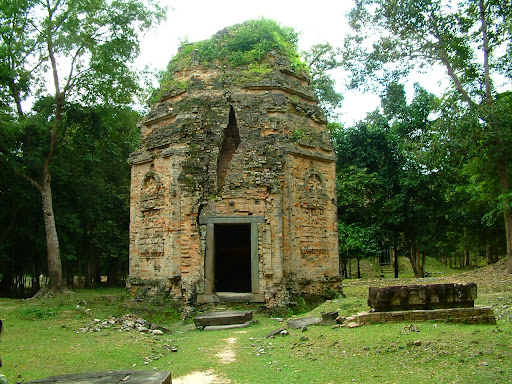
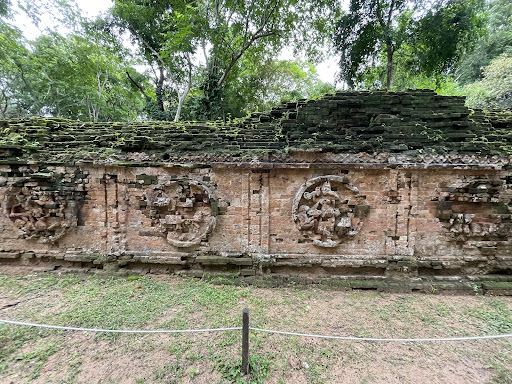
The Sambor Preykuk Temple Site is located in Sambor Village, Sambor Commune, Prasat Sambor District, Kampong Thom Province, and 35 km from the Kampong Thom provincial town or 206 km north of Phnom Penh Capital. This site covers an area of 25 sq. km, situated in the lowland with rivers, creeks, swamp, dams, and a reservoir irrigating agricultural crops. The Sambor Preikuk Site has been known to be “Isanapura” where is the capital of the Chenla Kingdom between the late 6th century and the early 7th century. King Isana Varman I (616-637 AD) was the founder of the Isanapura capital. In his diary, a Chinese emissary wrote the Isanapura capital populated by some 20,000 families. Right in the center of the capital, there is a large audience hall built of laterite and brick. Until the Angkor era, the Sambor Preikuk Site was still of importance. During the reign of King Rachentra Varman II (944-968 AD), he ordered an engineer to renovate buildings and construct some additional buildings on the site. On the site, there are ten eight-angular shaped temples built in the distinctive and oldest architectural style in Southeast Asia. On the walls, these temples are decorated with high reliefs. Sculptures were built of sandstone in the Sambor Preikuk style – the first Khmer one between the late sixth century and the early seventh century. These were carved on lintels, gables, and supporting pillars. The Khmer art and architecture became one of the country’s foremost masterpieces and were recognized in other countries in the region. At last, the Khmer art and architecture became prominent in the Angkor era. The Sanskrit and Khmer stone inscription has shown in archaeological evidence that the presence of the Sambor Preikuk site laid the foundation for the Khmer Empire between India and China. At present, the Sambor Preikuk Site totals 293 temples of which there are main temple groups: The Northern Temple Group or “Sambor Temple Group”
The Central Temple Group or “Tor Temple Group”
The Southern Temple Group or “Yeay Poan Temple Group”
Kraol Romeas Temple Group Trapaing Ropeak Temple Group
Many temples are always worshipped by residents and tourists. In reality, the local community deem Isanapura to be a ‘dwelling place of the tutelary spirits’ obeyed by residents during the religious festivals and two other relevant festivals. Although of old, these temples are still in an original condition. The Sambor Preikuk temples are presently conserved as an ‘ancient historic building site’. The Sambor Preikuk Temple Site has its particular features by the UNESCO’s criteria as follows: The Sambor Preikuk Temple Site as rare evidence of the architecture and the group organization; The Isanaborei City gaining a social, religious and artistic influence from India; The Isanaborei City of the universal value of harmony and unity.
By the above-mentioned criteria, the World Heritage Committee of UNESCO decided to inscribe the ‘Sambor Preikuk Temple Site’ on the World Heritage List in the forty-first summit meeting attended by the 193-member countries and the 21 countries of the permanent committee in Krakow City, the Republic of Poland on July 8, 2017. This inscription is opening a wide door for travel, tourism, and investment in Kampong Thom Province – the tourism potential one after the Siem Reap Province and the Preah Vihear Province of the Kingdom...
Read moreSambor Prei Kuk. Sambor Prei Kuk est un site archéologique préangkorien situé au Cambodge (30 km au nord de Kompong Thom) ancienne capitale du Chenla. Cette capitale a été établie au début du 7ème siècle, par le roi Içanavarman Ier. Le site forme trois groupes architecturaux : Groupe Nord : Prasat Sambor très dégradé. Groupe Central : Prasat Tao (Temple des lions) aux animaux magnifiquement sculptés en ronde-bosse. Groupe Sud : Prasat Yeaye Peou, aux monuments disséminés dans une forêt claire et paisible.
Sambor Prei Kuk. Sambor Prei Kuk (Khmer: ប្រាសាទសំបូរព្រៃគុក, Prasat Sambor Prei Kuk) is an archaeological site in Cambodia located in Kampong Thom Province, 30 km (19 mi) north of Kampong Thom, the provincial capital, 176 km (109 mi) east of Angkor and 206 km (128 mi) north of Phnom Penh. The now ruined complex dates back to the Pre-Angkorian Chenla Kingdom (late 6th to 9th century), established by king Isanavarman I as central royal sanctuary and capital, known then as Isanapura. The Cambodian government has included Sambor Prei Kuk on its Tentative List of UNESCO World Heritage Sites. Located on the Eastern bank of the Tonle Sap lake, close to the Sen River, the central part of Sambor Prei Kuk is divided into three main groups. Each group has a square layout surrounded by a brick wall. The structures of the overall archaeological area were constructed at variable times: the southern and north groups (7th century) by Isanavarman I, who is considered a possible founder of the city and the central group (later date). The buildings of Sambor Prei Kuk are characteristic of the Pre-Angkorean period with a simple external plan. The principal material is brick, but sandstone is also used for certain structures. Architectural features include numerous prasats, octagonal towers, shiva lingams and yonis, ponds and reservoirs, and lion sculptures. Sambor Prei Kuk is located amidst mature sub-tropical forests with limited undergrowth. The area has been mined and could still contain...
Read moreSambor Prei Kuk (tiếng Khmer: ប្រាសាទសំបូរព្រៃគុក, Prasat Sambor Prei Kuk) là một địa điểm khảo cổ nằm ở Kompung Thom, Campuchia. Nó nằm cách thành phố thủ phủ Kampong Thom 30 km (19 mi) về phía bắc, cách Di sản thế giới Angkor 176 km (109 mi) về phía đông và cách Phnôm Pênh 206 km (128 mi) về phía bắc. Quần thể này được xây dựng dưới thời tiền Angkor bởi Vương quốc Chân Lạp (cuối thế kỷ thứ 6 đến 9) do vua Isanavarman I thành lập để là kinh đô của vương quốc, được biết đến như là Isanapura. Năm 2017, quần thể di tích này chính thức trở thành một Di sản thế giới của UNESCO
Nó nằm trên bờ đông của Tonle Sap, gần sông Steung Saen, phần trung tâm của Sambor Prei Kuk được chia thành ba nhóm chính. Mỗi nhóm được bố trí bao quanh bởi một bức tường gạch hình vuông. Các cấu trúc của khu vực khảo cổ được xây dựng ở những thời điểm khác nhau: nhóm phía nam và phía bắc được xây dựng dưới thời Isanavarman I (thế kỷ thứ 7), được coi là người sáng lập nên thành phố trong khi nhóm đền ở trung tâm được xây dựng sau này.
Quần thể đã bị hủy hoại, nằm giữa những cánh rừng nhiệt đới đã từng bị khai thác và còn sót lại nhiều bom mìn sau chiến tranh, các công trình ở đây đặc trưng thời tiền Angkor. Vật liệu chính để xây dựng là gạch nhưng đá sa thạch vẫn được sử dụng cho những cấu trúc nhất định. Quần thể bao gồm các ngôi đền, tháp bát giác, biểu tượng thần Shiva, đá Yoni, ao và hồ chứa,cùng các tác phẩm điêu khắc sư tử.
Lịch sửCông cuộc chinh phục Phù Nam của người Chân Lạp cũng như sự hợp nhất giữa hai nước Chân Lạp và Phù Nam đã tạo ra quốc gia Khmer và Bavavacman I có thể coi là người sáng lập. Tuy vậy, sự hợp nhất đó không có nghĩa là đã chấm dứt được ngay tình hình đối lập về thành phần chủng tộc nữa.
Các tháp hầu như đổ nát Em của Bavavacman I là Chitơrasena kế ngôi anh vào khoảng năm 600, hiệu là Mahendravacman. Ông vua này tiếp tục mở rộng bờ cõi vương quốc về phía Tây và phía Nam, đặt quan hệ giao hữu với nước Chămpa láng giềng để rảnh tay về biên giới phía Đông, tập trung mở rộng biên giới phía Tây.[[Tập tin::Sambor Prei Kuk Các gian thờ bên trong tháp]]
Dưới đời vua Ixanavacman I (615-635) con của Mahendravacman, lãnh thổ Chân Lạp mở rộng thêm về phía Tây Nam, bao gồm Angkor Baray, Kampong Cham, Prey Veng, Kandal, Takeo, cho đến Chanthaburi thuộc Thái Lan ngày nay. Để củng cố quan hệ hữu hảo với các nước láng giềng, Ixanavacman I triều cống Trung Quốc vào những năm 616, 623, 628, mặt khác cũng gả con gái của mình cho cháu nội của vua Chămpa lúc bấy giờ. Do cuộc hôn nhân đó mà sinh ra một người con trai, sau này lên ngôi vua Chămpa năm 653, hiệu là Vikrantavacman một ông vua rất nổi tiếng về những công trình xây dựng đền đài (vùng Mỹ Sơn - Đông Dương thuộc tỉnh Quảng Nam ngày nay).
Cụm tháp S Ixanavacman dời đô đến Ixanapura, vùng Sampor Prei Kuk ngày nay ở phía Bắc tỉnh Kampong Thom thuộc vùng Biển Hồ, nơi mà nhiều bản văn bia khắc từ đời ông vua này để lại có ghi vương quốc của Ixanavacman được củng cố vững mạnh hơn. Giúp việc vua, có một bộ máy hành chính quan liêu khá hoàn chỉnh gồm có năm quan đại thần đứng đầu năm bộ ở kinh đô và vài chừng ba mươi tổng trấn cai trị trên ba mươi tỉnh...
Read more