HTML SitemapExplore
Find Things to DoFind The Best Restaurants

Banteay Samre — Attraction in Siem Reap

Name
Banteay Samre
Description
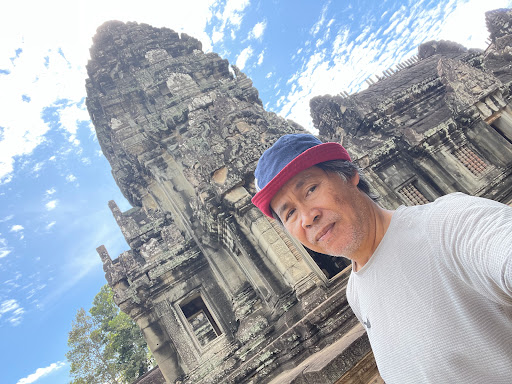
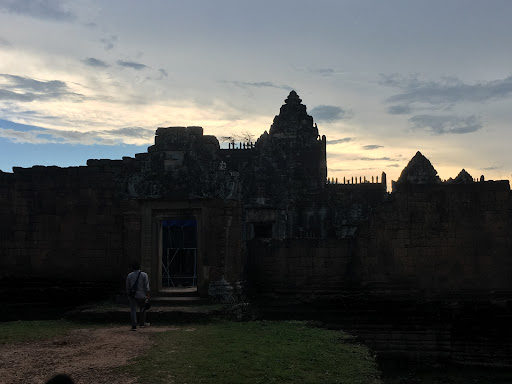
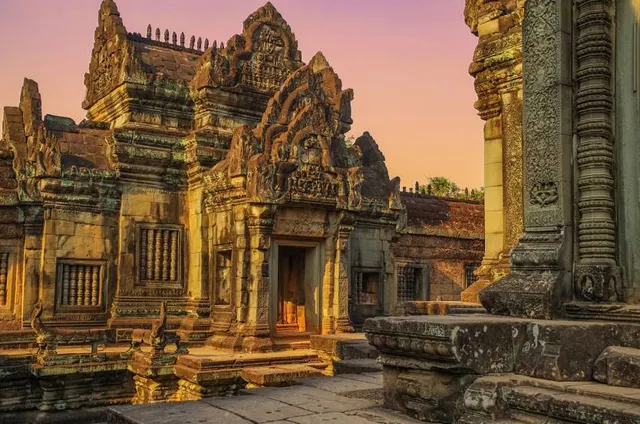
Banteay Samré is a temple at Angkor, Cambodia, located 400 metres to the east of the East Baray. Built during the reign of Suryavarman II and Yasovarman II in the early 12th century, it is a Hindu temple in the Angkor Wat style.
Nearby attractions
Nearby restaurants
Nearby hotels
Related posts
Keywords
Banteay Samre tourism.Banteay Samre hotels.Banteay Samre bed and breakfast. flights to Banteay Samre.Banteay Samre attractions.Banteay Samre restaurants.Banteay Samre travel.Banteay Samre travel guide.Banteay Samre travel blog.Banteay Samre pictures.Banteay Samre photos.Banteay Samre travel tips.Banteay Samre maps.Banteay Samre things to do.
Banteay Samre things to do, attractions, restaurants, events info and trip planning
Banteay Samre
CambodiaSiem ReapBanteay Samre

Basic Info

Banteay Samre

17000 Sok San Rd, Krong Siem Reap, Cambodia
4.7(628)
Open until 5:30 PM
Save
spot

Ratings & Description

Info

Banteay Samré is a temple at Angkor, Cambodia, located 400 metres to the east of the East Baray. Built during the reign of Suryavarman II and Yasovarman II in the early 12th century, it is a Hindu temple in the Angkor Wat style.

Cultural
Scenic
Family friendly
attractions: , restaurants:
logoLearn more insights from Wanderboat AI.
Website
apsaraauthority.gov.kh
Open hoursSee all hours
Fri7:30 AM - 5:30 PMOpen

Plan your stay

hotel
Pet-friendly Hotels in Siem Reap
Find a cozy hotel nearby and make it a full experience.
hotel
Affordable Hotels in Siem Reap
Find a cozy hotel nearby and make it a full experience.
hotel
The Coolest Hotels You Haven't Heard Of (Yet)
Find a cozy hotel nearby and make it a full experience.
hotel
Trending Stays Worth the Hype in Siem Reap
Find a cozy hotel nearby and make it a full experience.

Reviews

Things to do nearby

Study Khmer cooking with a local in Siem Reap
Fri, Dec 26 • 12:30 PM
Krong Siem Reap, Siem Reap Province 17254, Cambodia
View details
Angkor Wat Sunrise Guided Tour and Breakfast
Sat, Dec 27 • 4:30 AM
Krong Siem Reap, Siem Reap Province 17252, Cambodia
View details
Hidden Gems of Siem Reap, Private & Customizable
Sat, Dec 27 • 5:00 AM
Krong Siem Reap, Siem Reap Province 171202, Cambodia
View details
Get the Appoverlay
Get the AppOne tap to find yournext favorite spots!
Wanderboat LogoWanderboat

Your everyday Al companion for getaway ideas

CompanyAbout Us
InformationAI Trip PlannerSitemap
SocialXInstagramTiktokLinkedin
LegalTerms of ServicePrivacy Policy

Get the app

© 2025 Wanderboat. All rights reserved.

Reviews of Banteay Samre

4.7
(628)
avatar
5.0
51w

Banteay Samre Temple

Banteay Samre Temple, located in the Angkor region of Cambodia, is a remarkable Hindu temple built in the early 12th century during the reigns of Kings Suryavarman II and Yasovarman II. Named after the Samré, an ancient ethnic group, the temple is a fine example of the Angkor Wat architectural style.

The temple's layout features a central sanctuary with a single tower, connected by an antarala (antechamber) to a mandapa (hall). This central structure is surrounded by two concentric gallery enclosures, creating a compact yet intricate design. The temple is approached via a 200-meter-long raised causeway from the east, which suggests it once enclosed a sizable town.

Banteay Samre is noted for its well-preserved carvings and lintels, which depict scenes from Hindu mythology, including battles between gods and demons. The central tower and surrounding structures are adorned with detailed bas-reliefs, showcasing the artistic prowess of the Khmer craftsmen.

One of the unique aspects of Banteay Samre is its similarity to the larger Angkor Wat temple, both in style and construction materials. The temple's sandstone and laterite structures have weathered the centuries well, allowing visitors to appreciate its original grandeur. The temple's design also includes elements that are reminiscent of the Phimai temple in Thailand, highlighting the cultural exchanges within the region.

Despite its historical significance, Banteay Samre is less frequented by tourists compared to other Angkor temples, offering a more serene and intimate experience. Its relative seclusion makes it an excellent spot for photography and quiet exploration.

Today, Banteay Samre stands as a testament to the architectural and cultural achievements of the Khmer Empire, providing valuable insights into the religious and social dynamics of the...

   Read more
avatar
5.0
7y

The temple is worth the extra effort to experience the elaborate architecture, and fine carvings, although theft has mutilated many of the temple's treasures. Banteay Samre is located 400 meters (1,312 miles) east of the East Baray. It can be accessed by enter and leave Banteay Samre from the east. It was built in the middle of the 12th century by king Suryavarman II (reigned 1113-1150) and dedicated to Hindu (dedicated to vishnu) with Art Style of Angkor Wat. Banteay Samre is one of the most complete complexes at Angkor due to restoration using the method of anastylosis. Unfortunately, the absence of maintenance over the past 20 years is evident. The name Samre refers to an ethnic group of mountain people, who inhabited the regions at the base of Phnom Kulen and were probably related to the Khmers. No inscription has been found for this temple, but the style of most of the architecture is of the classic art of the middle period similar to Angkor Wat. The monument most likely dates from the same period, or, perhaps, slightly later, although there are additions attributed to the Bayon style. The proportions of Banteay Samre are plended. A unique feature is an interior moat with laterite paving, which when filled with water must have given an ethereal atmosphere to the temple. All of the buildings around the moat are on a raised base with horizontal mouldings, decoreated in some areas with figures framed...

   Read more
avatar
5.0
2y

Cute temple dedicated to shiva and built around 12th century which has excellent architecture of central sanctum tower connected through cylindrical entrance hall.The central structure has a small courtyard around the inner corridors in four directions having four entrance mantapams and one is connected to the sanctum hall.It also has very big outer courtyard with gallery corridors having four entrance gopurams connected to the inner mantapams that makes it simple and elegant.There's some excellent sculpture on the gopurams and mantapams in the form of war scenes of ramayana,damaged nataraja, left over parts of amrutha madanam, dancing nataraja on yali lintel,narasimha removing the intestines of hiranyakasipu,concentrated face of nataraja with damaged body,few astadikpalas on their vehicles,kumara swamy sitting on peacock? or astadikpala,shiva piercing the spear into enemy and blackened anantha sheyanam gives us idea of it's grandeur in the...

   Read more
Page 1 of 7
Previous
Next

Posts

Duc HoangDuc Hoang
Banteay Samre Temple Banteay Samre Temple, located in the Angkor region of Cambodia, is a remarkable Hindu temple built in the early 12th century during the reigns of Kings Suryavarman II and Yasovarman II. Named after the Samré, an ancient ethnic group, the temple is a fine example of the Angkor Wat architectural style. The temple's layout features a central sanctuary with a single tower, connected by an antarala (antechamber) to a mandapa (hall). This central structure is surrounded by two concentric gallery enclosures, creating a compact yet intricate design. The temple is approached via a 200-meter-long raised causeway from the east, which suggests it once enclosed a sizable town. Banteay Samre is noted for its well-preserved carvings and lintels, which depict scenes from Hindu mythology, including battles between gods and demons. The central tower and surrounding structures are adorned with detailed bas-reliefs, showcasing the artistic prowess of the Khmer craftsmen. One of the unique aspects of Banteay Samre is its similarity to the larger Angkor Wat temple, both in style and construction materials. The temple's sandstone and laterite structures have weathered the centuries well, allowing visitors to appreciate its original grandeur. The temple's design also includes elements that are reminiscent of the Phimai temple in Thailand, highlighting the cultural exchanges within the region. Despite its historical significance, Banteay Samre is less frequented by tourists compared to other Angkor temples, offering a more serene and intimate experience. Its relative seclusion makes it an excellent spot for photography and quiet exploration. Today, Banteay Samre stands as a testament to the architectural and cultural achievements of the Khmer Empire, providing valuable insights into the religious and social dynamics of the period. Source: Copilot
Shankar RajasekharanShankar Rajasekharan
The temple is worth the extra effort to experience the elaborate architecture, and fine carvings, although theft has mutilated many of the temple's treasures. Banteay Samre is located 400 meters (1,312 miles) east of the East Baray. It can be accessed by enter and leave Banteay Samre from the east. It was built in the middle of the 12th century by king Suryavarman II (reigned 1113-1150) and dedicated to Hindu (dedicated to vishnu) with Art Style of Angkor Wat. Banteay Samre is one of the most complete complexes at Angkor due to restoration using the method of anastylosis. Unfortunately, the absence of maintenance over the past 20 years is evident. The name Samre refers to an ethnic group of mountain people, who inhabited the regions at the base of Phnom Kulen and were probably related to the Khmers. No inscription has been found for this temple, but the style of most of the architecture is of the classic art of the middle period similar to Angkor Wat. The monument most likely dates from the same period, or, perhaps, slightly later, although there are additions attributed to the Bayon style. The proportions of Banteay Samre are plended. A unique feature is an interior moat with laterite paving, which when filled with water must have given an ethereal atmosphere to the temple. All of the buildings around the moat are on a raised base with horizontal mouldings, decoreated in some areas with figures framed by lotus buds.
dan safradan safra
Those walls talked poetry to me and this is what they said... In the cradle of Cambodia’s timeless plains, Banteay Samre rises, where stillness reigns. A sentinel of sandstone, weathered but proud, Its whispers of history pierce through the crowd. Here, the sun's golden kiss graces every wall, Carving shadows of kings who once heard its call. Intricate carvings, a tapestry of lore, Tell stories of valor, of gods, and of war. The lotus blooms on lintels finely wrought, Echoing a time when divinity was sought. Every archway and corridor, a sacred hymn, A dance of light and shadow, ancient and grim. Amidst its ruins, tranquility sings, A temple of men but a home for kings. Less trodden by crowds, its secrets remain, A haven of silence, untouched by disdain. Banteay Samre, a jewel in Angkor’s crown, A place where eternity quietly bows down. To walk through your halls is to touch the divine, A sacred communion of mortal and time.
See more posts
See more posts
hotel
Find your stay

Pet-friendly Hotels in Siem Reap

Find a cozy hotel nearby and make it a full experience.

Banteay Samre Temple Banteay Samre Temple, located in the Angkor region of Cambodia, is a remarkable Hindu temple built in the early 12th century during the reigns of Kings Suryavarman II and Yasovarman II. Named after the Samré, an ancient ethnic group, the temple is a fine example of the Angkor Wat architectural style. The temple's layout features a central sanctuary with a single tower, connected by an antarala (antechamber) to a mandapa (hall). This central structure is surrounded by two concentric gallery enclosures, creating a compact yet intricate design. The temple is approached via a 200-meter-long raised causeway from the east, which suggests it once enclosed a sizable town. Banteay Samre is noted for its well-preserved carvings and lintels, which depict scenes from Hindu mythology, including battles between gods and demons. The central tower and surrounding structures are adorned with detailed bas-reliefs, showcasing the artistic prowess of the Khmer craftsmen. One of the unique aspects of Banteay Samre is its similarity to the larger Angkor Wat temple, both in style and construction materials. The temple's sandstone and laterite structures have weathered the centuries well, allowing visitors to appreciate its original grandeur. The temple's design also includes elements that are reminiscent of the Phimai temple in Thailand, highlighting the cultural exchanges within the region. Despite its historical significance, Banteay Samre is less frequented by tourists compared to other Angkor temples, offering a more serene and intimate experience. Its relative seclusion makes it an excellent spot for photography and quiet exploration. Today, Banteay Samre stands as a testament to the architectural and cultural achievements of the Khmer Empire, providing valuable insights into the religious and social dynamics of the period. Source: Copilot
Duc Hoang

Duc Hoang

hotel
Find your stay

Affordable Hotels in Siem Reap

Find a cozy hotel nearby and make it a full experience.

Get the Appoverlay
Get the AppOne tap to find yournext favorite spots!
The temple is worth the extra effort to experience the elaborate architecture, and fine carvings, although theft has mutilated many of the temple's treasures. Banteay Samre is located 400 meters (1,312 miles) east of the East Baray. It can be accessed by enter and leave Banteay Samre from the east. It was built in the middle of the 12th century by king Suryavarman II (reigned 1113-1150) and dedicated to Hindu (dedicated to vishnu) with Art Style of Angkor Wat. Banteay Samre is one of the most complete complexes at Angkor due to restoration using the method of anastylosis. Unfortunately, the absence of maintenance over the past 20 years is evident. The name Samre refers to an ethnic group of mountain people, who inhabited the regions at the base of Phnom Kulen and were probably related to the Khmers. No inscription has been found for this temple, but the style of most of the architecture is of the classic art of the middle period similar to Angkor Wat. The monument most likely dates from the same period, or, perhaps, slightly later, although there are additions attributed to the Bayon style. The proportions of Banteay Samre are plended. A unique feature is an interior moat with laterite paving, which when filled with water must have given an ethereal atmosphere to the temple. All of the buildings around the moat are on a raised base with horizontal mouldings, decoreated in some areas with figures framed by lotus buds.
Shankar Rajasekharan

Shankar Rajasekharan

hotel
Find your stay

The Coolest Hotels You Haven't Heard Of (Yet)

Find a cozy hotel nearby and make it a full experience.

hotel
Find your stay

Trending Stays Worth the Hype in Siem Reap

Find a cozy hotel nearby and make it a full experience.

Those walls talked poetry to me and this is what they said... In the cradle of Cambodia’s timeless plains, Banteay Samre rises, where stillness reigns. A sentinel of sandstone, weathered but proud, Its whispers of history pierce through the crowd. Here, the sun's golden kiss graces every wall, Carving shadows of kings who once heard its call. Intricate carvings, a tapestry of lore, Tell stories of valor, of gods, and of war. The lotus blooms on lintels finely wrought, Echoing a time when divinity was sought. Every archway and corridor, a sacred hymn, A dance of light and shadow, ancient and grim. Amidst its ruins, tranquility sings, A temple of men but a home for kings. Less trodden by crowds, its secrets remain, A haven of silence, untouched by disdain. Banteay Samre, a jewel in Angkor’s crown, A place where eternity quietly bows down. To walk through your halls is to touch the divine, A sacred communion of mortal and time.
dan safra

dan safra

See more posts
See more posts