HTML SitemapExplore
Find Things to DoFind The Best Restaurants

Prasat Beng Mealea — Attraction in Siem Reap

Name
Prasat Beng Mealea
Description
Beng Mealea, or Boeng Mealea, is a temple from the Angkor Wat period located 40 km east of the main group of temples at Angkor, Cambodia, on the ancient royal highway to Preah Khan Kompong Svay.
Nearby attractions
Nearby restaurants
Nearby hotels
Related posts
Keywords
Prasat Beng Mealea tourism.Prasat Beng Mealea hotels.Prasat Beng Mealea bed and breakfast. flights to Prasat Beng Mealea.Prasat Beng Mealea attractions.Prasat Beng Mealea restaurants.Prasat Beng Mealea travel.Prasat Beng Mealea travel guide.Prasat Beng Mealea travel blog.Prasat Beng Mealea pictures.Prasat Beng Mealea photos.Prasat Beng Mealea travel tips.Prasat Beng Mealea maps.Prasat Beng Mealea things to do.
Prasat Beng Mealea things to do, attractions, restaurants, events info and trip planning
Prasat Beng Mealea
CambodiaSiem ReapPrasat Beng Mealea

Basic Info

Prasat Beng Mealea

F6GH+3G2, Phumi Boeng Mealea, Cambodia
4.7(1.2K)
Open 24 hours
Save
spot

Ratings & Description

Info

Beng Mealea, or Boeng Mealea, is a temple from the Angkor Wat period located 40 km east of the main group of temples at Angkor, Cambodia, on the ancient royal highway to Preah Khan Kompong Svay.

Cultural
Outdoor
Adventure
attractions: , restaurants:
logoLearn more insights from Wanderboat AI.

Plan your stay

hotel
Pet-friendly Hotels in Siem Reap
Find a cozy hotel nearby and make it a full experience.
hotel
Affordable Hotels in Siem Reap
Find a cozy hotel nearby and make it a full experience.
hotel
The Coolest Hotels You Haven't Heard Of (Yet)
Find a cozy hotel nearby and make it a full experience.
hotel
Trending Stays Worth the Hype in Siem Reap
Find a cozy hotel nearby and make it a full experience.

Reviews

Get the Appoverlay
Get the AppOne tap to find yournext favorite spots!
Wanderboat LogoWanderboat

Your everyday Al companion for getaway ideas

CompanyAbout Us
InformationAI Trip PlannerSitemap
SocialXInstagramTiktokLinkedin
LegalTerms of ServicePrivacy Policy

Get the app

© 2025 Wanderboat. All rights reserved.

Reviews of Prasat Beng Mealea

4.7
(1,171)
avatar
5.0
7y

Prasat Beng Mealea was built by king Suryavarman II, early 12th century by primary deity to Vishnu with architecture of Angkor Wat. This temple is located 40 km east of the main group of temples at Angkor, and 77 km from Siem Reap by road.

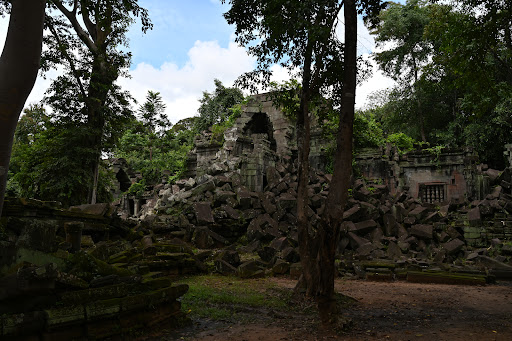
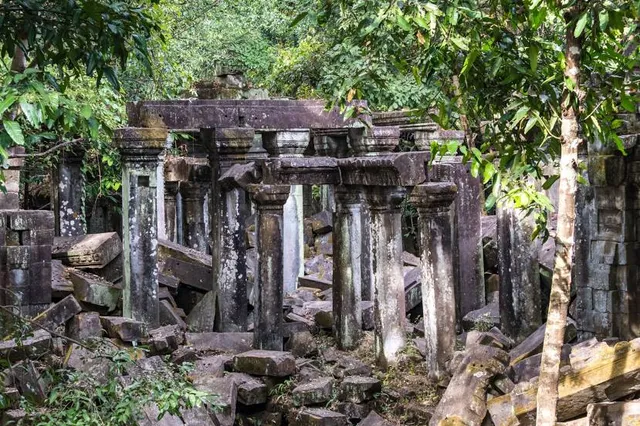
Beng Mealea (its name means "lotus pond") is a temple in the Angkor Wat style located 40 km east of the main group of temples at Angkor, Cambodia. It was built as hinduist temple, but there are some carvings depicting buddhist motifs. Its primary material is sandstone and it is largely unrestored, with trees and thick brush thriving amidst its towers and courtyards and many of its stones lying in great heaps.

The history of the temple is unknown and it can be dated only by its architectural style, identical to Angkor Wat, so scholars assumed it was built during the reign of king Suryavarman II in the early 12th century. Smaller in size than Angkor Wat, the king's main monument, Beng Mealea nonetheless ranks among the Khmer empire's larger temples: the gallery which forms the outer enclosure of the temple is 181 m by 152 m. It was the center of a town, surrounded by a moat 1025 m by 875 m large and 45 m wide.

Beng Mealea is oriented toward the east, but has entranceways from the other three cardinal directions. The basic layout is three enclosing galleries around a central sanctuary, collapsed at present. The enclosures are tied with "cruciform cloisters", like Angkor Wat. Structures known as libraries lie to the right and left of the avenue that leads in from the east. There is extensive carving of scenes from Hindu mythology, including the Churning of the Sea of Milk and Vishnu being borne by the bird god Garuda. Causeways have long balustrades formed by bodies of the seven-headed Naga serpent.

It was built mostly of sandstone: Beng Mealea is only 7 km far from the angkorian sandstone quarries of Phnom Kulen, as the crow flies. Presumably sandstone blocks used for Angkor were transported along artificial water canals and passed from here. Despite of lack of information, the quality of architecture and decorations has drown the attention of French scholars just from...

   Read more
avatar
4.0
39w

Amazing Temple in the jungle surrounded by trees. This temple is 72km out of town and so does not have many visitors. Having said that, I would highly recommend going. It’s a bit of a walk up a lane and out again, but the temple area itself has wooden staircases, balconies and steps that are well laid out. The first thing you see when entering the site is that the area is ‘under construction’. There is a huge crane uncovering lots of large rectangular slabs, each one if which is given a ‘placement number’ for re-positioning. One of the amazing wonders are the long bridge like stone structures that swan-neck up with a large cobra head on the tip. These snake-heads are intricately carved and detailed as are a number of stone structures in the area.

As you wonder through this vast area, the most notable things are:- The extraordinary amount are large rectangular slabs (each about 3’x1.5’x1.5’), each one with 2x2” holes (some more) for the insertion of sticks and twine for moving - although these slabs aren’t going anywhere as they are too difficult to move / reconstruct and too overwhelming cumbersome and abundant. Many of the structures have trees growing around them or through them / and many of these very large trees are covered and smothered by smaller, thinner fig trees that surround, suffocate and kill the larger trees. A truly amazing and unique experience to witness.

Remember to take water, sunscreen, a hat & maybe sunglasses. It’s hot in this part of the world. Also, I highly recommend getting a guide and driver with an air conditioned car. Going to any temple on a tuk-tuk or scooter on dirt or bumpy roads in traffic on a hot day does not look...

   Read more
avatar
5.0
2y

This temple is very far from the main temples of Angkor, and as such, you'll need at least a motorbike or tuk tuk to get here. By motorbike/tuk tuk it's going to take you at least 1.5 hours to get here, and although the "highway" is quite new and in good condition compared to most Cambodian roads, it isn't by any means a smooth drive. Make sure to buy your Angkor Pass before coming to Beng Mealea, they don't sell them here.

This is an enormous temple. It had to be one of the finest in Angkor when it was built. Although not as big as Angkor Wat, I can't think of another temple I went to that felt as large as this one (except maybe Preah Vihear). So you're getting to see the pinnacle of the Angkor Empire here. But the last 800 years haven't been kind to Beng Mealea, and now the temple is in an advanced state of ruin (think Ta Phrom after a couple of earthquakes). So more than any temple in Angkor, this one had the eerie feeling of stepping into a lost world that had long ago been reclaimed by nature.

Although it isn't the easiest temple to get to, it is absolutely worth seeing. If you have 3 or more days in Siem Reap, see this temple (along with Bakong and Preah Ko on the way back to Siem Reap). The combination of sheer size and advanced state of ruin makes it one of the coolest...

   Read more
Page 1 of 7
Previous
Next

Posts

Shankar RajasekharanShankar Rajasekharan
Prasat Beng Mealea was built by king Suryavarman II, early 12th century by primary deity to Vishnu with architecture of Angkor Wat. This temple is located 40 km east of the main group of temples at Angkor, and 77 km from Siem Reap by road. Beng Mealea (its name means "lotus pond") is a temple in the Angkor Wat style located 40 km east of the main group of temples at Angkor, Cambodia. It was built as hinduist temple, but there are some carvings depicting buddhist motifs. Its primary material is sandstone and it is largely unrestored, with trees and thick brush thriving amidst its towers and courtyards and many of its stones lying in great heaps. The history of the temple is unknown and it can be dated only by its architectural style, identical to Angkor Wat, so scholars assumed it was built during the reign of king Suryavarman II in the early 12th century. Smaller in size than Angkor Wat, the king's main monument, Beng Mealea nonetheless ranks among the Khmer empire's larger temples: the gallery which forms the outer enclosure of the temple is 181 m by 152 m. It was the center of a town, surrounded by a moat 1025 m by 875 m large and 45 m wide. Beng Mealea is oriented toward the east, but has entranceways from the other three cardinal directions. The basic layout is three enclosing galleries around a central sanctuary, collapsed at present. The enclosures are tied with "cruciform cloisters", like Angkor Wat. Structures known as libraries lie to the right and left of the avenue that leads in from the east. There is extensive carving of scenes from Hindu mythology, including the Churning of the Sea of Milk and Vishnu being borne by the bird god Garuda. Causeways have long balustrades formed by bodies of the seven-headed Naga serpent. It was built mostly of sandstone: Beng Mealea is only 7 km far from the angkorian sandstone quarries of Phnom Kulen, as the crow flies. Presumably sandstone blocks used for Angkor were transported along artificial water canals and passed from here. Despite of lack of information, the quality of architecture and decorations has drown the attention of French scholars just from its discovery.
Gunnar CayaGunnar Caya
This temple is very far from the main temples of Angkor, and as such, you'll need at least a motorbike or tuk tuk to get here. By motorbike/tuk tuk it's going to take you at least 1.5 hours to get here, and although the "highway" is quite new and in good condition compared to most Cambodian roads, it isn't by any means a smooth drive. Make sure to buy your Angkor Pass before coming to Beng Mealea, they don't sell them here. This is an enormous temple. It had to be one of the finest in Angkor when it was built. Although not as big as Angkor Wat, I can't think of another temple I went to that felt as large as this one (except maybe Preah Vihear). So you're getting to see the pinnacle of the Angkor Empire here. But the last 800 years haven't been kind to Beng Mealea, and now the temple is in an advanced state of ruin (think Ta Phrom after a couple of earthquakes). So more than any temple in Angkor, this one had the eerie feeling of stepping into a lost world that had long ago been reclaimed by nature. Although it isn't the easiest temple to get to, it is absolutely worth seeing. If you have 3 or more days in Siem Reap, see this temple (along with Bakong and Preah Ko on the way back to Siem Reap). The combination of sheer size and advanced state of ruin makes it one of the coolest temples in Cambodia
NumNum ChannelNumNum Channel
ปราสาทบึงมาลา หรือ ปราสาทเบ็งเมเลีย ปราสาทเบ็งเมเลีย: มหาปราสาทที่ถูกกลืนกินโดยธรรมชาติ ปราสาทเบ็งเมเลีย (Beng Mealea) เป็นหนึ่งในปราสาทที่ยิ่งใหญ่และน่าหลงใหลที่สุดในกัมพูชา ตั้งอยู่ห่างจากเมืองเสียมราฐไปทางตะวันออกประมาณ 40-77 กิโลเมตร ได้รับสมญานามว่า "นครวัดแห่งตะวันออก" หรือ "วิหารป่า" เนื่องจากสภาพที่ถูกธรรมชาติเข้าครอบงำอย่างสมบูรณ์ ทำให้เกิดภาพที่สวยงามและลึกลับราวกับฉากในภาพยนตร์ ประวัติโดยย่อ * ยุคสมัยและการสร้าง: เชื่อกันว่าปราสาทเบ็งเมเลียถูกสร้างขึ้นในราว กลางศตวรรษที่ 12 ในรัชสมัยของ พระเจ้าสุริยวรมันที่ 2 (ค.ศ. 1113-1150) ซึ่งเป็นช่วงเดียวกับการสร้างปราสาทนครวัด แม้จะไม่มีจารึกที่ระบุถึงการสร้างปราสาทนี้โดยตรง แต่จากสถาปัตยกรรม แผนผัง และลวดลายแกะสลักที่คล้ายคลึงกับนครวัดอย่างมาก ทำให้ผู้เชี่ยวชาญหลายคนเชื่อว่าปราสาทแห่งนี้อาจเป็น ต้นแบบหรือแบบจำลอง ของนครวัด หรืออย่างน้อยก็เป็นผลงานจากช่างฝีมือชุดเดียวกัน * วัตถุประสงค์: ปราสาทแห่งนี้สร้างขึ้นเพื่ออุทิศให้กับศาสนาฮินดู โดยเฉพาะเทพเจ้า พระวิษณุ ซึ่งสะท้อนผ่านลวดลายแกะสลักเทพปกรณัมต่างๆ อย่างไรก็ตาม ก็มีการพบหลักฐานของพุทธศาสนาในบางส่วนด้วยเช่นกัน * ความสำคัญทางยุทธศาสตร์: เบ็งเมเลียตั้งอยู่บนเส้นทางหลวงโบราณที่เชื่อมโยงเมืองพระนคร (อังกอร์) กับปราสาทพระขรรค์กำปงสวาย ทำให้เป็นจุดสำคัญทางศาสนาและการค้าในยุคนั้น คูน้ำขนาดใหญ่ที่ล้อมรอบปราสาท (ปัจจุบันแห้งขอด) ยังเป็นสัญลักษณ์ของมหาสมุทรที่ล้อมรอบเขาพระสุเมรุในคติจักรวาลวิทยาของฮินดู * การถูกทิ้งร้างและการค้นพบ: ปราสาทเบ็งเมเลียถูกทอดทิ้งในช่วงคริสต์ศตวรรษที่ 16 เมื่ออาณาจักรขอมเสื่อมอำนาจ และถูกค้นพบอีกครั้งโดยนักสำรวจชาวฝรั่งเศสในปลายศตวรรษที่ 19 คือ Louis Delaporte ในปี ค.ศ. 1880 แต่เนื่องจากไม่มีรูปสลักที่มีค่า หรือการบูรณะที่สำคัญเหมือนปราสาทอื่นๆ ทำให้เบ็งเมเลียถูกปล่อยทิ้งให้ธรรมชาติเข้าครอบงำ * ช่วงสงคราม: ในช่วงสงครามกลางเมืองของกัมพูชา โดยเฉพาะยุคเขมรแดง เบ็งเมเลียเคยเป็นหนึ่งในที่มั่นสำคัญ และมีการวางทุ่นระเบิดจำนวนมาก ทำให้ไม่สามารถเข้าถึงได้เป็นเวลานานหลายทศวรรษ จนกระทั่งมีการเก็บกู้ทุ่นระเบิดอย่างเป็นระบบในช่วงทศวรรษที่ผ่านมา ปราสาทจึงเปิดให้นักท่องเที่ยวเข้าชมได้อย่างปลอดภัย ความน่าสนใจของปราสาทเบ็งเมเลีย * สถาปัตยกรรมแบบ "นครวัด" ที่ถูกกลืนกินโดยธรรมชาติ: นี่คือเสน่ห์ที่โดดเด่นที่สุดของเบ็งเมเลีย ด้วยโครงสร้างที่คล้ายคลึงกับนครวัด มีระเบียงคด 3 ชั้นล้อมรอบปราสาทประธาน แต่สิ่งที่แตกต่างคือการที่ปราสาทแห่งนี้ถูกปล่อยให้เป็นไปตามสภาพธรรมชาติอย่างแท้จริง รากไม้ขนาดมหึมา เลื้อยพันไปตามกำแพงหิน มอสและพืชพรรณ ปกคลุมซากปรักหักพังอย่างหนาแน่น ทำให้เกิดภาพที่สวยงาม ลึกลับ และชวนให้จินตนาการถึงอดีตที่รุ่งเรือง * ความรู้สึกของการผจญภัย: การเดินสำรวจปราสาทเบ็งเมเลียให้ความรู้สึกเหมือนกำลังเป็นนักสำรวจในภาพยนตร์แนวผจญภัย ผู้เยี่ยมชมจะได้ปีนป่ายไปบนก้อนหินที่ถล่มลงมา เดินผ่านโถงทางเดินที่มืดมิด และสำรวจซอกมุมต่างๆ ที่ธรรมชาติได้สร้างสรรค์ขึ้นมาใหม่ ปัจจุบันมีการสร้างทางเดินไม้เพื่ออำนวยความสะดวกและรักษาโครงสร้างบางส่วน แต่ก็ยังคงความรู้สึกของการผจญภัยไว้ได้อย่างดี * ลวดลายแกะสลักอันวิจิตร: แม้จะอยู่ในสภาพปรักหักพัง แต่ยังคงสามารถมองเห็นลวดลายแกะสลักอันประณีตงดงามบนผนัง เสา และทับหลัง ซึ่งบอกเล่าเรื่องราวจากมหากาพย์ฮินดูที่สำคัญ เช่น การกวนเกษียรสมุทร มหาภารตะ และรามายณะ รวมถึงภาพเทพเจ้าต่างๆ และอัปสรา ที่แสดงถึงฝีมืออันน่าทึ่งของช่างศิลป์ขอมโบราณ * บรรยากาศอันเงียบสงบและลึกลับ: เนื่องจากตั้งอยู่ห่างไกลจากกลุ่มปราสาทหลักในเมืองเสียมราฐ ทำให้เบ็งเมเลียมีความเงียบสงบและผู้คนไม่พลุกพล่านเท่า ทำให้สามารถดื่มด่ำกับบรรยากาศอันขลังและลึกลับของปราสาทที่ถูกธรรมชาติโอบอุ้มไว้ได้อย่างเต็มที่ * ฉากถ่ายทำภาพยนตร์ "Tomb Raider": ปราสาทแห่งนี้เป็นที่รู้จักในระดับสากลมากขึ้นจากการเป็นหนึ่งในสถานที่ถ่ายทำภาพยนตร์เรื่อง "Tomb Raider" ซึ่งช่วยเน้นย้ำถึงความลึกลับและเสน่ห์ของเบ็งเมเลีย ปราสาทเบ็งเมเลียจึงเป็นจุดหมายที่ห้ามพลาดสำหรับผู้ที่ต้องการสัมผัสกับความงามที่แตกต่างของอารยธรรมขอมโบราณ ที่ไม่เพียงแต่แสดงถึงความยิ่งใหญ่ทางสถาปัตยกรรม แต่ยังสะท้อนถึงพลังอันน่าเกรงขามของธรรมชาติที่สามารถโอบอุ้มและกลืนกินสิ่งที่มนุษย์สร้างขึ้นได้อย่างงดงามน่าทึ่ง
See more posts
See more posts
hotel
Find your stay

Pet-friendly Hotels in Siem Reap

Find a cozy hotel nearby and make it a full experience.

Prasat Beng Mealea was built by king Suryavarman II, early 12th century by primary deity to Vishnu with architecture of Angkor Wat. This temple is located 40 km east of the main group of temples at Angkor, and 77 km from Siem Reap by road. Beng Mealea (its name means "lotus pond") is a temple in the Angkor Wat style located 40 km east of the main group of temples at Angkor, Cambodia. It was built as hinduist temple, but there are some carvings depicting buddhist motifs. Its primary material is sandstone and it is largely unrestored, with trees and thick brush thriving amidst its towers and courtyards and many of its stones lying in great heaps. The history of the temple is unknown and it can be dated only by its architectural style, identical to Angkor Wat, so scholars assumed it was built during the reign of king Suryavarman II in the early 12th century. Smaller in size than Angkor Wat, the king's main monument, Beng Mealea nonetheless ranks among the Khmer empire's larger temples: the gallery which forms the outer enclosure of the temple is 181 m by 152 m. It was the center of a town, surrounded by a moat 1025 m by 875 m large and 45 m wide. Beng Mealea is oriented toward the east, but has entranceways from the other three cardinal directions. The basic layout is three enclosing galleries around a central sanctuary, collapsed at present. The enclosures are tied with "cruciform cloisters", like Angkor Wat. Structures known as libraries lie to the right and left of the avenue that leads in from the east. There is extensive carving of scenes from Hindu mythology, including the Churning of the Sea of Milk and Vishnu being borne by the bird god Garuda. Causeways have long balustrades formed by bodies of the seven-headed Naga serpent. It was built mostly of sandstone: Beng Mealea is only 7 km far from the angkorian sandstone quarries of Phnom Kulen, as the crow flies. Presumably sandstone blocks used for Angkor were transported along artificial water canals and passed from here. Despite of lack of information, the quality of architecture and decorations has drown the attention of French scholars just from its discovery.
Shankar Rajasekharan

Shankar Rajasekharan

hotel
Find your stay

Affordable Hotels in Siem Reap

Find a cozy hotel nearby and make it a full experience.

Get the Appoverlay
Get the AppOne tap to find yournext favorite spots!
This temple is very far from the main temples of Angkor, and as such, you'll need at least a motorbike or tuk tuk to get here. By motorbike/tuk tuk it's going to take you at least 1.5 hours to get here, and although the "highway" is quite new and in good condition compared to most Cambodian roads, it isn't by any means a smooth drive. Make sure to buy your Angkor Pass before coming to Beng Mealea, they don't sell them here. This is an enormous temple. It had to be one of the finest in Angkor when it was built. Although not as big as Angkor Wat, I can't think of another temple I went to that felt as large as this one (except maybe Preah Vihear). So you're getting to see the pinnacle of the Angkor Empire here. But the last 800 years haven't been kind to Beng Mealea, and now the temple is in an advanced state of ruin (think Ta Phrom after a couple of earthquakes). So more than any temple in Angkor, this one had the eerie feeling of stepping into a lost world that had long ago been reclaimed by nature. Although it isn't the easiest temple to get to, it is absolutely worth seeing. If you have 3 or more days in Siem Reap, see this temple (along with Bakong and Preah Ko on the way back to Siem Reap). The combination of sheer size and advanced state of ruin makes it one of the coolest temples in Cambodia
Gunnar Caya

Gunnar Caya

hotel
Find your stay

The Coolest Hotels You Haven't Heard Of (Yet)

Find a cozy hotel nearby and make it a full experience.

hotel
Find your stay

Trending Stays Worth the Hype in Siem Reap

Find a cozy hotel nearby and make it a full experience.

ปราสาทบึงมาลา หรือ ปราสาทเบ็งเมเลีย ปราสาทเบ็งเมเลีย: มหาปราสาทที่ถูกกลืนกินโดยธรรมชาติ ปราสาทเบ็งเมเลีย (Beng Mealea) เป็นหนึ่งในปราสาทที่ยิ่งใหญ่และน่าหลงใหลที่สุดในกัมพูชา ตั้งอยู่ห่างจากเมืองเสียมราฐไปทางตะวันออกประมาณ 40-77 กิโลเมตร ได้รับสมญานามว่า "นครวัดแห่งตะวันออก" หรือ "วิหารป่า" เนื่องจากสภาพที่ถูกธรรมชาติเข้าครอบงำอย่างสมบูรณ์ ทำให้เกิดภาพที่สวยงามและลึกลับราวกับฉากในภาพยนตร์ ประวัติโดยย่อ * ยุคสมัยและการสร้าง: เชื่อกันว่าปราสาทเบ็งเมเลียถูกสร้างขึ้นในราว กลางศตวรรษที่ 12 ในรัชสมัยของ พระเจ้าสุริยวรมันที่ 2 (ค.ศ. 1113-1150) ซึ่งเป็นช่วงเดียวกับการสร้างปราสาทนครวัด แม้จะไม่มีจารึกที่ระบุถึงการสร้างปราสาทนี้โดยตรง แต่จากสถาปัตยกรรม แผนผัง และลวดลายแกะสลักที่คล้ายคลึงกับนครวัดอย่างมาก ทำให้ผู้เชี่ยวชาญหลายคนเชื่อว่าปราสาทแห่งนี้อาจเป็น ต้นแบบหรือแบบจำลอง ของนครวัด หรืออย่างน้อยก็เป็นผลงานจากช่างฝีมือชุดเดียวกัน * วัตถุประสงค์: ปราสาทแห่งนี้สร้างขึ้นเพื่ออุทิศให้กับศาสนาฮินดู โดยเฉพาะเทพเจ้า พระวิษณุ ซึ่งสะท้อนผ่านลวดลายแกะสลักเทพปกรณัมต่างๆ อย่างไรก็ตาม ก็มีการพบหลักฐานของพุทธศาสนาในบางส่วนด้วยเช่นกัน * ความสำคัญทางยุทธศาสตร์: เบ็งเมเลียตั้งอยู่บนเส้นทางหลวงโบราณที่เชื่อมโยงเมืองพระนคร (อังกอร์) กับปราสาทพระขรรค์กำปงสวาย ทำให้เป็นจุดสำคัญทางศาสนาและการค้าในยุคนั้น คูน้ำขนาดใหญ่ที่ล้อมรอบปราสาท (ปัจจุบันแห้งขอด) ยังเป็นสัญลักษณ์ของมหาสมุทรที่ล้อมรอบเขาพระสุเมรุในคติจักรวาลวิทยาของฮินดู * การถูกทิ้งร้างและการค้นพบ: ปราสาทเบ็งเมเลียถูกทอดทิ้งในช่วงคริสต์ศตวรรษที่ 16 เมื่ออาณาจักรขอมเสื่อมอำนาจ และถูกค้นพบอีกครั้งโดยนักสำรวจชาวฝรั่งเศสในปลายศตวรรษที่ 19 คือ Louis Delaporte ในปี ค.ศ. 1880 แต่เนื่องจากไม่มีรูปสลักที่มีค่า หรือการบูรณะที่สำคัญเหมือนปราสาทอื่นๆ ทำให้เบ็งเมเลียถูกปล่อยทิ้งให้ธรรมชาติเข้าครอบงำ * ช่วงสงคราม: ในช่วงสงครามกลางเมืองของกัมพูชา โดยเฉพาะยุคเขมรแดง เบ็งเมเลียเคยเป็นหนึ่งในที่มั่นสำคัญ และมีการวางทุ่นระเบิดจำนวนมาก ทำให้ไม่สามารถเข้าถึงได้เป็นเวลานานหลายทศวรรษ จนกระทั่งมีการเก็บกู้ทุ่นระเบิดอย่างเป็นระบบในช่วงทศวรรษที่ผ่านมา ปราสาทจึงเปิดให้นักท่องเที่ยวเข้าชมได้อย่างปลอดภัย ความน่าสนใจของปราสาทเบ็งเมเลีย * สถาปัตยกรรมแบบ "นครวัด" ที่ถูกกลืนกินโดยธรรมชาติ: นี่คือเสน่ห์ที่โดดเด่นที่สุดของเบ็งเมเลีย ด้วยโครงสร้างที่คล้ายคลึงกับนครวัด มีระเบียงคด 3 ชั้นล้อมรอบปราสาทประธาน แต่สิ่งที่แตกต่างคือการที่ปราสาทแห่งนี้ถูกปล่อยให้เป็นไปตามสภาพธรรมชาติอย่างแท้จริง รากไม้ขนาดมหึมา เลื้อยพันไปตามกำแพงหิน มอสและพืชพรรณ ปกคลุมซากปรักหักพังอย่างหนาแน่น ทำให้เกิดภาพที่สวยงาม ลึกลับ และชวนให้จินตนาการถึงอดีตที่รุ่งเรือง * ความรู้สึกของการผจญภัย: การเดินสำรวจปราสาทเบ็งเมเลียให้ความรู้สึกเหมือนกำลังเป็นนักสำรวจในภาพยนตร์แนวผจญภัย ผู้เยี่ยมชมจะได้ปีนป่ายไปบนก้อนหินที่ถล่มลงมา เดินผ่านโถงทางเดินที่มืดมิด และสำรวจซอกมุมต่างๆ ที่ธรรมชาติได้สร้างสรรค์ขึ้นมาใหม่ ปัจจุบันมีการสร้างทางเดินไม้เพื่ออำนวยความสะดวกและรักษาโครงสร้างบางส่วน แต่ก็ยังคงความรู้สึกของการผจญภัยไว้ได้อย่างดี * ลวดลายแกะสลักอันวิจิตร: แม้จะอยู่ในสภาพปรักหักพัง แต่ยังคงสามารถมองเห็นลวดลายแกะสลักอันประณีตงดงามบนผนัง เสา และทับหลัง ซึ่งบอกเล่าเรื่องราวจากมหากาพย์ฮินดูที่สำคัญ เช่น การกวนเกษียรสมุทร มหาภารตะ และรามายณะ รวมถึงภาพเทพเจ้าต่างๆ และอัปสรา ที่แสดงถึงฝีมืออันน่าทึ่งของช่างศิลป์ขอมโบราณ * บรรยากาศอันเงียบสงบและลึกลับ: เนื่องจากตั้งอยู่ห่างไกลจากกลุ่มปราสาทหลักในเมืองเสียมราฐ ทำให้เบ็งเมเลียมีความเงียบสงบและผู้คนไม่พลุกพล่านเท่า ทำให้สามารถดื่มด่ำกับบรรยากาศอันขลังและลึกลับของปราสาทที่ถูกธรรมชาติโอบอุ้มไว้ได้อย่างเต็มที่ * ฉากถ่ายทำภาพยนตร์ "Tomb Raider": ปราสาทแห่งนี้เป็นที่รู้จักในระดับสากลมากขึ้นจากการเป็นหนึ่งในสถานที่ถ่ายทำภาพยนตร์เรื่อง "Tomb Raider" ซึ่งช่วยเน้นย้ำถึงความลึกลับและเสน่ห์ของเบ็งเมเลีย ปราสาทเบ็งเมเลียจึงเป็นจุดหมายที่ห้ามพลาดสำหรับผู้ที่ต้องการสัมผัสกับความงามที่แตกต่างของอารยธรรมขอมโบราณ ที่ไม่เพียงแต่แสดงถึงความยิ่งใหญ่ทางสถาปัตยกรรม แต่ยังสะท้อนถึงพลังอันน่าเกรงขามของธรรมชาติที่สามารถโอบอุ้มและกลืนกินสิ่งที่มนุษย์สร้างขึ้นได้อย่างงดงามน่าทึ่ง
NumNum Channel

NumNum Channel

See more posts
See more posts