Sure! Here's a detailed and immersive review of Ta Prohm Temple written in the style of a passionate, super long, travel-ping-style review. It captures history, atmosphere, personal reactions, and vivid detail:
🌿🌳 TA PROHM TEMPLE – THE JUNGLE'S MASTERPIECE OF MYSTERY AND MEMORY 🌳🌿
Okay, where do I even begin? I’ve just visited Ta Prohm Temple in Siem Reap, Cambodia, and I’m still picking metaphorical (and actual) jungle leaves out of my hair and heart. This place is NOT just a tourist attraction—it’s a living, breathing, slowly crumbling, totally awe-inspiring monument where nature and history are locked in the most poetic embrace.
Let me paint you the scene.
📍 Setting the Scene: Ta Prohm is part of the Angkor Archaeological Park, which includes Angkor Wat and Bayon, but this one hits different. As you walk up to the entrance, you’re immediately struck by the silence—not an eerie silence, but a peaceful one. The thick jungle canopy filters the sunlight into dreamy rays that pierce through the foliage. The air is thick and humid, with the scent of moss and damp stone. You hear birds calling from deep within the trees. It’s like stepping into a sacred forgotten world.
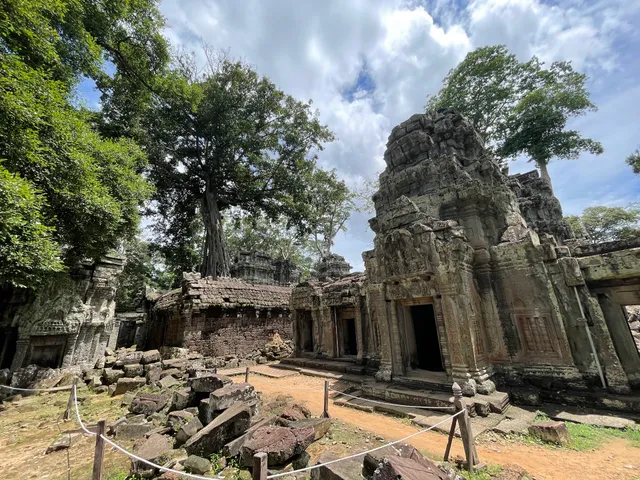
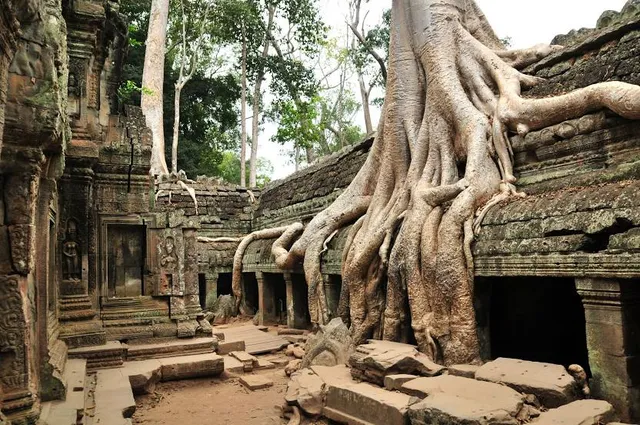
🚪 First Glimpse: The temple doesn’t rise majestically like Angkor Wat. No—Ta Prohm sinks into the earth, or maybe the earth has risen to meet it. The stone towers, walls, and courtyards are being slowly consumed by massive silk-cotton and strangler fig trees, their roots pouring over the structures like liquid wood. It’s like Mother Nature said, “Let me have this back,” and the temple didn’t argue.
🌳 THE TREES. THE ROOTS. They’re what you come for, and they do NOT disappoint. Some trees are so massive that you wonder how the temple hasn’t just collapsed under their weight. Roots twist through windows, hug doorways, and strangle columns. It's both beautiful and haunting—like you're witnessing the world after we’re gone. And that’s the crazy part: this place feels post-human. As if it exists outside of time, waiting for explorers or ghosts.
📸 Famous But Not Overhyped: Yes, it’s the Tomb Raider temple (cue the Lara Croft theme music), but that doesn’t cheapen the experience. In fact, if anything, it adds a layer of cinematic drama to it. But no film set can prepare you for how real and surreal this place feels. It’s like a fairytale and a ruin merged.
📜 History Corner (Bear With Me, It’s Cool): Built in the late 12th century by King Jayavarman VII as a Mahayana Buddhist monastery and university, Ta Prohm was originally called Rajavihara. It housed over 12,500 people, including priests, dancers, and workers. After the fall of the Khmer Empire, the jungle began to reclaim it. Unlike many temples in the area that were "cleaned up," Ta Prohm was intentionally left mostly unrestored to showcase that powerful blend of man-made and natural forces.
🎧 Vibes and Atmosphere: I felt like an archaeologist and a child at the same time. There’s this sense of reverence—like you’re in a temple not just of religion, but of time. You find yourself whispering without meaning to. Every corner, every root, every fallen stone is a story. It’s haunting, but not in a scary way. More like: sacred, quiet, and endlessly curious.
👣 What I Loved:
Wandering semi-alone through moss-covered corridors.
Getting lost in the maze-like galleries and stumbling upon hidden carvings.
Watching nature not just surround the temple—but intertwine with it.
The play of light and shadow through the jungle canopy. Photographers, EAT YOUR HEART OUT.
⚠️ Tips for the Next Explorer:
Come early or late in the day to avoid the peak crowds. It’s much more magical when it’s quieter.
Wear breathable clothes and good shoes—it’s humid, and the ground is uneven and often slippery.
Don’t rush. Let the place speak to you. Sit on a stone. Breathe it in. You’re not just a tourist—you’re a witness.
Try to hire a knowledgeable guide, or at least read up before you go. The context makes it 100x richer.
📚 Final Thoughts: Ta Prohm isn’t just a temple—it’s a poem. It’s a...
Read moreEmbarking on a journey through the ancient temple of Ta Prohm, famously featured in Tomb Raider, was a surreal and mesmerizing experience that surpassed all expectations. The allure of this historical site, combined with its cinematic fame, created an enchanting atmosphere that left an indelible mark on our visit.
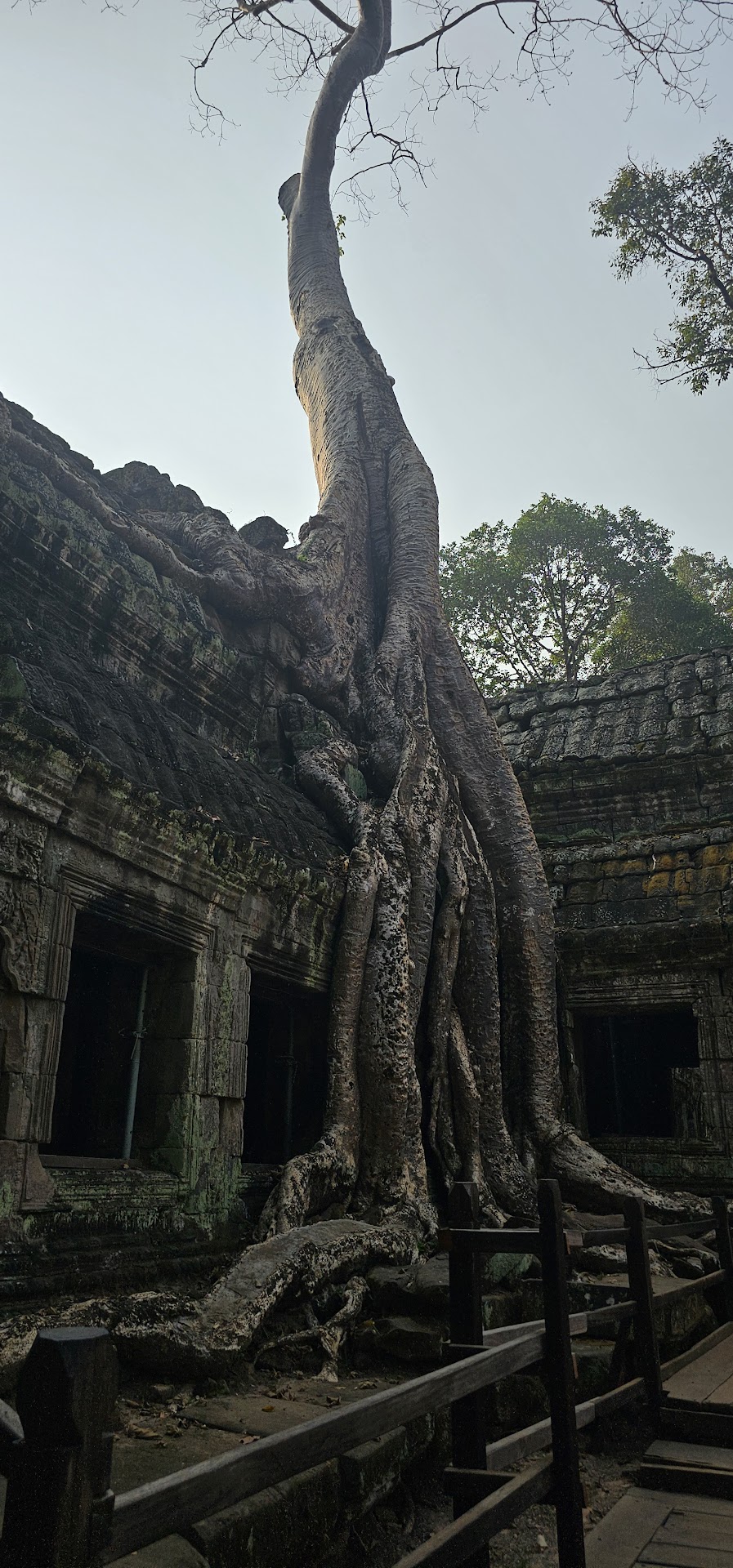
As we traversed the corridors and courtyards of Ta Prohm, the most captivating aspect was the mystically grown trees that seemingly defied gravity by extending their roots over the ancient stone structures. The intricate dance between nature and history unfolded before our eyes, with massive banyan and silk-cotton trees embracing the temple as if weaving a magical tapestry over the centuries.
The ethereal beauty of these trees, their roots cascading down walls and pillars, added an otherworldly dimension to Ta Prohm. It was as if the temple had become an organic part of the surrounding jungle, each element coexisting in perfect harmony. The play of light and shadow through the interwoven branches created an ever-changing tableau, enhancing the mysterious and timeless aura of the temple.
One of the most iconic scenes from our visit was standing beneath the canopy of a colossal silk-cotton tree that had gracefully ensconced itself atop parts of the temple. The sheer scale and beauty of this living structure, seemingly born from the heart of Ta Prohm itself, were awe-inspiring. It was a living testament to the relentless force of nature, highlighting the cyclical and symbiotic relationship between the temple and the surrounding environment.
Exploring Ta Prohm felt like stepping into a forgotten realm, where the boundaries between ancient civilization and the natural world blurred into a seamless panorama of wonder. The juxtaposition of the weathered stone carvings and the vibrant, living roots created a visual symphony that spoke to the passage of time and the enduring spirit of this sacred site.
In conclusion, Ta Prohm is not just a temple; it is a living testament to the mystical interplay between nature and history. The enchanting embrace of the mystically grown trees adds an unparalleled layer of magic to this already captivating site. Our journey through Ta Prohm was a transcendent experience, and we wholeheartedly recommend it to anyone seeking to witness the mesmerizing convergence of ancient ruins and nature's enduring embrace in the heart...
Read moreVisiting Ta Prohm temple in Siem Reap is like stepping into another world, where nature and history have become one. My return after eleven years, this time with my family, was nothing short of magical. Time may have passed, but the temple’s allure remains just as captivating, if not more so.
As we walked through the ancient corridors and marveled at the trees enveloping the temple walls, I found myself both revisiting old memories and creating new ones with my loved ones. The giant roots, snaking through crumbling stone, tell stories of resilience and transformation. It's a reminder of the delicate balance between humanity and nature, and how they can co-exist so beautifully. The dappled sunlight filtering through the dense canopy above casts an ethereal glow, highlighting the intricacies of the Khmer architecture in ways that simply cannot be captured in photographs.
Ta Prohm’s ambiance continues to feel like a movie set, with towering roots and timeworn stones enveloping visitors in a sense of discovery. There is a timeless quality here; each corner we turned felt like a hidden treasure, where nature’s slow embrace of the temple transports you to an ancient era, unspoiled by modernity.
Experiencing this temple with my family was particularly meaningful. Watching their expressions of awe mirrored the wonder I felt on my first visit all those years ago. The experience was deeply immersive, and we left with not only unforgettable memories but a shared sense of having touched something timeless.
For those planning to visit, I suggest arriving early to avoid the crowds and take in the serene beauty in the morning light. Ta Prohm remains one of Siem Reap’s most enchanting temples, a place where history breathes, and nature reigns supreme. It’s an unmissable stop on any traveler’s journey through Cambodia, and I hope to return once again to see how time continues to shape this...
Read more