Ta Som Temple
Ta Som Temple, located in the Angkor region of Cambodia, is a charming and historically significant Buddhist temple built in the late 12th century during the reign of King Jayavarman VII. The temple was dedicated to the king's father, Dharanindravarman II, and is a fine example of the Bayon architectural style, characterized by its face towers and intricate carvings.
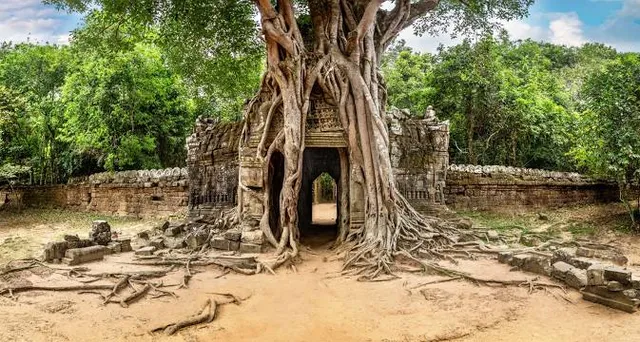
The temple's layout includes a single shrine situated on one level, surrounded by three laterite enclosure walls and a moat. The main entrance, or gopura, is adorned with four faces, a hallmark of the Bayon style, and is particularly famous for the massive strangler fig tree that has grown over the eastern gopura, creating a picturesque and iconic scene.
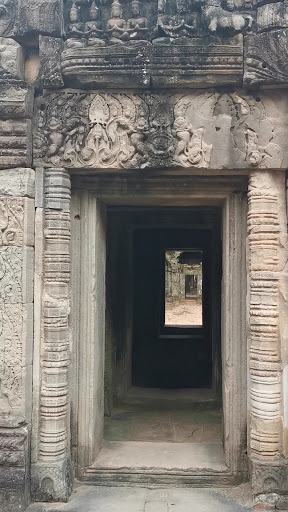
Ta Som's architectural design features a cruciform central sanctuary with porches at each arm, surrounded by four corner pavilions. Two small libraries are located on either side of the eastern entrance path, adding to the temple's symmetrical beauty. The temple's carvings are notable for their depiction of the Mahayana Buddhist savior Avalokiteshvara, known as Lokeshvara in Khmer culture, and the exquisite apsara (celestial dancer) carvings.
Despite its relatively small size, Ta Som offers a serene and intimate experience for visitors. The temple was left largely unrestored for many years, allowing nature to intertwine with its structures. In 1998, the World Monuments Fund included Ta Som in their restoration program, stabilizing the structure and improving visitor access.
Today, Ta Som remains a popular site for those exploring the Angkor complex, offering a glimpse into the religious and architectural achievements of the Khmer Empire. Its tranquil atmosphere and the enchanting sight of the tree-covered gopura make it a must-visit for history enthusiasts and photographers...
Read morePrasat Ta Som located in the east of Nean Pean. The entry and exit to Ta Som can only be access from east entrance. It was built in the end of the 12th century, dedicated to the father of the king (Buddhist), replica to Bayon style of art. BACKGROUND Ta Som has not been restored. It is a small quiet temple and affords a delightful visit. In the past one of the significant features of Ta Som was the growth of fig trees the faces at the entrance towers. These have been cut from the east tower but they are still visible at the west one. LAYOUT Ta Som is a single tower monument on one level surrounded by three enclosing walls with entry on the east and west carved with four faces, the face on the right of the east tower (facing the temple) has a beautiful smile. The entry towers are in the shape of a cross with a small room on each side connecting to a laterite wall. Walk through the first entry tower over a causeway, which crosses a moat and is bordered with serpents and large Garudas. The wall of the second enclosure is in laterite with a sandstone entry tower in the shape of a cross on the east and west sides. The entry towers have windows with balusters on the exterior and proceeded by a porch with pillars. The next enclosure comprises a laterite and sandstone gallery with corner pavilions, which have molded false doors. Amongst the crumbled heaps of stones in the courtyard are two libraries opening to the west. CENTRAL SANCTUARY The main tower is in the shape of a cross with four porches. To see the Central Sanctuary, courtyard and libraries, climb through the opening on...
Read moreGood morning Leo here
Planetary walker and finder of wonderful interesting and bright light places
Today Ta Som, after 2 hours be bycicle along very good bike way from the main street directly from Siem Reap from the check point on the right side in the forest I arrived along other temples Ta Som mystical and haunted almost empty and with the spirit of a ancient culture long times gone
Everywhere huge stones from broken wall and everywhere trees as a new ruler of this place erected by humans imaginations and creating fantastic aesthetician structures and symbolic forms... 😊
I fine between floors and doors and spiritual places under broken cuppels guess the ceremony here happen...
To the west gate the symbol for the power and gentle covering the stones and structures by the roots of the old and formerly huge tree over hundert of years
I make my rest and listen the insects, closes the eyes and smelled the water around and the flowers and trees smells and saw the rests of amazing powerful structures now only a slightly shape under the plants and water and trees...
Look self the place of melting nature and humans creations together...
Highly recommended that place to see how ancient cultures and huge buildings ending in the power of plants and nature
Finitennes of humans high culture in time and space 🤗
Sunny...
Read more