Absolutely amazing. As young high schoolers we often drove to the cliff as a group & hiked up. We also walked through the cows right to the base. This was all way before it was repatriated to the Blackfoot.
I'm so glad things are run by the ancestral people of the land. My memories of the place are completely different. I think we went to the further, now for First Nations only, Buffalo Jump.
I loved the interpretation centre. I wish we could have joined the private group tours to learn more. There wasn't any wandering interpretation staff to talk to when we were there.
The man at the entrance to pay was so friendly & welcoming. I wanted to offer him tobacco to ask permission to come in, as I was taught, but there was a line behind me & I didn't want him to feel awkward seeing as he was behind a glass wall. I grew up knowing that you offered tobacco as both permission to be somewhere & to ask if the Firsr Nations person would accept it to honour their guidance they could choose to give you. It's symbolic but important.
I would suggest adding some different languages as an audio walking tour or maybe books to borrow for common other languages. There were 2 family groups i witnessed, one Persian & one French that struggled with understanding the movies & written displays.
As someone who grew up in Southern Alberta I knew this place was important & sacred. My high school didn't respect its sacredness or coordinate with local Blackfoot to have permission or even pay for a guided tour.
I offered tobacco as an offering when I came for several reasons. First, to apologize for coming there without permission as a teen & not respecting the sacredness in the past. Next to thank the spirit & ancestors of the land for allowing me to come back to both apologize & see it's majesty again.
I had hoped to offer tobacco officially to a guide to ask them if they would accept it, but I never saw anyone until we were leaving. I had prayed with it & had some ready to offer. I used most of it up at the tourist area overlooking the first jump, but left some along the path to & from the facility in sincere thanks.
The gift shop was ok, but I would have loved to see much more artisanal work by local Blackfoot . The t shirts were nice, staff in the shops too.
The gift shop is poorly designed and cramped. The snack area was closed. Parking was ok. You can drop off people at the entrance that have mobility issues. It's all wheelchair friendly. You start by taking elevators to the top. I did overhear that one of the USA groups had trouble with the elevators because they were...
Read moreHead-Smashed-In Buffalo Jump is the oldest preserved buffalo jump site in North America. Continuing there since 1948, archeological research and excavations found multiple proofs that this site was used by Indigenous people starting from over 7000 years ago.
The site was designed as National Historical Site in 1968, and was recognized by UNESCO as a World Heritage Site in 1981. In May 1982 Provincial Government approved the constraction of the Head-Smashed-In Buffalo Jump Interpretive Centre. It was designed by the architect Robert LeBlond, who received the Governor General’s Award for Architecture for this design later in 1990. The construction of the center was started in June 1985 and was completed in October 1986. Official opening ceremony was held in July 23, 1987.
The building is perfectly integrated into the surrounding landscape. Inside, each of the seven terraces presents multiple artifacts and includes exhibitions that are telling the stories about this land and about everyday life, hunting strategy and surviving skills of Indigenous people before and after Europeans arrival.
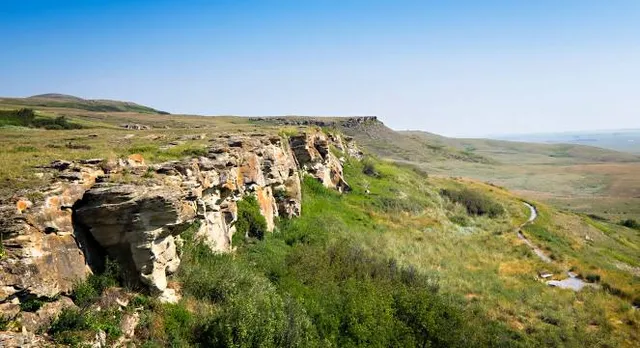
Outside, short upper and lower trails allow to overview the cliffs where the buffalo's deadly leaps took place and the area where hunters butchered their prey.
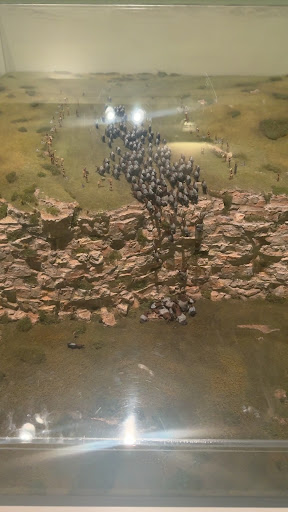
The legend about young boy, whose head was smashed under the cliff by falling buffalo, may come to life in your imagination. And if you'll watch the short, but the very informative, 15-minute film "Pis'kun - The Buffalo Hunt" in the Interpretive Center's movie theater, the whole story of the early days of buffalo hunting will forever become an unforgettable part...
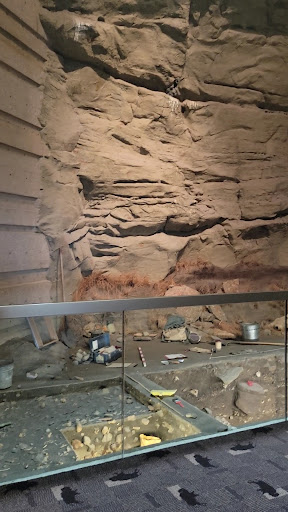
Read moreThe only downside of this place is the parking situation. You can drop off people at the top of the loop, but parking is downhill. Unfortunately, they lost funding precovid, which allowed them to have a shuttle back in the day, but that is gone now. So keep that in mind when you are going. First Nations get in free which was wonderful. Kids under 4 are free, adults are $15 each, and they offer family passes. The set up is meant to be top to bottom. So to begin you take one elevator to 4th floor, down a hallway and then a second upto the 6th floor. From there, you walk out the doors and along the paved path to the lookout area. They have telescopes to survey the land and see some of the areas where the Buffalo jump would've taken place which was cool. They had some gardens which housed a variety of natural grasses and plants from wild juniper and sage. While at the lookout we got to see some mule deer and a meandering fox. Anyone who wears the red vests work their and provide amazing information. Once you return back in, you can see a variety of different exhibits that detail the hunt, the tools used, and what they did with the meat, hide, and other natural resources. They had many exhibits on the Blackfoot people and part of the cultural and the after settlers arrived and what they brought. There was a really cool video to watch and other different interactive displays. The bottom floor you can see different animal that have been taxidermied, and the excavation process.
Really neat and so happy we finally went...
Read more